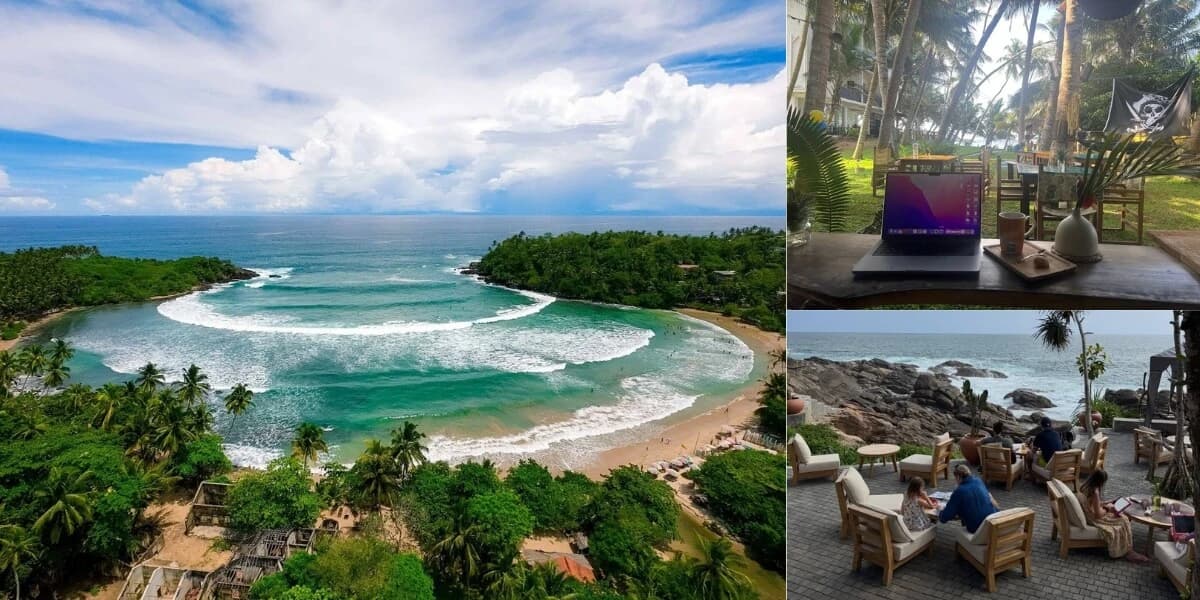
You flew 8,000 kilometres to work from a beach in Sri Lanka. Your client doesn't care about the palm trees. They care about the Zoom call freezing at minute three.
That's the truth nobody puts in the Instagram caption. Hiriketiya — this tiny horseshoe bay on Sri Lanka's southern coast — has become the quiet favourite of digital nomads who've done Bali, done Chiang Mai, and want something that still feels undiscovered. But the one question that decides whether you stay or flee after 48 hours is brutally simple:
can I actually get work done here?
We spent the 2025–2026 high season testing every coworking space, cafe, and coliving spot in Hiriketiya with a laptop, a speed test app, and a calendar full of real client calls. No sponsored posts. No "gifted" stays. Just honest numbers and a weak spot for good iced coffee.
Here's what we found.
The Wi-Fi Situation in Hiriketiya: What You Need to Know First
Sri Lanka ranks around 127th in the world for fixed broadband speed. That's not a typo. The national average hovers somewhere between Laos and Nigeria in the global rankings. Heavy rain can knock out connectivity entirely, and power cuts — particularly midday — are still a regular feature of island life.
So why do hundreds of remote workers keep coming back?
Because Hiriketiya's best spots have solved the problem that the rest of the country hasn't. Fiber-optic lines now reach several properties.
Backup generators keep routers alive during outages. And a handful of operators genuinely understand that their business depends on your ability to ship code, run calls, and meet deadlines from a beanbag under a coconut palm.
The gap between the best and worst Wi-Fi in Hiriketiya is enormous. Choose right, and you'll have 80 Mbps with backup power. Choose wrong, and you'll be tethering off a Dialog SIM in a power cut, praying your hotspot holds.
This guide exists so you choose right.
The 7 Best Places to Work With Reliable Wi-Fi in Hiriketiya (2026)
1. Clics Coliving & Coworking — The Serious Worker's First Choice
Wi-Fi Speed: ~80 Mbps download / ~40 Mbps upload Day Pass: ~1,700 LKR ($6) including a coffee Power Backup: Yes Air Conditioning: Yes (indoor coworking area) Best For: Video calls, focused deep work, developers and writers
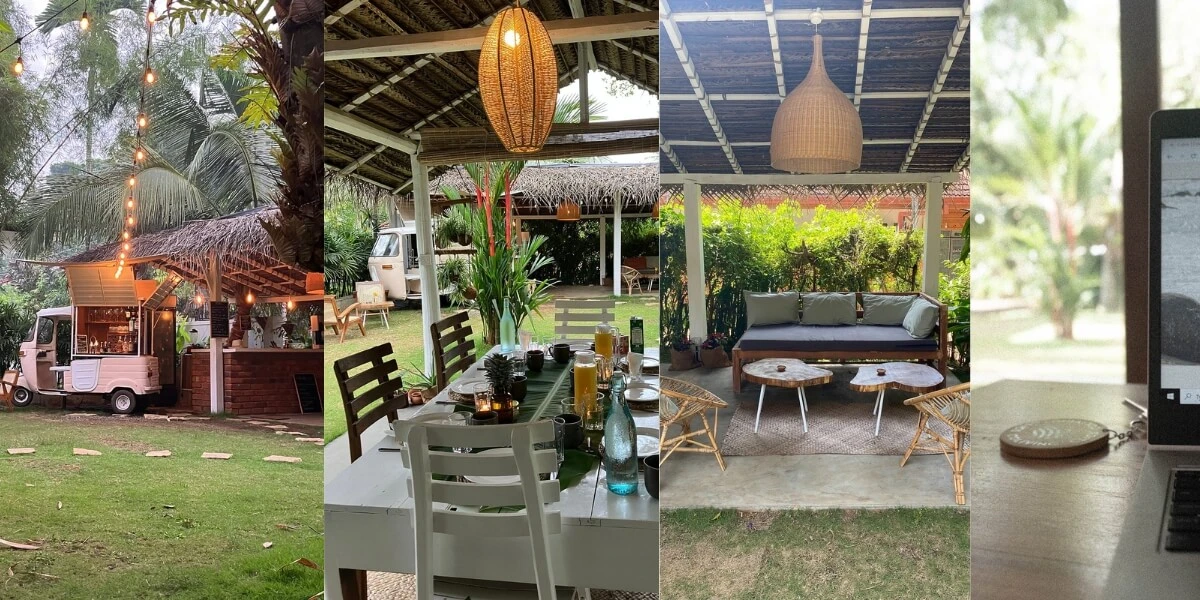
If your income depends on stable internet, start here.
Clics sits in a lush garden behind Hiriketiya Beach — close enough to hear the waves, far enough to avoid the backpacker bass. The indoor coworking area is fully air-conditioned, which matters more than you think when the midday heat turns your brain to porridge. They run fiber-optic internet, and the speed is consistent — not the kind of "up to 80 Mbps" that really means 11 Mbps at lunch.
The space is deliberately quiet. Private desks for calls. Shared tables for those who like a bit of ambient company. The garden offers shaded outdoor spots when you need a change of scenery without leaving the property.
Coliving guests get priority on desk space, so if you're a day-pass visitor, arrive before 9 AM during peak season (December to February). The private rooms are clean, well-designed, and come with king-sized beds and air conditioning — a rarity at this price point in Hiri.
Verdict: The consumer isn't a moron. She's your colleague. And she needs the Wi-Fi to work. Clics understands this better than anyone in town.
2. Verse Collective — Speed King With a Beach Across the Road
Wi-Fi Speed: ~100 Mbps download / ~40 Mbps upload Coworking Packages: Various day, weekly and monthly options Power Backup: Yes — 24/7 generator VPN: Free, built-in Best For: Long-stay nomads, content creators, people who surf before standup calls
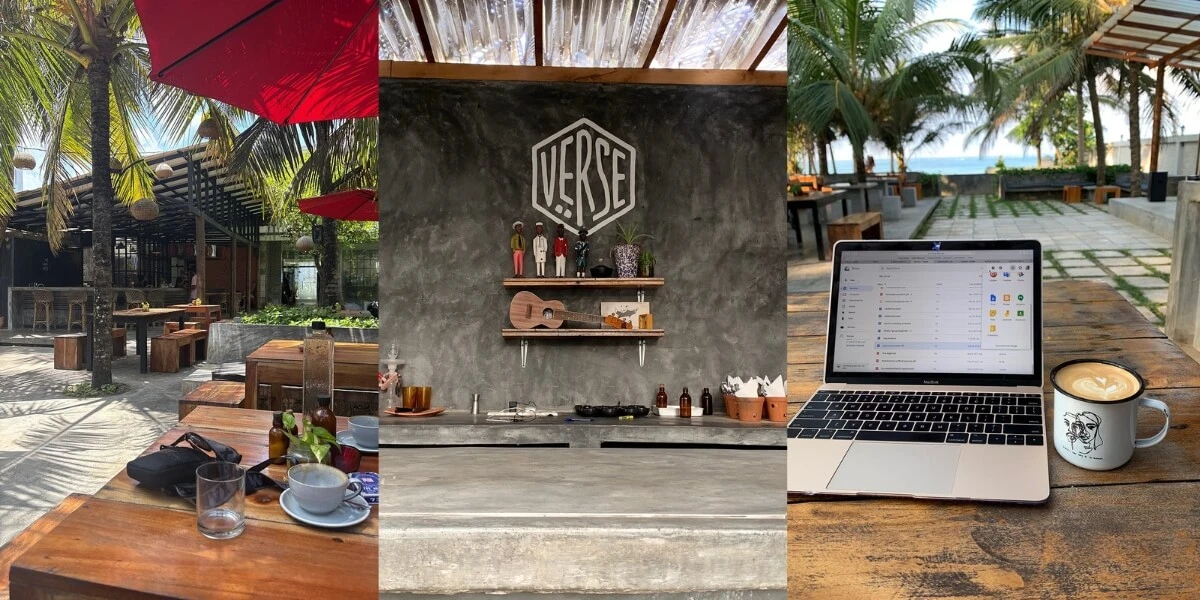
Verse Collective technically sits in Dickwella, just a short walk from Hiriketiya Bay. It has the fastest reported Wi-Fi speeds along this stretch of coast — and a 24/7 generator to make sure you're never caught offline during Sri Lanka's unscheduled power holidays.
The coworking setup offers both indoor desks and outdoor spaces, including swinging chairs and deep sofas for those who do their best thinking horizontally. There's a free VPN included, which is genuinely useful — some services and banking platforms behave strangely on Sri Lankan IP addresses.
Beyond the work infrastructure, Verse is a creative hub. A podcast and music studio. A skate ramp. Community events that actually attract interesting people rather than the usual "networking" events where everyone is selling the same course.
The location is a trade-off: you're a short walk from Hiriketiya's main strip, which means you'll want a scooter for dinner runs. But the beach across the road (Dickwella Beach) is beautiful, less crowded, and perfect for a mid-afternoon reset.
Verdict: Don't count the people you reach. Reach the people who count. Verse reaches the serious remote workers who've been burned by every "coworking with vibes" promise before.
3. Dots Bay House — Free Coworking With a Catch
Wi-Fi Speed: Decent — suitable for browsing, email, lighter video calls Cost: Free (order food or drinks) Power Backup: Limited Air Conditioning: No (open-air setting) Best For: Social workers, morning admin, freelancers who crave atmosphere
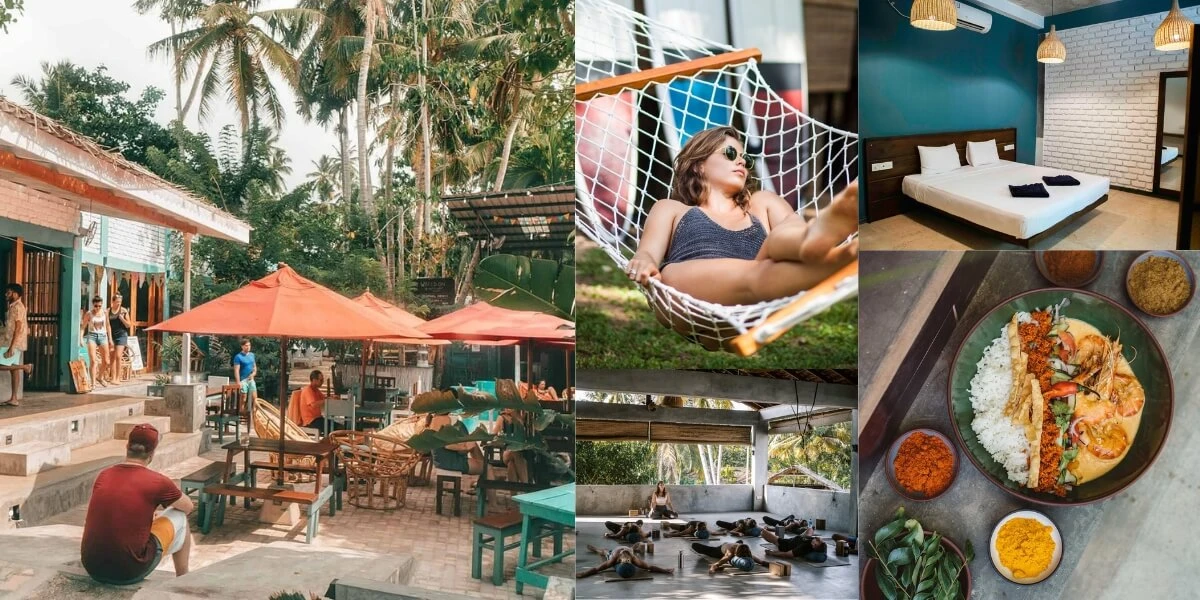
Dots Bay House is the beating heart of Hiriketiya. It has been since 2015, when the whole place was a single shipping container and five rooms. Today, it's a hostel-restaurant-bar-yoga-coworking compound with a pool, weekly parties, live music, and the best egg hoppers in town.
The coworking space is free for anyone who eats or drinks at the restaurant. The food is genuinely good — not just "good for a hostel" — and the garden setting is beautiful. Here's the catch: the coworking area sits near the speakers. When there's a party (which is often during high season), the space is essentially unusable for focused work.
Use Dots for the morning shift. Arrive for breakfast around 8 AM, claim a table, churn through your email and lighter tasks. By noon, transition to a quieter spot for deep work. Return for sundowners and community.
This is not the place for a four-hour coding sprint. This is the place where you meet the person who becomes your business partner, your travel companion, or your friend for the next decade.
Verdict: You can't bore people into buying your product. You can only interest them. Dots doesn't bore anyone. It just might distract you.
4. Homebase Hiriketiya — The Coliving Play
Wi-Fi Speed: Fiber-optic — strong and stable Cost: Included with coliving stay; coworking day passes available (~$5 with coffee) Power Backup: Yes — battery backup for Wi-Fi (up to 4+ hours) Best For: Solo nomads who want community, longer stays (weekly/monthly)
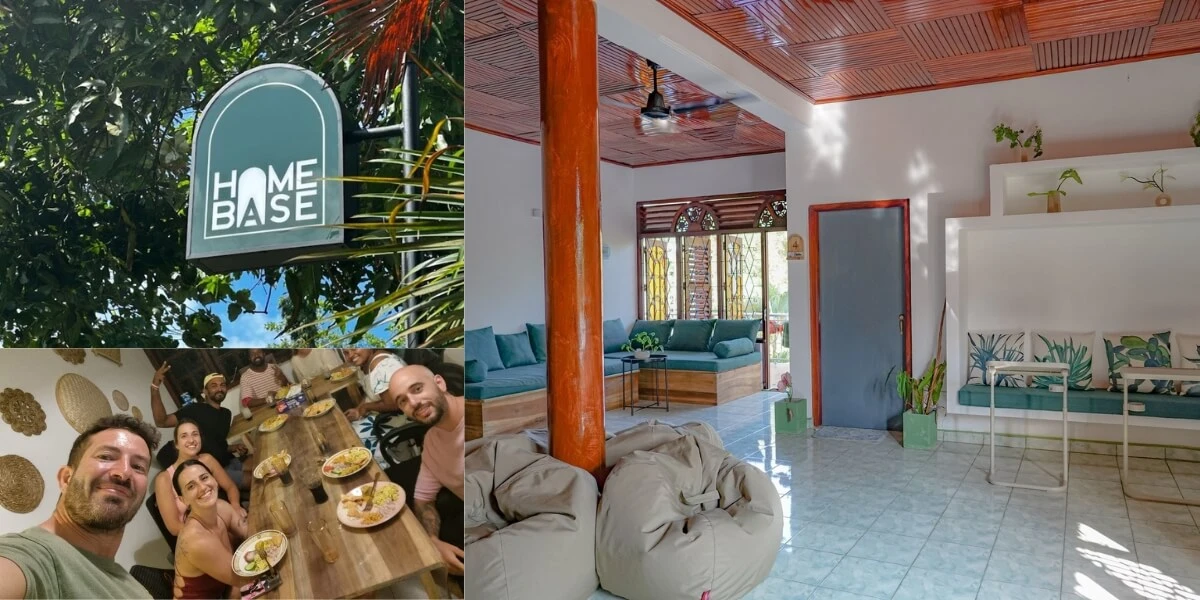
Homebase opened in late 2024 and was purpose-built for remote workers by remote workers. The founders are digital nomads themselves — the kind who've spent enough nights in mouldy guesthouses to know exactly what matters and what doesn't.
Six coworking desks upstairs, with movable desks for your room if you prefer to work privately. Fiber-optic internet. A battery backup system that keeps the router running for hours during power cuts — which is more thoughtful engineering than most five-star hotels in Colombo offer.
The coliving model is intimate: seven bedrooms, three shared kitchens, a community WhatsApp group, and regular events like Skillshare talks and Sri Lankan curry cooking nights. They'll even take you to the Saturday market to buy ingredients.
The location is a seven-minute walk from the beach. Not beachfront, but that's actually a feature — you're removed from the noise and foot traffic that makes some spots feel more like a festival than a workplace.
Verdict: The best ideas come as jokes. Make your thinking as funny as possible. The joke at Homebase is that you came for a week and stayed for a season. Most residents aren't laughing — they're extending their booking.
5. Slow Life Coliving (by Nomadico) — Fiber Under the Palms
Wi-Fi Speed: Fiber-optic — reliable for video calls and heavy uploads Power Backup: Yes — backup generator Air Conditioning: Yes (in coworking area) Best For: Wellness-focused nomads, yoga and surf lifestyle, community-oriented stays
Nomadico's Hiriketiya property brings a tested coliving formula (they also run spaces in Madeira) to Sri Lanka's south coast. The coworking is on the upper floor — light-filled, air-conditioned, with ergonomic chairs and seating for up to eight people.
Fiber-optic internet with backup power means you can take client calls without the anxiety that plagues most of Sri Lanka's coastal towns. Private rooms with desks give you the option to work in solitude when needed.
The emphasis here is on intentional living: yoga, surfing, community dinners, and a pace that genuinely earns the name "slow." Temperatures hover between 26°C and 32°C year-round, and the December-to-April dry season is when the community is fullest and the waves are cleanest.
Verdict: Every advertisement is a long-term investment in the image of a brand. Slow Life invests in the image of a life well-lived — and delivers on the promise.
6. KiXi Cafe — Best Coffee, Decent Wi-Fi, No Pretence
Wi-Fi Speed: Moderate — fine for browsing, email, light tasks Cost: Buy something every hour or so Power Backup: No dedicated backup Air Conditioning: No Open: November to April only (seasonal) Best For: Morning work sessions, writers, people who value great coffee over great bandwidth
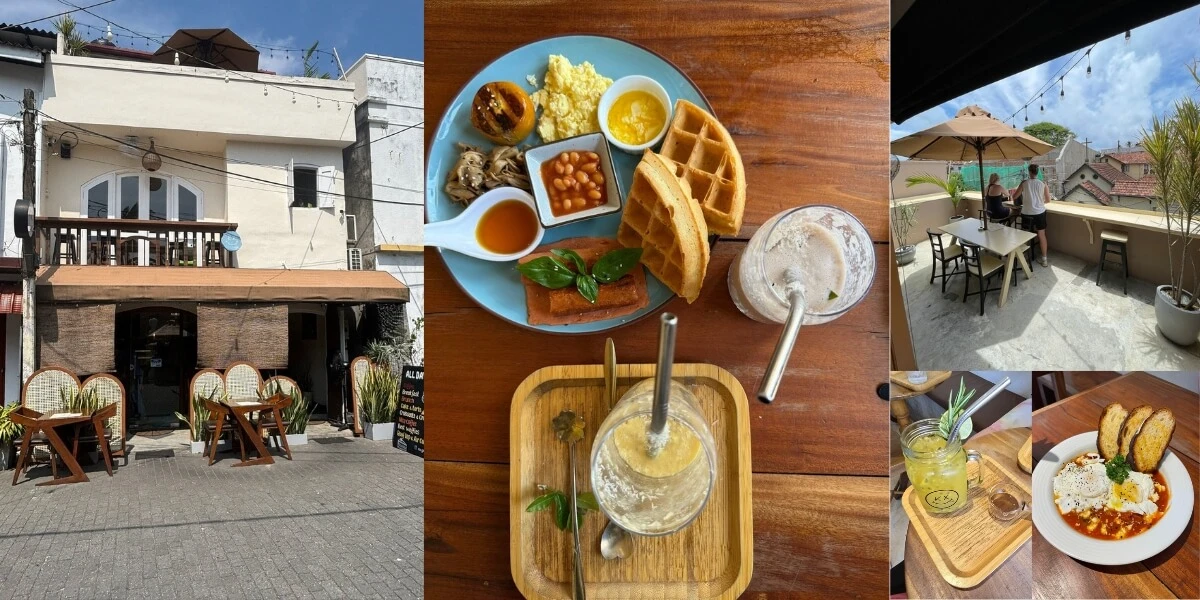
KiXi isn't a coworking space. It's a cafe with an upstairs area where the owners are happy for you to set up your laptop, provided you keep ordering. Given that they serve what many consider the best iced long black in Sri Lanka, this is no hardship.
The food is good. The vibe is unpretentious. The Wi-Fi is decent but not bombproof — don't schedule your most important client presentation from here. Use KiXi for the kind of work that benefits from a change of environment: writing, planning, admin, design work that doesn't need constant cloud syncing.
A word of caution: KiXi only operates during high season. If you arrive in June expecting that iced coffee, you'll find closed shutters.
Verdict: I don't regard advertising as entertainment or an art form, but as a medium of information. KiXi doesn't advertise. The coffee does the talking.
7. Voulez-Vous — The Quiet Dark Horse
Wi-Fi Speed: Reliable — suitable for standard remote work Cost: Included with accommodation; cafe open to visitors Power Backup: Check locally (varies seasonally) Best For: Nomads who want space away from the main Hiriketiya crowd
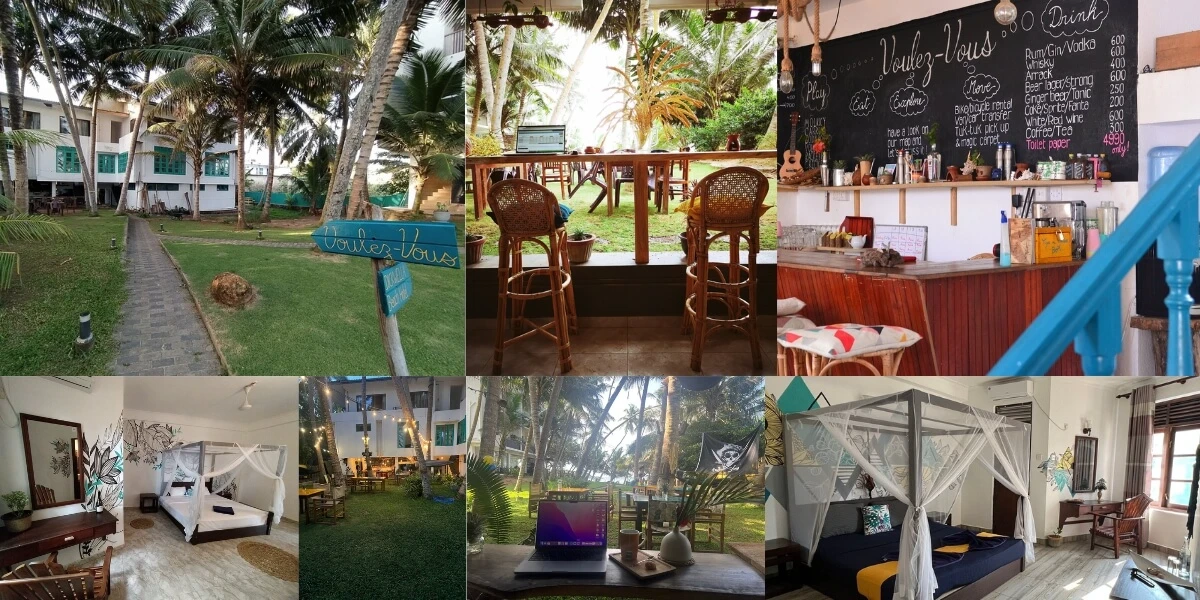
Voulez-Vous is one of Hiriketiya's lesser-known spots, and that's precisely its value. While the more famous names fill up during peak season, Voulez-Vous tends to have space. It's a hotel-hostel with a coworking-friendly setup and a cafe that welcomes laptop workers.
The Wi-Fi is reliable for standard tasks. The atmosphere is calm. The rooms start at around 5,500 LKR per night, making it one of the more affordable accommodation-plus-workspace combinations in town.
If every other spot on this list is full during the December-February rush — and they will be — Voulez-Vous is your safety net.
Verdict: On the average, five times as many people read the headline as read the body copy. When you have written your headline, you have spent eighty cents out of your dollar. Most people never read far enough down a "best coworking" list to find Voulez-Vous. Their loss.
Quick Comparison Table: Hiriketiya Coworking & Wi-Fi at a Glance
SpotWi-Fi SpeedPower BackupACDay Pass CostBest ForClics Coliving~80/40 MbpsYesYes~$6Focused deep work, video callsVerse Collective~100/40 MbpsYes (24/7)PartialVarious packagesLong stays, creatorsDots Bay HouseModerateLimitedNoFree (buy food)Social sessions, morningsHomebaseFiber-opticYes (4+ hrs)Partial~$5Coliving, communitySlow Life (Nomadico)Fiber-opticYesYesWith stayWellness-focused nomadsKiXi CafeModerateNoNoBuy hourlyCoffee lovers, light workVoulez-VousReliableVariablePartialWith stayQuiet alternative
Sri Lanka's New Digital Nomad Visa: A Game-Changer for Hiriketiya (2026)
Here's the development that changes everything for remote workers considering Hiriketiya.
Sri Lanka officially launched its Digital Nomad Visa in February 2026. For the first time, you can legally live and work remotely from the island for up to 12 months — renewable annually — without the old routine of border runs and tourist visa gymnastics.
The key requirements:
You need to be at least 18 years old, earning a minimum of $2,000 per month (recently lowered from a higher threshold), and working exclusively for clients or employers outside Sri Lanka. Spouses and dependents can be included. The visa costs approximately $500 per person, and after the first year, you'll need to register with Sri Lanka's tax authorities for renewal — though foreign-sourced income generally isn't subject to local income tax if you stay under 183 days per year.
The application runs through the Department of Immigration and Emigration's online portal. You'll need a police clearance, medical clearance, proof of international health insurance, and documentation of your income.
What this means for Hiriketiya: The town was already attracting long-stay nomads on tourist visas. Now, with a legal framework designed specifically for remote workers, expect the infrastructure to improve further. More fiber-optic installations. More backup power systems. More coworking spaces competing for your business. The places that invest in reliability now will be the ones that thrive.
Essential Wi-Fi Survival Tips for Working in Hiriketiya
Get a local SIM card immediately. Dialog is generally considered the best network in Sri Lanka. If your phone is unlocked, buy a prepaid SIM at any Dialog shop. If it's locked, pick up an eSIM through Airalo or Holafly before you arrive. This is your insurance policy when the Wi-Fi falters — and it will falter at some point, because this is still a small coastal village, not Singapore.
Test before you commit. Before booking a week at any coliving, spend a day pass testing the Wi-Fi during your actual working hours. Morning speeds and afternoon speeds can be radically different, especially during peak tourist season when every nomad in town is on a Zoom call simultaneously.
Schedule important calls for the morning. Internet across Hiriketiya tends to be most stable before noon. Power cuts are more common in the afternoon. If you have a call that cannot fail, book it early.
Have a backup plan. The best remote workers in Hiriketiya always have two options: their primary workspace and a fallback. If Clics has a power issue, walk to Dots. If Dots is hosting a party, scooter to Verse. Flexibility is the difference between a productive week and a stressful one.
Invest in a portable battery pack for your laptop. When the power goes out and the generator hasn't kicked in yet, the nomad with 40% battery life is the nomad who finishes the deliverable.
Download everything you might need offline. Before you leave your accommodation each morning, sync your files. Download reference materials. Cache your Spotify playlist. The five minutes of preparation saves hours of frustration.
When to Visit Hiriketiya for Remote Work
The south coast dry season runs from November to April — this is when Hiriketiya comes alive. Coworking spaces are fully operational, cafes are open, the digital nomad community is at its peak, and the surf is excellent.
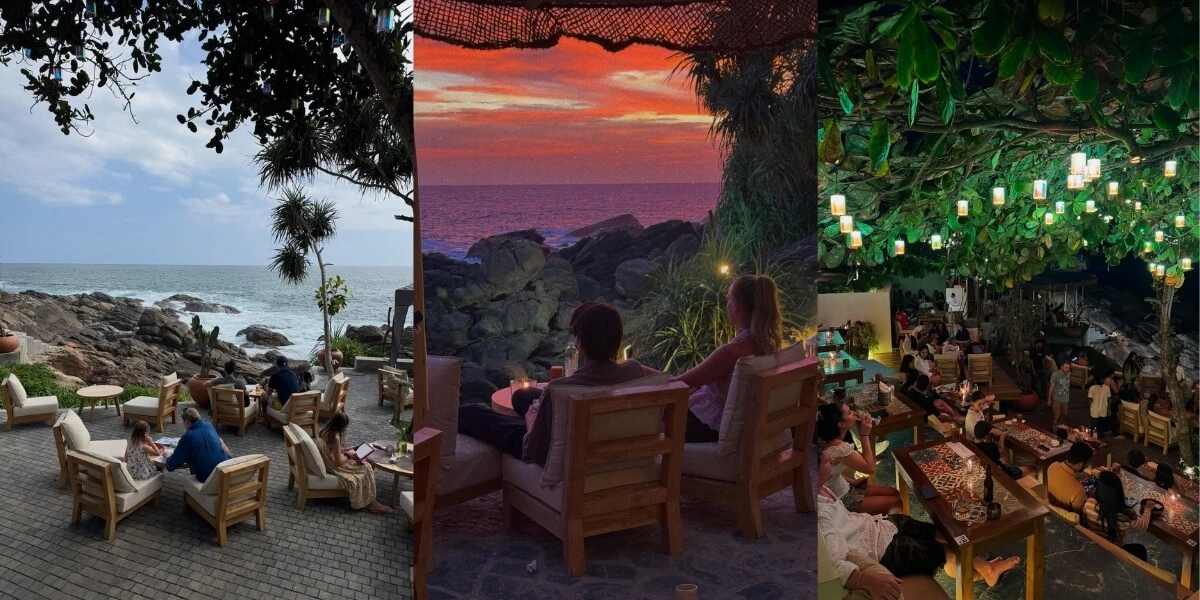
December to February is the busiest period. Coworking spots fill up fast, accommodation prices are at their highest, and you'll need to book popular coliving spaces weeks in advance. The trade-off: the community is most vibrant, the events calendar is fullest, and the weather is nearly perfect.
March to April is the sweet spot if you want good weather, fewer crowds, and lower prices. Most spaces are still open, but the frenzy has calmed.
May to October brings the monsoon to the south coast. Many seasonal spots (including KiXi) close entirely. The town quiets dramatically. Some coliving spaces remain open, but the nomad community thins out considerably. If you're visiting during this period, consider the east coast instead — Arugam Bay's high season conveniently begins as Hiriketiya's ends.
Cost of Living: What a Month in Hiriketiya Actually Costs a Remote Worker
One of Hiriketiya's strongest cards against Bali and Thailand is affordability — though it's no longer the backpacker bargain it was five years ago. Touristy cafes along the beach charge prices that would feel normal in Lisbon or Barcelona. But step one street back, and you're eating spectacular rice and curry for $2-3.
Here's a realistic monthly breakdown for a single remote worker during high season:
Accommodation: $400–1,200 (private room in a guesthouse at the low end; private room in a coliving at the high end)
Coworking: $0–150 (free at Dots with food purchases; monthly packages at dedicated spaces)
Food: $300–500 (mix of local restaurants and western-style cafes)
Scooter rental: $60–100
SIM card / data: $5–15
Miscellaneous (laundry, surf lessons, day trips): $100–200
Total: $865–$2,165/month
A comfortable, productive month in Hiriketiya — with good coworking, decent accommodation, and the occasional splurge on a sunset cocktail — costs most people around $1,200 to $1,500.
The Bottom Line
Hiriketiya isn't perfect. The internet isn't Tokyo. The power grid isn't Berlin. And anyone who tells you remote work from a tropical island is all smoothie bowls and sunset calls is selling you something.
But here's what Hiriketiya does offer: a genuine community of interesting, driven people. A pace of life that makes you better at your work, not worse. Surf in the morning, deep work in the afternoon, and the kind of evenings you'll remember for decades.
The Wi-Fi works — if you know where to go. You now know where to go.
David Ogilvy once wrote: "The consumer is not a moron. She is your wife." We'd update that for 2026: the digital nomad is not a tourist. She's a professional who happens to like warm water. Treat her internet connection accordingly, and she'll stay for months.
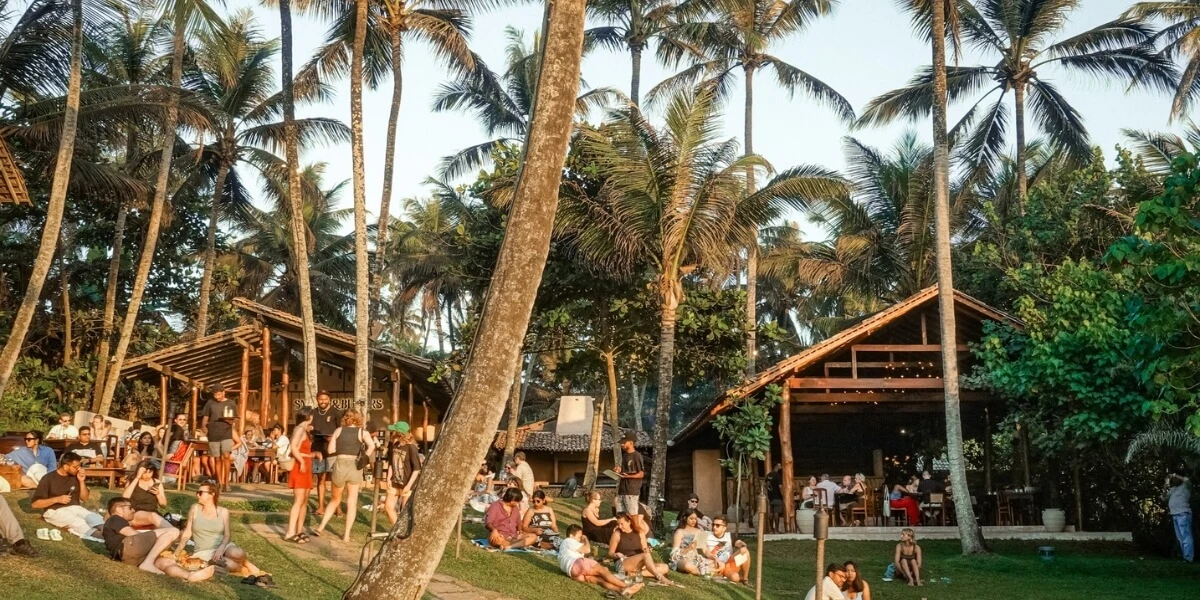
Hiriketiya is learning this lesson faster than anywhere else in Sri Lanka.
Frequently Asked Questions
What is the fastest Wi-Fi in Hiriketiya? Verse Collective offers the fastest reported speeds at approximately 100 Mbps download and 40 Mbps upload with a 24/7 backup generator. Clics Coliving follows closely at around 80 Mbps download and 40 Mbps upload.
Can I work remotely from Hiriketiya legally? Yes. Sri Lanka launched its Digital Nomad Visa in February 2026, allowing remote workers to stay legally for up to 12 months. You need a minimum monthly income of $2,000 and must work exclusively for foreign clients or employers.
Is the internet in Hiriketiya reliable enough for Zoom calls? At the top coworking spaces (Clics, Verse Collective, Homebase, Slow Life), yes. These spots use fiber-optic connections and have backup power. At general cafes and guesthouses, quality varies significantly.
How much does coworking cost in Hiriketiya? Day passes range from free (Dots Bay House, with food purchase) to approximately $5–6 at Clics and Homebase. Monthly packages at dedicated spaces vary but are significantly cheaper than equivalent options in Bali or Thailand.
What is the best time to visit Hiriketiya as a digital nomad? November to April (dry season) is ideal. The sweet spot for value is March to April — good weather, lower prices, and all facilities still operational.
What mobile network should I use in Hiriketiya? Dialog is widely considered the best mobile network in Sri Lanka. Get a local SIM card or use an eSIM provider like Airalo for reliable backup connectivity.
Are there power cuts in Hiriketiya? Yes, power cuts still occur, particularly during midday hours. The best coworking spaces have generators or battery backup systems. Always carry a portable charger and save your work frequently.
Places Mentioned(5)
Clics Coliving Coworking
Sri Lanka
Dots Bay House
Hiriketiya Beach, Dikwella 81200, Sri Lanka
Homebase Hiriketiya Coliving
Nilwella Road, Hiriketiya Beach Rd, Hiriketiya 81200, Sri Lanka
Slow Life Coliving & Coworking by Nomadico
No.1, Bo Sevana, Dodampahala, Hiriketiya Rd, Dikwella, Sri Lanka
Voulez-Vous (closed)
112 New Tangalle Rd, Dikwella 81200, Sri Lanka
Tap a place card to see more details • Swipe to see all 5 places