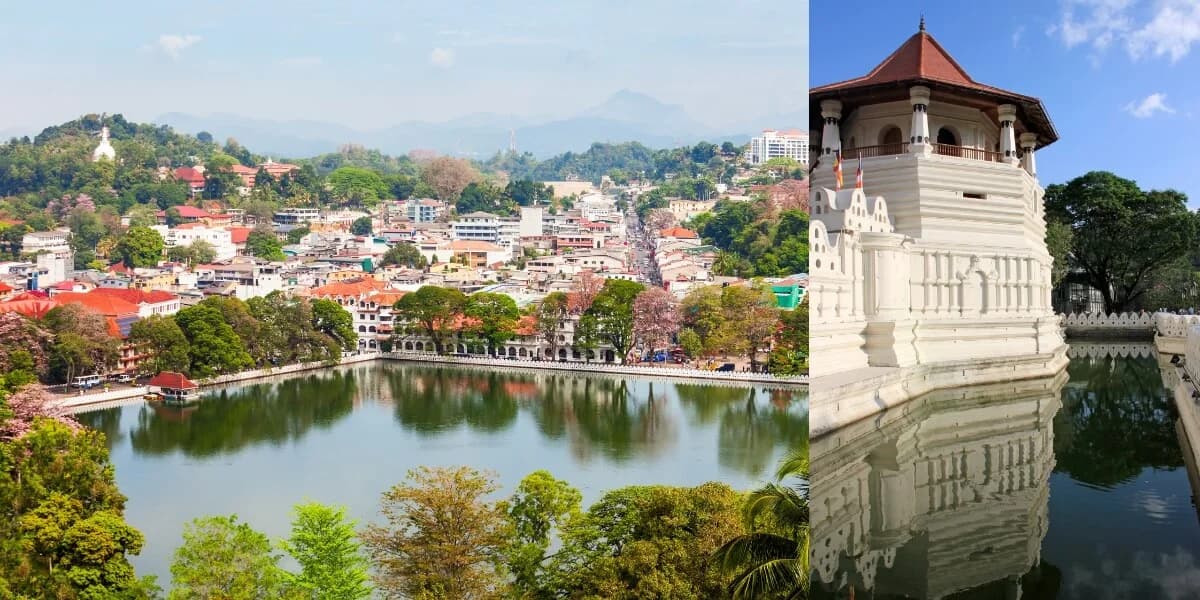
The Honest Truth About Kandy
Read enough travel blogs about Kandy and you'll encounter two completely different cities.
In one version, Kandy is Sri Lanka's spiritual heart — a UNESCO World Heritage city cradled by green hills, home to the country's most sacred Buddhist relic, ringed by a picture-perfect lake, and the starting point for one of the world's great train journeys. In the other version, Kandy is loud, congested, underwhelming once you've seen the temple, and a place to spend one night before catching the morning train to Ella.
Both versions are accurate. Kandy is the rare destination where your experience depends almost entirely on what you know before you arrive, how you structure your time, and whether you understand that the city's rewards are quieter and more layered than its frustrations.
This guide is designed to tip the balance toward the first version.
A Very Brief History (That Explains Everything)
Kandy's character makes more sense once you know what it survived.
Founded in the 14th century as the capital of the Kandyan Kingdom, this hill-country city was the last independent kingdom on the island — the one place the Portuguese and the Dutch could never conquer. While the coastal regions fell to successive European colonial powers, Kandy held out for over three centuries, defended by its mountainous terrain and the fierce independence of its kings.
The British finally took the city in 1815, making Kandy the last part of Sri Lanka to surrender colonial rule. The Kandyan Convention that formalised the handover was signed in the very audience hall that tourists now walk past on the way to the Temple of the Tooth.
That history of defiant independence still runs through Kandy's identity.
This is a city that considers itself the keeper of Sinhalese Buddhist culture — the guardian of traditions that predate European contact by centuries. The Temple of the Tooth isn't just a tourist attraction; it's a living symbol of Kandyan sovereignty and national identity.
Understanding this changes how you experience it.
The Temple of the Tooth (Sri Dalada Maligawa)

Entry: ~2,000 LKR ($6–7). Additional 500 LKR for camera permission.
Hours: 5:30 AM–8:00 PM daily. Puja (worship) ceremonies at 5:30 AM, 9:30 AM, and 6:30 PM.
Time needed: 1–2 hours.
The Temple of the Sacred Tooth Relic is Sri Lanka's most important Buddhist site and the reason Kandy is a UNESCO World Heritage city. It houses a relic believed to be an actual tooth of the Buddha, brought to Sri Lanka from India in the 4th century CE, hidden in the hair of a princess.
A few things to understand before you visit.
You will not see the tooth. The relic is kept inside a series of nested golden caskets within the inner sanctum, behind heavy doors. During the thrice-daily puja ceremonies, the doors to the inner chamber are opened, and devotees file past — but the tooth itself remains inside the casket. What you experience is not a viewing but a proximity to something hundreds of millions of people consider one of Buddhism's holiest objects.

The puja ceremonies are the real experience. The evening puja (6:30 PM) is the most atmospheric. Drums beat in rhythmic waves. The air fills with incense and the scent of lotus offerings. A line of devotees — families, monks, elderly pilgrims — moves slowly past the inner chamber, pressing their palms together. The emotion in the room is palpable and sincere. If you visit the temple outside puja times, you'll see the architecture but miss the soul.
Dress modestly. Shoulders and knees must be covered. Shoes must be removed at the entrance (a shoe storage area is provided). White clothing is traditional for temple visits in Sri Lanka but not required for tourists. The temple is an active place of worship — treat it as you would any other house of prayer.

The temple complex is larger than you expect. The tooth shrine is the centrepiece, but the surrounding Royal Palace complex includes the King's Palace (now an archaeological museum), the Royal Audience Hall with its intricately carved wooden pillars, the Maha Vishnu Temple, and the World Buddhist Museum. Allow time to explore beyond the main shrine.
Go early or go for the evening puja. Between 10 AM and 4 PM, the temple is at its busiest with tour groups. Early morning (soon after the 5:30 AM opening) offers the most peaceful experience. The evening puja combines atmosphere with ritual.
Beyond the Temple: What Else to Do
The Temple of the Tooth is the headline, but Kandy has enough to fill two full days if you know where to look. Most of it lies outside the chaotic city centre.
Royal Botanic Gardens, Peradeniya
Entry: ~2,000 LKR ($6–7). The 644 bus from Kandy Clock Tower costs about 20 LKR, or a tuk-tuk runs $2–3.

Time needed: 2–3 hours minimum.
These gardens are, without exaggeration, among the finest botanical gardens in Asia. Originally the private pleasure gardens of Kandyan royalty, they were transformed by the British in 1821 into a 60-hectare botanical collection that now houses over 4,000 species of plants and 10,000 individual trees.
The avenue of royal palms is the most photographed feature — a towering double row of palms planted in 1885 that frames the central walkway. But the gardens reward slow exploration: the giant Javan fig tree (one of the largest in the world, its canopy covering 2,500 square metres), the orchid house, towering bamboo groves along the Mahaweli River, the spice garden section where you can see cinnamon, cardamom, and cloves growing, and the cannonball tree planted by King George V and Queen Mary in 1901.
Sri Lankan families come here for weekend picnics. Young couples stroll the paths hand-in-hand. The contrast with the hectic energy of Kandy's city centre makes Peradeniya feel like a different world. If you have time for only one thing beyond the Temple of the Tooth, make it this.
Walk Around Kandy Lake
Cost: Free.
Time needed: 45 minutes to 1 hour.

Kandy Lake sits at the centre of the city, a calm rectangle of water surrounded by trees, with the Temple of the Tooth occupying its northern shore. The lake was created in 1807 by the last King of Kandy — it looks natural but is entirely man-made.
The shaded walking path around the lake is Kandy's most pleasant stroll. It's best in the early morning (before the heat builds) or late afternoon (when the light turns golden and the temple reflects in the water). The path is flat, mostly shaded, and about 3.5 kilometres around the full circuit.
The Three Temple Loop
Cost: Small donation at each temple (~200–500 LKR each). Tuk-tuk for the loop: ~$10–15.
Time needed: Half day with transport.

Leave the city and the rewards multiply. The Three Temple Loop is a circuit of three 14th-century Buddhist temples in the countryside south of Kandy — Gadaladeniya, Lankathilaka, and Embekke — each representing a different architectural tradition and set among rice paddies and green hills.
Gadaladeniya Viharaya is built on a rocky outcrop in a South Indian-influenced stone style, with gilded seated Buddha statues inside.
Lankathilaka is perched dramatically on a rock with panoramic countryside views and a towering four-storey image house.
Embekke Devalaya is famous for its extraordinary medieval woodcarvings — some of the finest in Sri Lanka, covering the pillars and beams of the audience hall with animals, dancers, soldiers, and mythological creatures carved 700 years ago with astonishing precision.
The Three Temple Loop is the thing most visitors to Kandy miss, and the thing most people who did it remember best. Combine it with the Botanical Gardens (they're in the same direction from Kandy) for a full-day excursion.
Kandyan Dance Performance
Cost: ~1,500–2,500 LKR ($5–8).
Time needed: 1 hour (usually 5:00 PM or 5:30 PM).

"Cultural shows" are usually touristy and forgettable. The Kandyan dance performance is the exception. Performed at the Kandy Lake Club or several other venues around the city, the show features traditional Kandyan dance (elaborate costumes, vigorous rhythmic movement), drumming that reverberates in your chest, acrobatics, and a fire-walking finale that is genuinely startling.
The tradition of Kandyan dance is centuries old, rooted in religious ritual and royal court performance. The dancers and drummers are typically trained from childhood. Is it performed primarily for tourists now? Yes. Is it still impressive, athletic, and worth an hour of your time? Also yes.
Most performances are timed to end before the evening puja at the Temple of the Tooth, so you can do both in sequence.
Udawattakele Forest Reserve
Cost: ~$5 entry fee.
Time needed: 1–2 hours.

A 104-hectare tropical forest sanctuary sitting directly behind the Temple of the Tooth, in the middle of the city. The contrast is surreal: step off a busy street and within minutes you're on a shaded trail surrounded by towering trees, giant lianas, and birdsong. Over 80 bird species have been recorded here, making it a serious birdwatching destination.
The trails are well-marked but can be muddy. Leech socks or tucked-in trousers are advisable during the wet season. Bring water and mosquito repellent.
Kandy Central Market
Cost: Free to browse.
Time needed: 30–60 minutes.

The main market near the train station is where Kandy's real life happens — stalls piled with tropical fruits, vegetables, dried fish, spices, and handmade crafts. The spice section is especially worth exploring: cinnamon, cloves, cardamom, vanilla, and nutmeg in quantities and at prices that make home-country supermarkets feel absurd.
The market is also where you'll find some of Kandy's cheapest and most authentic food. Small stalls serve rice and curry, short eats (savoury snacks), and fresh fruit juice.
The Esala Perahera: Sri Lanka's Greatest Festival

When: Ten nights in July or August, ending on the Esala full moon. In 2026, scheduled for approximately August 18–28.
Where: Streets of central Kandy, centred on the Temple of the Tooth.
If there is one event that justifies planning an entire Sri Lanka trip around a date, it's the Kandy Esala Perahera.
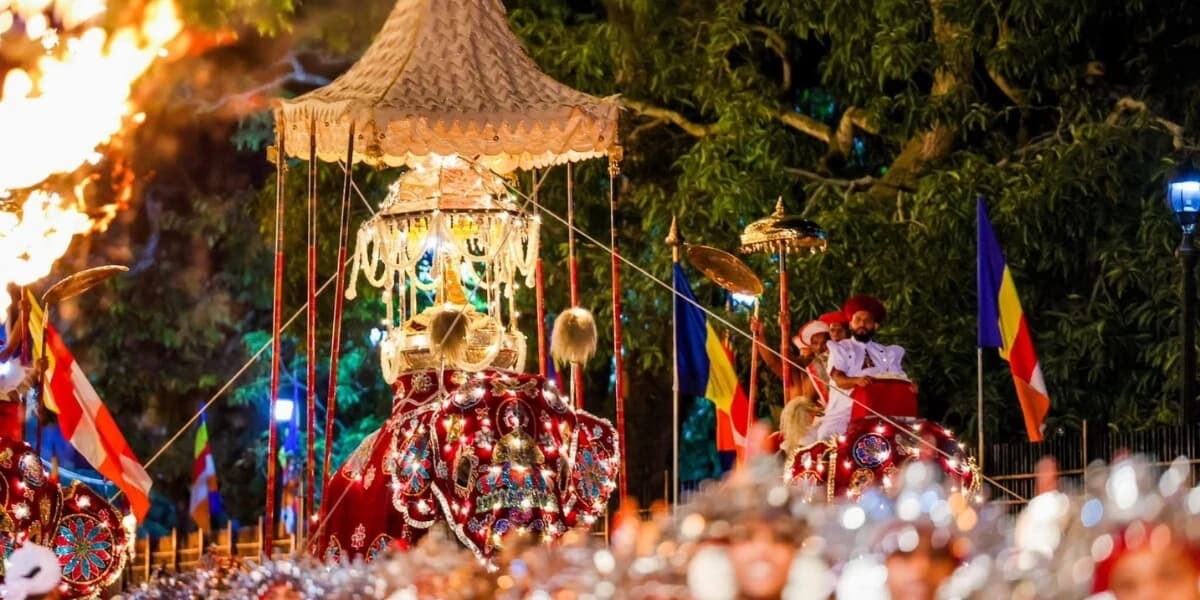
For ten consecutive nights, Kandy transforms. Thousands of dancers, drummers, whip-crackers, fire-jugglers, and acrobats — wearing elaborate traditional costumes — parade through streets lit by torches and lined with hundreds of thousands of spectators. Over a hundred decorated elephants march in the procession, the most magnificent bearing a golden casket containing a replica of the Sacred Tooth Relic.
The processions start around 7 PM and grow larger and more spectacular each night, culminating in a grand final procession that lasts approximately five hours. A water-cutting ceremony at the Mahaweli River marks the close of the festival.
The practical reality: The Perahera is extraordinary, but it requires planning. Accommodation in Kandy books out months in advance during the festival. Prices double or triple. The city centre closes to vehicles hours before the procession begins — in recent years, entrances were closed by 3–5 PM due to overwhelming crowds.
Reserved seating is available and strongly recommended. Temporary grandstands are erected along the procession route, with tickets sold online and through hotels. Seats closer to the Temple of the Tooth are the most expensive but offer the best views. Without reserved seating, you'll be standing in crowds many people deep.
Is it worth the logistics? Unequivocally yes. The Esala Perahera is one of Asia's oldest and most spectacular religious festivals, dating back to the 3rd century BCE. There is no equivalent experience in Sri Lanka or, arguably, anywhere else.
Where to Eat
Kandy's food scene is less developed than Colombo's or Galle's, but honest Sri Lankan food is excellent and cheap throughout the city.

For authentic Sri Lankan food: Balaji Dosai for South Indian–style dosa and vegetarian food (beloved by locals). The Central Market area for short eats and rice-and-curry lunches under $2. Bakery culture is huge in Kandy — the Bake House and other local bakeries sell savoury pastries, rolls, and curry-stuffed buns that are the Sri Lankan equivalent of grabbing a sandwich.
For atmosphere: Helga's Folly — a gloriously eccentric converted mansion that looks like a fever dream decorated by a maximalist art collector. The food is fine; the interior is the reason to go. Café Secret Alley and Hideout Lounge for Western-style café food with reliable coffee.

For lakeside dining: Several restaurants along Kandy Lake offer rooftop terraces with views of the water and the Temple of the Tooth lit up at night. The food tends toward tourist-friendly prices (still cheap by international standards) but the setting is worth one evening meal.
Budget: A full rice-and-curry meal at a local restaurant costs 400–800 LKR ($1.50–3). Short eats (snacks) from bakeries: 50–150 LKR each. A meal at a tourist-oriented restaurant: $5–15.
Where to Stay
Near the Lake and Temple (Most Convenient)
Budget ($15–30/night): Guesthouses within walking distance of the lake. Kandy has a solid backpacker infrastructure with numerous small guesthouses on the streets climbing the hills above the lake.
Mid-range ($40–80/night): The historic Hotel Suisse sits directly opposite the Temple of the Tooth, with colonial-era character and an unbeatable location. Several converted residences on the hillsides above the lake offer balconies with city-and-lake views at reasonable prices.

Luxury ($100–250+/night): The Kandy House (a converted 18th-century Kandyan chief's mansion in the countryside outside the city, $150–250) offers the most atmospheric luxury experience. Mahaweli Reach Hotel offers modern comfort with river views.
Outside the City Centre (Peace and Views)
The hills surrounding Kandy are dotted with guesthouses and small hotels that offer mountain views and quiet surroundings, typically 15–30 minutes from the centre by tuk-tuk. These are worth considering if you have a driver or don't mind tuk-tuk commutes — you trade convenience for significantly better settings and prices.
During the Perahera
Book 2–3 months in advance minimum. Properties with views of the procession route charge premium rates but offer a spectacular experience. Some rooftop restaurants and hotels sell viewing packages for the festival.
Practical Information
Getting to Kandy:
From Colombo: Train (2.5–3 hours, scenic route through the hill country, $2–5 depending on class). Bus (3–4 hours, frequent departures). Private car (3 hours via the Kandy road, $40–60).
From the airport (Negombo area): 3.5–4 hours by car ($50–70). No direct train — you'd need to go via Colombo.
From Sigiriya/Dambulla (Cultural Triangle): 2.5–3 hours by car. Bus available but slower.
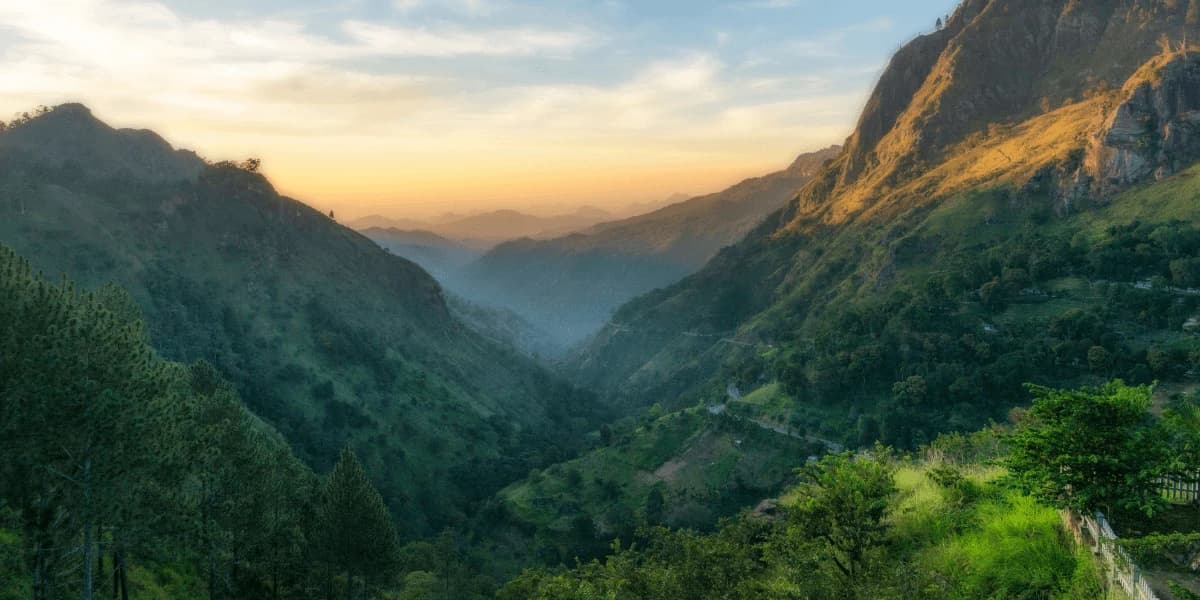
The Kandy to Ella train: Kandy is the starting point for what many consider the world's most scenic railway journey. Trains depart for Ella daily, taking 6–7 hours through tea plantations, mountain passes, and spectacular hill-country scenery. See our dedicated Kandy to Ella train guide for full details on booking, classes, and what to expect.

Getting around Kandy: The city centre is walkable, though hilly. Tuk-tuks are the standard transport — use PickMe to avoid fare negotiations. The 644 bus to Peradeniya Botanical Gardens is cheap and reliable.
How long to stay: Two nights is the sweet spot. Day 1: Temple of the Tooth (evening puja), Kandy Lake walk, Kandyan dance show. Day 2: Peradeniya Botanical Gardens + Three Temple Loop, or Udawattakele Forest. Day 3: Morning train to Ella.
One night is sufficient only if you limit yourself to the temple and a quick lake walk. Three nights make sense if you want to explore the countryside or if you're an unhurried traveller who prefers depth over coverage.
The traffic warning: Kandy's city centre traffic is genuinely terrible. The city sits in a valley with limited road access, and rush hours (roughly 7–9 AM and 4–7 PM) can turn a 10-minute tuk-tuk ride into 40 minutes. Plan your timing accordingly, especially if catching a train.
Best months: January to April (dry season in the hill country). July–August if you want to see the Esala Perahera. Avoid the heaviest monsoon months (October–November), when rain can be persistent.
Altitude: Kandy sits at approximately 500 metres above sea level — cooler than the coast but not as dramatically so as Ella (1,041m) or Nuwara Eliya (1,868m). Expect daytime temperatures of 25–30°C and pleasant evenings around 18–22°C. You won't need a jacket, but you'll notice the relief from the coastal humidity.
The Two-Day Kandy Itinerary
Day 1: The City
Morning: Walk around Kandy Lake in the early morning light. Browse the Central Market for fruit, spices, and people-watching.
Afternoon: Explore the Royal Palace complex and the World Buddhist Museum at your own pace.
5:00 PM: Kandyan dance performance (1 hour).
6:30 PM: Evening puja at the Temple of the Tooth. The drumming, incense, and flowing crowd of devotees make this the most powerful way to experience the temple.
8:00 PM: Dinner at a lakeside restaurant with the temple lit up across the water.
Day 2: Beyond the City
Morning: Tuk-tuk or bus to the Royal Botanic Gardens at Peradeniya. Spend 2–3 hours. The morning light through the palm avenue is gorgeous.
Midday: Continue to the Three Temple Loop (Gadaladeniya, Lankathilaka, Embekke). Your tuk-tuk driver can take you on the circuit.
Late afternoon: Return to Kandy. Optional: walk the Udawattakele Forest for a green escape.
Evening: Pack for your morning train to Ella.
Why Kandy Divides People (And How to Be on the Right Side)
The travellers who dislike Kandy almost always share the same story: they arrived with one night, saw the temple during a busy mid-afternoon hour, found the city noisy and traffic-clogged, and caught the train to Ella the next morning feeling they hadn't missed much.
The travellers who love Kandy tell a different story: they went to the evening puja and felt the weight of centuries of devotion. They spent a morning at Peradeniya and realised it was one of the great gardens of the world. They took a tuk-tuk to the Three Temple Loop and found medieval woodcarvings in the countryside that rivalled anything in the Cultural Triangle. They watched Kandyan dancers pound the stage with an athleticism and intensity that no video had prepared them for.
Same city. Different approach. The variable is time, timing, and knowing where to look.

Give Kandy two days. Go to the evening puja. Get out of the city centre. And understand that Sri Lanka's cultural capital doesn't perform for tourists — it simply continues doing what it has done for seven centuries, and rewards those who pay attention.
This article is part of our comprehensive Sri Lanka travel series. For the onward journey from Kandy, see our Kandy to Ella train guide. For inland heritage sites near Kandy, see our Cultural Triangle guide. For route planning, see our Sri Lanka 10/14-day itinerary.
Key Takeaways for Quick Reference:
Temple of the Tooth: ~2,000 LKR ($6–7). Evening puja (6:30 PM) is the essential experience. Cover shoulders and knees. Remove shoes.
Peradeniya Botanical Gardens: ~2,000 LKR ($6–7). 60 hectares, 4,000+ species. Allow 2–3 hours. Bus 644 from Kandy Clock Tower (20 LKR) or tuk-tuk ($2–3).
Three Temple Loop: Half-day tuk-tuk trip ($10–15). Gadaladeniya, Lankathilaka, Embekke. Medieval architecture and woodcarvings in the countryside. Most people's favourite thing they almost skipped.
Kandyan Dance: ~$5–8. 1 hour. Time it before the 6:30 PM puja for a perfect double feature.
Esala Perahera: July/August (2026: ~Aug 18–28). Book accommodation months ahead. Reserved seating recommended. Asia's most spectacular Buddhist festival.
Kandy Lake walk: Free. 3.5 km loop. Best at sunrise or late afternoon.
How long: 2 nights ideal. 1 night bare minimum. 3 nights for depth.
Getting here: Train from Colombo (2.5–3 hrs). Car from airport (3.5–4 hrs).
Getting to Ella: Train (6–7 hrs), the world-famous scenic railway. See our dedicated guide.
Traffic: City centre is congested. Avoid rush hours. Use PickMe.
Food: Rice and curry $1.50–3. Central Market for cheap eats. Helga's Folly for atmosphere.
Climate: 25–30°C days, 18–22°C evenings. Cooler than coast but not cold. No jacket needed.
Places Mentioned(9)
Sri Dalada Maligawa
Kandy, Sri Lanka
Kandy Lake
Kandy Lake, Kandy, Sri Lanka
Royal Botanic Gardens, Peradeniya
Royal Botanic Gardens, Kandy - Colombo Rd, Kandy 20400, Sri Lanka
Balaji Dosai
03 DS Senanayake Veediya, Kandy 20000, Sri Lanka
Sri Lankathilake Rajamaha Viharaya
6HM7+JX7, Daulagala, Sri Lanka
Gadaladeniya Raja maha viharaya
Gadaladeniya Paranapattiya Rd, Sri Lanka
Embekka Dewalaya
210/e, embekka, handessa, Kandy 20480, Sri Lanka
Udawatta Kele Sanctuary
Forest Department Office, Sangamitta Mawatha, Kandy 20000, Sri Lanka
Municipal Central Market - Kandy
144 Central Maket, Kandy 20000, Sri Lanka
Tap a place card to see more details • Swipe to see all 9 places