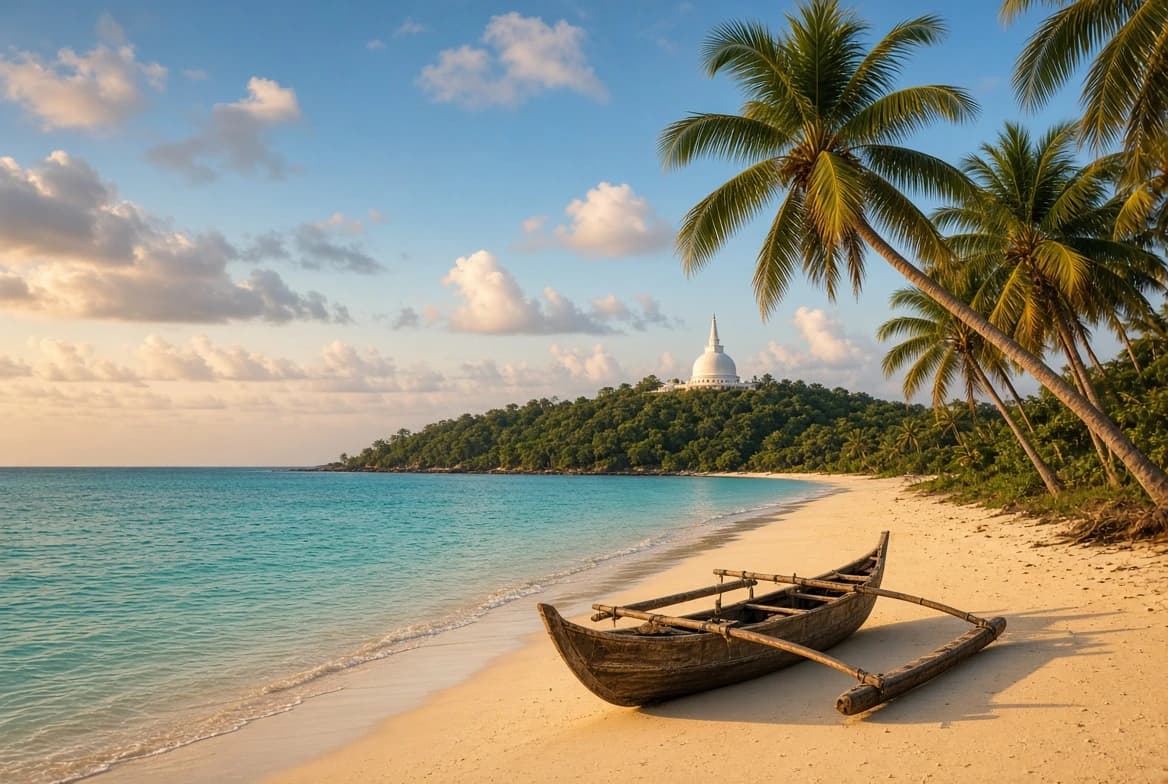
If someone told you August is “monsoon season” in Sri Lanka, they were only half right. The island runs two monsoons on opposite coasts. While the west and south still catch the southwest rains, the east and north are usually having one of their cleanest, driest months of the year.
That single fact changes the whole trip. The December-to-March route — Galle, Mirissa, the south-coast surf towns — is the wrong template. Flip the map. Build August around Trincomalee, Nilaveli, Pasikuda, Arugam Bay, the Cultural Triangle, Kandy, and, if you have time, Jaffna.
This guide covers weather by region, what August 2026 actually looked like on the ground, the festivals that make the month special, and itineraries that work with the rain instead of against it.
Is August a good time to visit Sri Lanka?
Yes — if you choose the right side of the island.
August is one of the strongest months for:
East-coast swimming and snorkelling
Surfing at Arugam Bay
Whale watching off Trincomalee
The Elephant Gathering at Minneriya
Kandy’s Esala Perahera
The start of Jaffna’s Nallur Festival
It is a weaker month for long, lazy beach days in Mirissa, Unawatuna, Bentota or Colombo. You can still go there. You just should not plan the trip around those beaches.
Sri Lanka weather in August
The two-coast rule
Sri Lanka’s climate is not one climate. From May to September the southwest monsoon (Yala monsoon) soaks the west, the southwest, and parts of the hill country. In the same months the east coast and much of the north sit in their dry season.
August sits near the tail of that southwest monsoon. Rain on the wet side is often a burst, not an all-day curtain. Mornings can still be usable in Galle or Colombo. But if your holiday is built around swimming, the east coast is the safer bet.
Averages help you plan. They are not a forecast for your Tuesday.
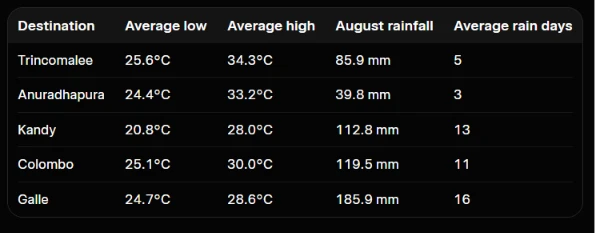
August climate averages
Long-term normals via the World Meteorological Organization’s World Weather Information Service:
Weather by region
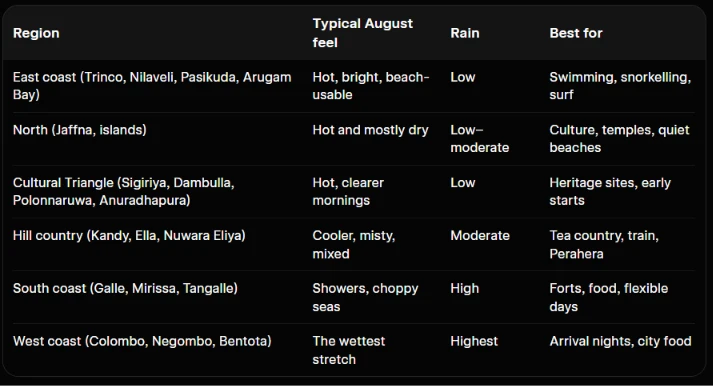
Daytime highs on the coasts sit around 30–34°C. Nights stay warm at 24–27°C. Up in Nuwara Eliya you can want a light layer after sunset.
Humidity is the part the tables underplay. On the east coast it is hot-and-sticky, not hot-and-crisp. Air-conditioning in the room is not a luxury in Trincomalee or Arugam Bay. It is the difference between sleeping and staring at the ceiling fan.
What late August 2026 has felt like
As of 29 August 2026, the Department of Meteorology’s pattern matched the seasonal script: showers at times in the Western and Sabaragamuwa provinces and in Galle, Matara, Kandy and Nuwara Eliya; mainly dry weather over much of the rest of the island.
Southwesterly winds have been brisk, and several sea areas have been rough.
That is useful colour, not a reason to rewrite your whole plan. August 2026 has lined up closely with the long-term averages. The east-and-culture route still holds.
Sea conditions
In August, treat the sea as two different oceans.
East-coast bays around Nilaveli, Uppuveli and Pasikuda are typically calmer and clearer. This is the swimming and snorkelling window.
The south and west often see swell, stronger wind and the odd surge near shore. Fine for watching waves. Less fine for a family float.
Arugam Bay is the exception on the east: the point break is working, which is exactly why surfers come.
Best places to visit in Sri Lanka in August
East coast: the main event
If you do one thing differently from a winter itinerary, make it this: give the east coast real time.
Trincomalee, Nilaveli and Uppuveli
Calm, shallow water and a slower pace than the south-coast strip. Nilaveli is the family beach. Uppuveli sits closer to town. Pigeon Island, a short boat ride off Nilaveli, is the snorkel day everyone remembers if the sea stays kind — turtles, reef fish, water you can actually see through.
Pasikuda
A wide, shallow bay that feels purpose-built for people who want to stand in the sea and talk for an hour. Good for couples and families who do not need a surf town.
Arugam Bay
Sri Lanka’s surf capital, and August sits inside peak season (roughly April to October). Main Point is the long right-hander intermediates and advanced surfers talk about. Whiskey Point and Peanut Farm are kinder if you are still finding your feet. The town itself is backpacker-meets-surf-camp: smoothie bowls, board racks, late breakfasts, and a livelier night than Nilaveli.
Stay at least three nights in Arugam Bay. The drive is not short. You want time to wait for a good morning.
Cultural Triangle: go early, then hide from the sun
August is a strong month for Sigiriya, Dambulla, Polonnaruwa and Anuradhapura. Rain days are few. The problem is heat, not weather.
Climb Sigiriya at opening, not at 11am. The rock is a furnace by late morning, the steps are exposed, and the view is the same at 7:30. Dambulla’s cave temples are a smarter midday stop — you are indoors, and you will need the shoulders-and-knees outfit anyway. Polonnaruwa is best by bicycle in the first half of the day.
Anuradhapura in August is quietly excellent: around 40 mm of rain and only a handful of wet days in a normal year. Bring more water than you think.
Kandy: August 2026 was a Perahera year
Kandy is always worth a night or two. In August it can be the reason you booked the flight.
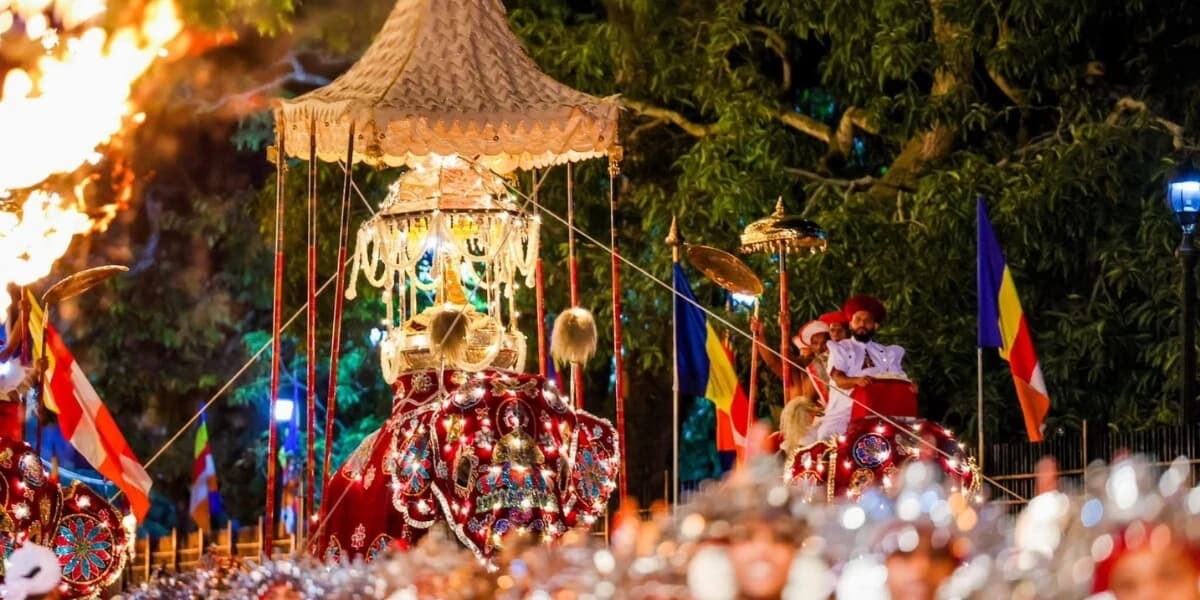
The Kandy Esala Perahera — the Festival of the Tooth — honours the Sacred Tooth Relic at Sri Dalada Maligawa. In 2026 the street processions ran from 18 to 28 August:
Kumbal Perahera: 18–22 August
Randoli Perahera: 23–27 August
Grand Randoli Perahera: 27 August
Diya Kepeema (water-cutting) and Day Perahera: 28 August
If you are reading this after those dates, the same rhythm returns every year around the Esala full moon. Dates move. Hotels in Kandy do not get cheaper when the elephants are in town. Book the city first, then build the rest of the route around it.
A practical note: this is a living religious festival, not a light show staged for visitors. Dress modestly, give procession space, and treat reserved seats as worth the money if you do not want to stand in a crush for two hours.
Hill country: cooler air, flexible plans
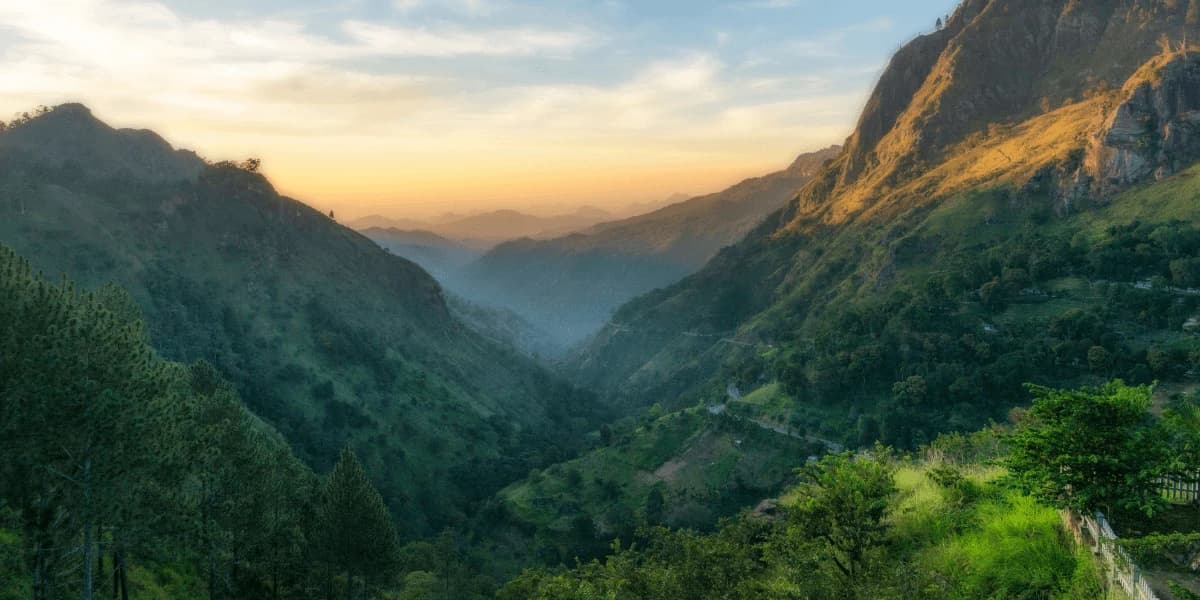
Ella, Nuwara Eliya and the tea slopes stay green in August, which is half the point. The Kandy-to-Ella train is still one of the best things you can do in Sri Lanka in any month. Reserve seats. Do not assume you will wander into a second-class carriage and find a window.
Expect mist, passing showers and the odd washed-out viewpoint. Little Adam’s Peak and Ella Rock are still worth it; just keep a spare morning. Pack a light rain layer even if the east-coast forecast looks perfect.
Jaffna and the north
August is hot in Jaffna, and that is not a small detail. It is also one of the most interesting cultural months in the north.
The Nallur Kandaswamy Kovil Festival, dedicated to Lord Murugan, ran in 2026 from mid-August into September (about 16 August to 12 September, with flag hoisting around 17 August and the chariot festival in early September). It is a 25-day Hindu festival: processions, drumming, devotion, and a very different Sri Lanka from the postcard south.
Add Delft Island if you like quiet, wind and wild ponies. Do not stack Jaffna onto a rushed 7-day trip. It rewards slowness.
South and west: honest version
You can land in Colombo, eat well, and spend a night. You can walk Galle Fort between showers and have a better lunch than you will find in some east-coast towns. What you should not do is sell yourself a week of beach weather in Unawatuna in August and then feel betrayed by the sky.
Use the south and west as connectors, food stops and heritage days. Save the swimming for the other shore.
Best things to do in Sri Lanka in August
Swim and snorkel on the east coast
This is the activity August does better than almost any other month. Book Pigeon Island for an early boat. Carry reef-safe sunscreen; the east-coast sun is not gentle. If you have kids, Pasikuda’s shallow shelf is easier than a reef day.
Surf Arugam Bay
August is peak. Mornings are usually cleaner before the wind chops the face. Lessons and board hire are easy to find in town — figure roughly $25–40 for a beginner lesson with a board. Travel insurance should say “surfing,” not just “holiday.”
Watch whales off Trincomalee
Sri Lanka’s whale season moves coasts with the monsoon. Mirissa is the winter boat. Trincomalee is the May-to-September boat. August is still a good month, especially in the first half; sightings taper as September gets closer. Blue whales and sperm whales are the headline. Nothing is guaranteed, and the good operators say that out loud.
Leave at dawn. Take motion-sickness tablets if you are even slightly unsure. The channel can bounce.
See the Elephant Gathering at Minneriya
Between July and October, as the ancient Minneriya Tank drops, Asian elephants walk in from the surrounding dry-zone forest to graze the exposed grass. By August the Gathering is building. September is often the peak. On a good afternoon you are not looking for “an elephant.” You are looking at a field of them.
Afternoon safaris beat mornings for this specific spectacle. Base yourself in Habarana or Sigiriya. If Minneriya is quiet, Kaudulla or Hurulu Eco Park is the usual pivot — the herds move.
A harder note, because it belongs in an honest guide: human-elephant conflict in Sri Lanka is real, and 2026 has again been a grim year for wild elephant deaths. Choose operators who keep distance, do not crowd family groups, and do not treat the tank edge like a drive-in theatre.
Look for leopards — with the right park
Yala is open and can still produce leopards in August, but the southeast can be wetter and more crowded than people expect. Wilpattu, Sri Lanka’s largest park, is the smarter August alternative for many travellers: dry-zone habitat, villus (natural lakes), and a quieter jeep track. Udawalawe remains a reliable elephant park if you want a shorter, less chaotic game drive.
Kitesurf Kalpitiya
July and August are the big-wind months on the northwest coast. The southwest monsoon that ruins a Bentota beach day is the same wind that makes Kalpitiya work: often 20–30 knots, warm water, no wetsuit. This is advanced-rider heaven and a serious beginner school scene in the lagoon. Modest dress in the villages — Kalpitiya is more conservative than Arugam Bay.
Ride the tea train and walk the hills
Do the Kandy–Ella train if you can lock a seat. Walk a tea estate with a picker-turned-guide rather than only photographing the bushes from the road. In Nuwara Eliya, August can feel like a different country after three days on the east coast — 10°C cooler, and you will suddenly care about a fleece.
August festivals worth planning around
Kandy Esala Perahera
The one festival that should reshape a mid-August itinerary. Ten nights of whip-crackers, Kandyan dancers, drummers, fire performers and caparisoned elephants, with the relic casket carried on the Maligawa tusker. 2026 dates were 18–28 August, with the grandest night on the 27th.
If you are planning a future August, wait for the Sri Dalada Maligawa announcement — the lunar calendar moves the window — then book Kandy immediately.
Nallur Festival, Jaffna
Sri Lanka’s longest major Hindu festival. In 2026 it stretched from mid-August to mid-September. Visitors are welcome if they dress modestly and treat it as worship, not content. Women typically wear a saree or long modest clothing; men a veshti or sarong. Shoes off, voices down, photographs only where they are clearly fine.
Sample August itineraries
These assume you land at Bandaranaike International (CMB) and want weather on your side.
7 days: culture and one good beach
Days 1–2: Sigiriya and Dambulla. Sunrise climb. Afternoon rest.
Day 3: Polonnaruwa or Minneriya afternoon safari, then drive to Trincomalee.
Days 4–5: Nilaveli or Uppuveli. Pigeon Island or a whale boat if the sea is kind.
Day 6: Kandy. Temple of the Tooth. Perahera night if your dates hit.
Day 7: buffer morning and airport.
10 days: the August route most people should book
Days 1–2: Cultural Triangle (Sigiriya, Dambulla).
Day 3: Minneriya or Kaudulla.
Days 4–5: Kandy, including a Perahera night in festival years.
Day 6: Train to Ella. One hill-country walk.
Days 7–9: Arugam Bay or, if you want still water instead of surf, Pasikuda / Trincomalee.
Day 10: long transfer back to CMB. Do not pretend this is a short hop.
14 days: add the north
Use the 10-day spine, then give Jaffna three nights during Nallur. Fly Colombo–Jaffna if you are tired of the road. Delft Island is the extra day that makes the north feel like its own trip.
What to pack for Sri Lanka in August
Pack for heat, sudden rain, temples and one cool hill-country evening. Laundry is cheap. Extra shirts are not.
Bring:
Breathable cotton or linen. You will live in it.
One modest outfit that covers shoulders and knees (temples, Perahera, Nallur).
Swimwear plus a long-sleeve rash guard. The east-coast sun burns through good intentions.
A compact rain jacket, not a heavy raincoat.
A light fleece for Ella and Nuwara Eliya.
Reef-safe SPF 50. Buy it before you fly. The good stuff is patchy on the east coast.
A real mosquito repellent, ideally DEET-based.
Closed shoes for Sigiriya and safari jeeps. Flip-flops for everything else.
A dry bag for phones on boats.
Type G adapter (UK-style).
Rehydration sachets. August heat plus humidity is a headache machine.
Leave the denim at home. Wet jeans in Kandy are a personality test nobody asked for.
Practical planning for August 2026
Visa. Most visitors still need an Electronic Travel Authorisation before they fly. Apply only on the official site, eta.gov.lk. Since 25 May 2026 the tourist ETA has been free for 40 countries, including India, the UK, the United States, Australia and much of the EU. Free is not the same as optional. Approval still has to be in place before you board.
Crowds and prices. August is peak on the east coast and peak in Kandy during Perahera. It is quieter, and often cheaper, on the south and west. Book Nilaveli, Arugam Bay and Kandy earlier than you book Galle.
Getting around. A private driver is still the least painful way to link Sigiriya, Kandy and the east in one trip. The train is for the hill-country segment, not for beating the clock. Domestic flights to Trincomalee or Batticaloa exist if you want to skip a 6–7 hour road day.
Money. Cards work in hotels and many restaurants. Carry rupees for kades, tuk-tuks and small guesthouses. UNESCO tickets (Sigiriya in particular) are a budget line of their own.
Health and comfort. Drink more water than feels reasonable. The sun sits nearly overhead in late August — from 28 August to 7 September it tracks directly over Sri Lankan latitudes — so shade at midday is not laziness. It is strategy.
Respect. Perahera elephants and temple grounds are not props. Keep a quiet distance, follow local instructions, and skip the drone.
Frequently asked questions
Is August a good month for beaches in Sri Lanka?
Yes, on the east coast. Nilaveli, Uppuveli, Pasikuda and the quieter stretches around Trincomalee are in their dry-season window. The south and west beaches are a gamble.
Does it rain every day in August?
No. In a normal August, Trincomalee sees about five rain days and Anuradhapura about three. Colombo and Galle see more like 11–16. When rain comes on the wet side, it is often a heavy short spell rather than a washed-out week.
Can I visit both coasts in one August trip?
You can. You should not pretend both will deliver the same beach week. Do culture and hills in the middle, swim in the east, and treat Galle or Colombo as a food-and-fort stop if you pass through.
Is Arugam Bay good for beginners in August?
Yes, with the right break. Skip Main Point on a solid day if you are new. Whiskey Point and Peanut Farm are the usual learner beaches. Take a lesson on day one instead of paddling straight out to the peak.
Will I see elephants at Minneriya in August?
August is inside the Gathering season and numbers are usually building toward the September peak. It is one of the more reliable wildlife bets of the month, especially on an afternoon drive. It is still wild animals and a wild landscape. Some days the herd is at Kaudulla instead.
Is the Kandy-to-Ella train running in August?
Yes. Weather can make the views moody rather than postcard-blue. Book reserved seats as soon as your dates are firm.
How hot is it, really?
Coastal days of 30–34°C with high humidity. Cultural Triangle sites feel hotter because of stone, stairs and no shade. Hill country is the relief: Kandy around 28°C by day, Nuwara Eliya much cooler.
The short version
August is not Sri Lanka’s off-season. It is a different season.
Go east for the sea. Go to Sigiriya early. Sit in Kandy if the Perahera falls on your dates. Watch the tank at Minneriya in the afternoon. Pack a rain layer for the hills and the west, and do not let a wet Galle afternoon convince you the whole island is closed.
That is the whole trick. The island did not get worse in August. Most itineraries just pointed at the wrong shore.
Places Mentioned(10)
Arugam Bay Beach
Arugam Bay Beach, Sri Lanka
Sri Dalada Maligawa
Kandy
Nilaveli Beach
Nilaveli Beach, Sri Lanka
Kalpitiya Beach
6PC2+7JR, Kalpitiya, Sri Lanka
Nallur Kandaswamy Devasthanam
M2FH+XM5, Jaffna 40000
Minneriya National Park
Sri Lanka
Pasikuda Beach
Pasikuda Beach
Uppuveli Beach
Uppuveli Beach, Trincomalee, Sri Lanka
Trincomalee Beach
410/1, Nugasewana Mawatha,5th Mile Post, Kandy Rd, Trincomalee, Sri Lanka
Sigiriya
Sigiriya, Sri Lanka
Tap a place card to see more details • Swipe to see all 10 places