What Is the Cultural Triangle?
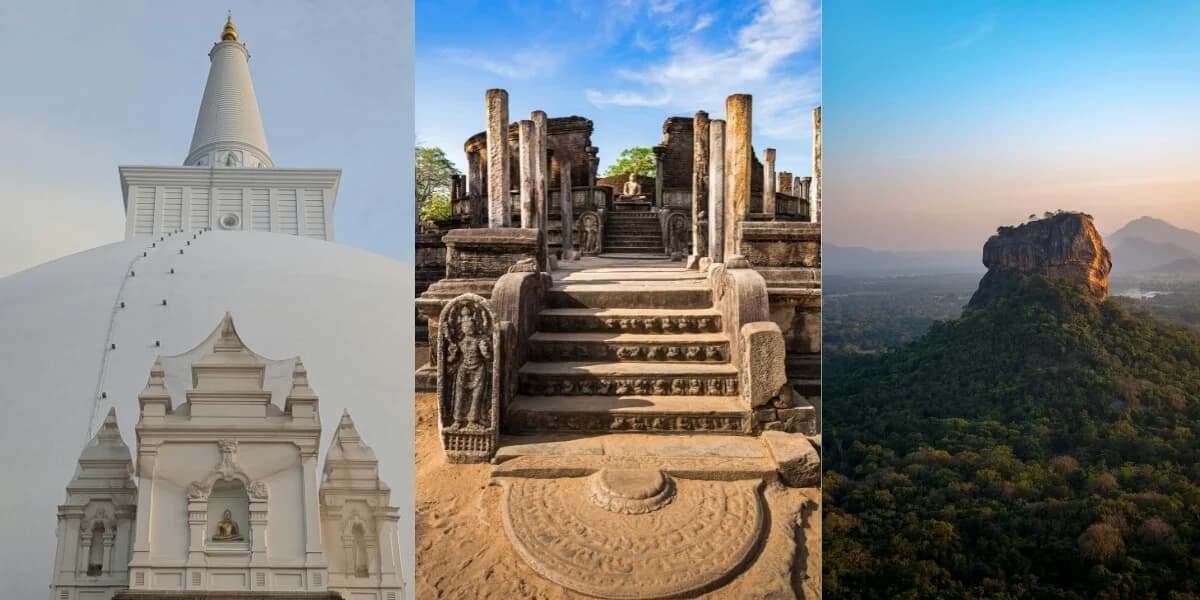
The Cultural Triangle is Sri Lanka's ancient heartland — a region in the north-central plains where three civilisations rose, ruled, and left their ruins behind. It contains four major sites, three UNESCO World Heritage listings, and some of the most impressive ancient architecture in South Asia.
The four sites:
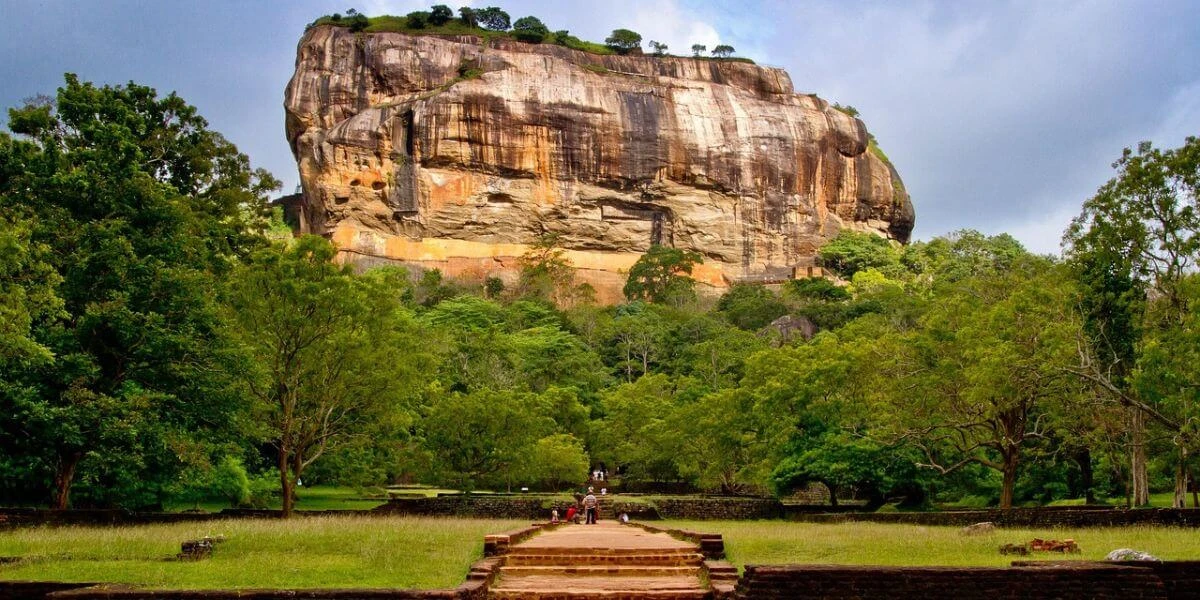
Sigiriya — A 200-metre rock fortress built by a patricidal king in the 5th century. The most visited paid attraction in Sri Lanka.
Dambulla — Five caves carved into a mountainside, filled with 150 Buddha statues and 2,000 years of painted murals.
Polonnaruwa — The medieval capital (11th–13th century), a vast complex of temples, palaces, and the finest stone-carved Buddha statues in the country.
Anuradhapura — The ancient capital, occupied for over 1,300 years, home to some of the world's oldest surviving trees and stupas the size of Egyptian pyramids.
Together, they represent 2,500 years of continuous civilisation. And together, their entrance fees total approximately $110 per person — a number that catches almost every tourist off guard.
This guide tells you what each site offers, what it costs, how long to spend, and — most importantly — which sites to prioritise if your time or budget doesn't stretch to all four.
Sigiriya: The One Everyone Comes For
What It Is
A volcanic rock plug rising 200 metres from flat jungle, Sigiriya was transformed in the 5th century by King Kashyapa into one of history's most ambitious building projects. After killing his father to seize the throne, Kashyapa abandoned the capital at Anuradhapura and built a new fortress-palace on top of this improbable rock — complete with landscaped water gardens, a throne room, bathing pools, and 1,500-year-old frescoes of celestial maidens painted on the cliff face.
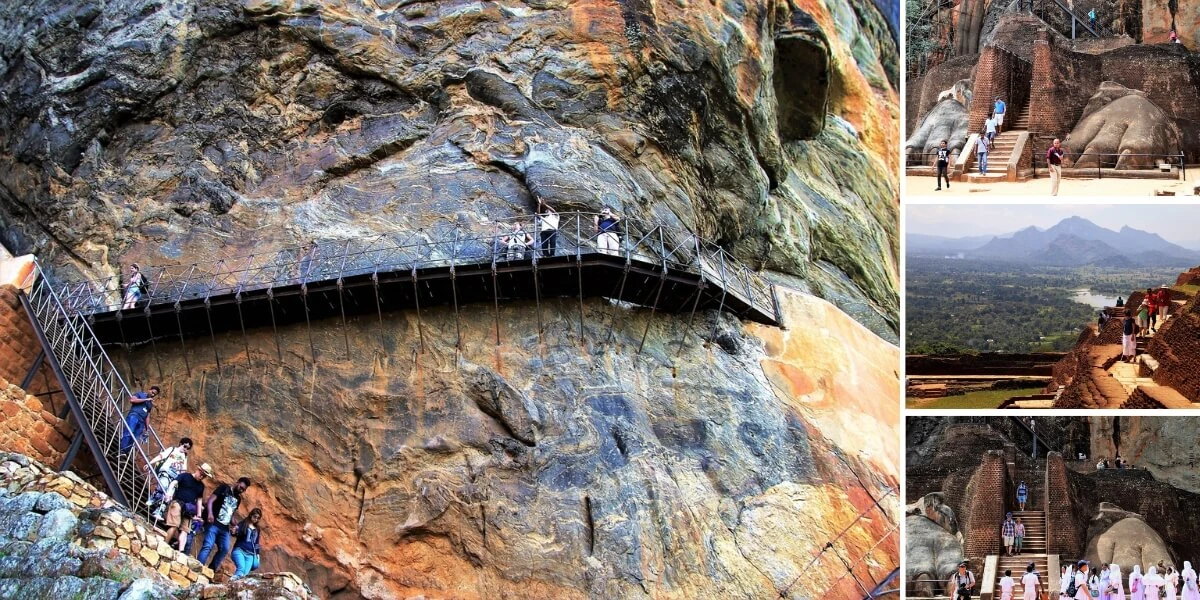
The climb involves roughly 1,200 steps through ascending stages: elaborate water gardens at the base, the famous frescoes and Mirror Wall midway up, the enormous lion's paw terrace (all that remains of the colossal lion statue that once guarded the entrance — hence "Lion Rock"), and finally the summit, where the palace foundations and cisterns spread across the top of the world.
The view from the top is everything the photographs suggest. On a clear morning, the central plains of Sri Lanka extend to the horizon in every direction, interrupted only by the jungle canopy and the neighbouring rock of Pidurangala.
What It Costs
Entrance fee: $30 USD per adult (non-SAARC). $15 for SAARC nationals. $15 for children (6–12). Free under 6. The fee includes access to the Sigiriya Museum at the entrance, which is worth 20 minutes of your time for context before climbing.
Tickets: Available at the gate or online at eservices.ccf.gov.lk. No real advantage to buying online unless you're visiting during peak hours and want to skip the ticket queue.
How Long You Need
2–3 hours. One hour for the actual climb (up and down), plus 1–2 hours for exploring the gardens, museum, frescoes, and lingering at the top.
When to Go
Early morning (arrive by 7 AM) or late afternoon (after 3:30 PM). The midday heat is brutal — there is no shade on the upper sections of the climb or at the summit. The sunrise option (gates open at 5 AM) is spectacular but requires arriving before the main ticket office opens; use the small counter inside the entrance building.
Most tour buses arrive between 9 and 11 AM. If you want the summit to yourself, beat them.
The Pidurangala Alternative
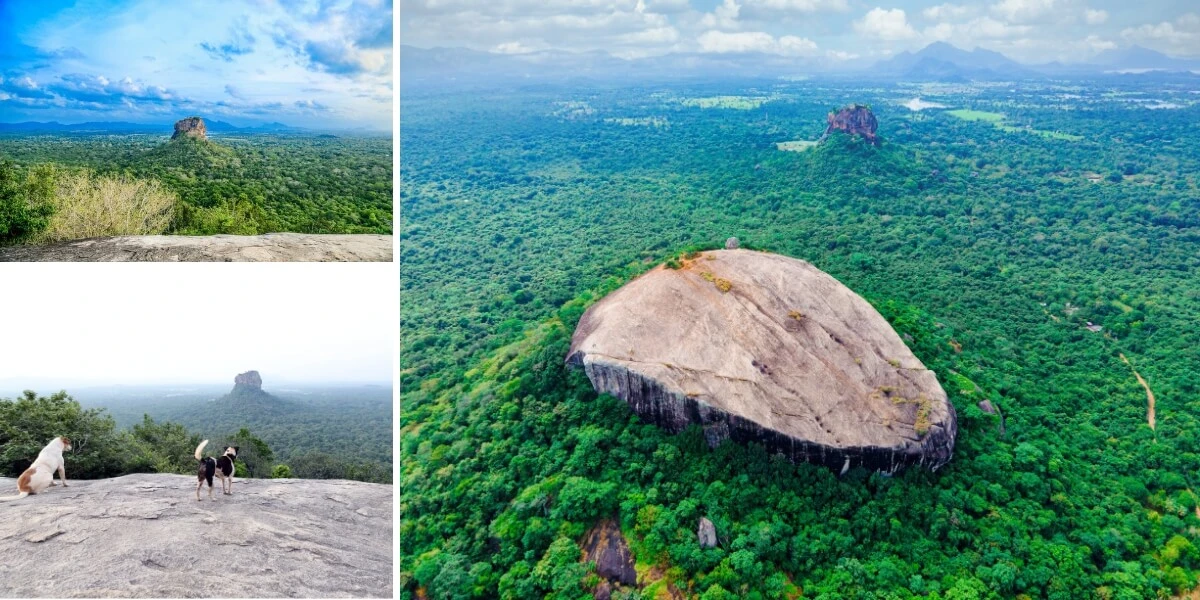
Ten minutes from Sigiriya by tuk-tuk sits Pidurangala Rock — a neighbouring formation that offers what many travellers consider the better view, because you're looking at Sigiriya rather than from it.
The climb is shorter (30–40 minutes), wilder (the final section involves scrambling over boulders rather than walking up stairs), and dramatically cheaper: 500–1,000 LKR ($2–3) compared to Sigiriya's $30. You'll pass a reclining Buddha and a small temple on the way up.
The smart play: Do both. Climb Pidurangala for sunrise (5:30 AM, $3, stunning view of Sigiriya lit up by the morning sun), then Sigiriya later in the morning ($30, the historical experience and summit ruins). Together, they're the highlight of the Cultural Triangle.
Honest Assessment
Sigiriya justifies its $30 price tag — barely. The combination of history, engineering, and views is genuinely world-class. What undermines it is the heat (no shade), the crowds (bus groups cluster at the lion's paw terrace), and the knowledge that you're paying 750 times what a Sri Lankan pays for the same experience. If you're on a strict backpacker budget and can only afford one site, Sigiriya is the one. But pair it with Pidurangala for the complete experience.
Dambulla Cave Temples: The One That Surprises You
What It Is
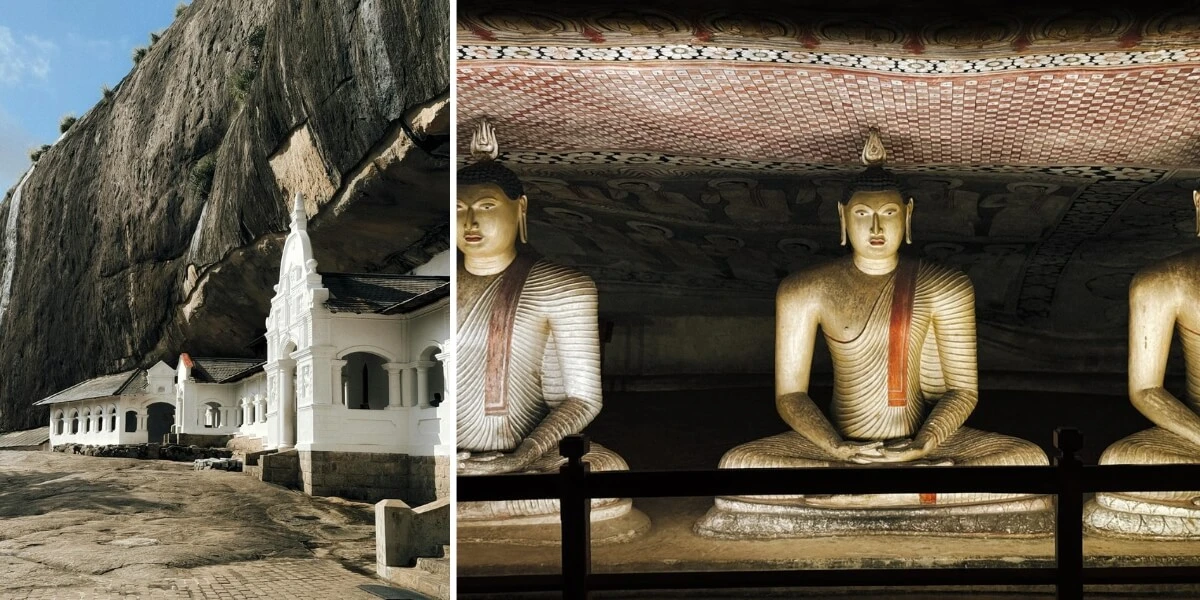
Five caves cut into a granite overhang, containing 153 Buddha statues and ceiling murals spanning 2,000 years — from the 1st century BCE to the 18th century. Dambulla is the most complete and best-preserved cave temple complex in Sri Lanka, and it's been a site of continuous Buddhist worship for over two millennia.
From outside, it's underwhelming — a modern golden temple at the base (skip it, it's a separate building and not the historical site) and a steep stairway up the hillside. But step through the cave entrances and the interiors are extraordinary: every surface covered in painted murals depicting the Buddha's life, the ceilings dripping with colour, and rows of statues ranging from small seated figures to a 14-metre reclining Buddha carved from the cave's natural rock.
Cave 2 (Maharaja Viharaya) is the largest and most impressive, containing over 60 statues and a ceiling so densely painted it resembles a religious kaleidoscope. Cave 1 has the enormous reclining Buddha. Caves 3–5 are smaller but each has details worth pausing for.
What It Costs
Entrance fee: ~$10 USD (approximately 3,000 LKR) per person. Separate from the Cultural Triangle round ticket — Dambulla has its own pricing.
How Long You Need
1–1.5 hours. The caves themselves take 30–45 minutes to walk through thoughtfully. Add 15 minutes each way for the uphill walk and time to remove/store shoes (required before entering).
When to Go
Late afternoon is ideal — the caves face west and the light through the entrances illuminates the statues beautifully. The climb up is also cooler. Morning works fine but can be busier with tour groups.
Honest Assessment
Dambulla is the Cultural Triangle's best value. At roughly one-third the price of Sigiriya, it delivers a more intimate, more atmospheric, and arguably more culturally significant experience. The caves are cool and shaded (a relief after Sigiriya's exposed summit), the art is genuinely remarkable, and the site is small enough that you don't need half a day to appreciate it.
Most visitors pair Dambulla with Sigiriya in a single day — they're only 20 minutes apart by tuk-tuk ($3–5). This is the right approach: Sigiriya for the dramatic climb and panoramic views, Dambulla for the quiet interior beauty.
Polonnaruwa: The One You Explore by Bicycle
What It Is
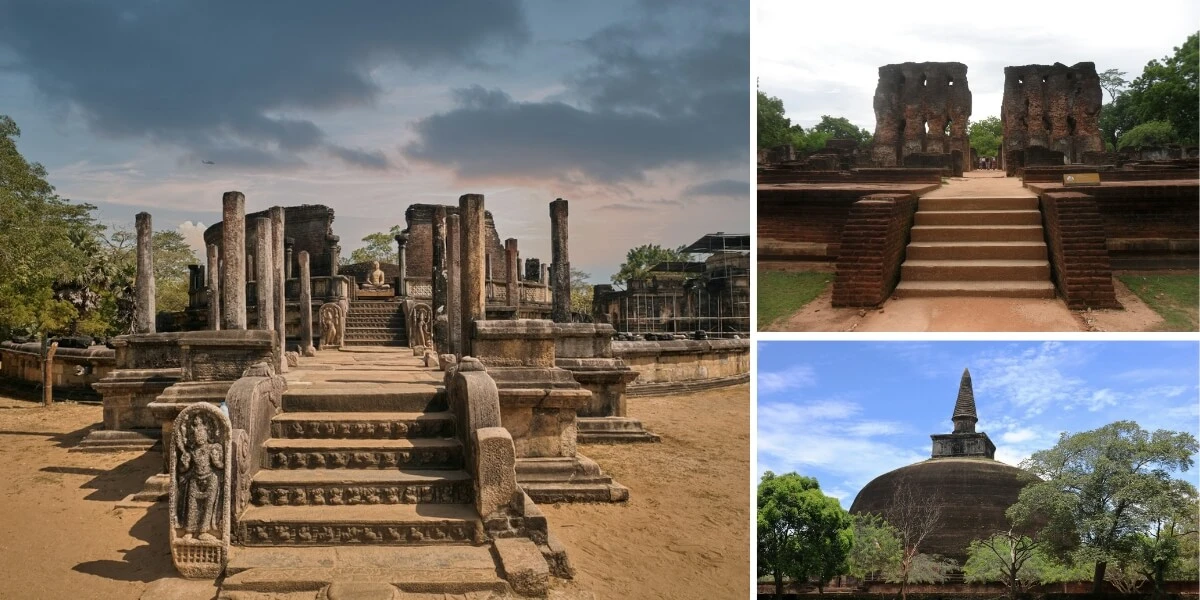
Sri Lanka's medieval capital, established after Anuradhapura fell to South Indian invaders in the 11th century. For two centuries, Polonnaruwa was the centre of Sinhalese civilisation, and its rulers built a remarkable concentration of temples, palaces, audience halls, and irrigation systems that are still impressive today.
The site is spread across several square kilometres of parkland, which is why the bicycle is the correct way to explore it. The key areas:
The Quadrangle — A compact, walled enclosure containing some of the finest architecture on the site: the Vatadage (a circular relic house with intricately carved moonstones and guard stones), the Hatadage, and several other shrines arranged around a central courtyard.
The Royal Palace Complex — The ruins of King Parakramabahu's palace, which once stood seven storeys tall. The remaining walls give you a sense of the scale.
Gal Vihara — The masterpiece. Four Buddha statues carved from a single granite outcrop — including a 14-metre reclining figure and a 7-metre standing figure that are among the finest examples of ancient Sinhalese sculpture anywhere. The craftsmanship is astonishing. This alone justifies the visit.
Rankoth Vehera — A massive stupa (the fourth largest in Sri Lanka) that gives you a sense of Polonnaruwa's former ambition.
What It Costs
Entrance fee: $25 USD per adult. $12.50 for children. Bicycle rental: $3–5 for the day from shops near the entrance.
How Long You Need
Half a day (3–5 hours). The site is large and cycling between areas takes time. Rushing Polonnaruwa defeats its purpose — the appeal is the combination of ruins, parkland, wildlife (monkeys and monitor lizards are common), and the peaceful atmosphere.
When to Go
Early morning (7–8 AM start) to beat the heat. Polonnaruwa sits in the dry zone and temperatures regularly exceed 35°C by midday. Bring at least a litre of water, sunscreen, and a hat. There's limited shade between the major ruin clusters.
Honest Assessment
Polonnaruwa is more rewarding than most tourists expect and less dramatic than Sigiriya. It doesn't have the single "wow" moment of climbing Lion Rock, but it offers a deeper, more sustained engagement with Sri Lankan history. Cycling through the ruins in the early morning light, with monkeys scattering across ancient stonework, is one of the most memorable experiences in the Cultural Triangle.
The Gal Vihara sculptures are genuinely extraordinary — they'd be worth a museum visit anywhere in the world, and here they sit exactly where they were carved 800 years ago, open to the sky.
If you're choosing between Polonnaruwa and Anuradhapura (and many 10-day itineraries force this choice), Polonnaruwa is the better option for most tourists. It's more compact, more visually impressive, and easier to navigate in half a day.
Anuradhapura: The One for Serious History
What It Is
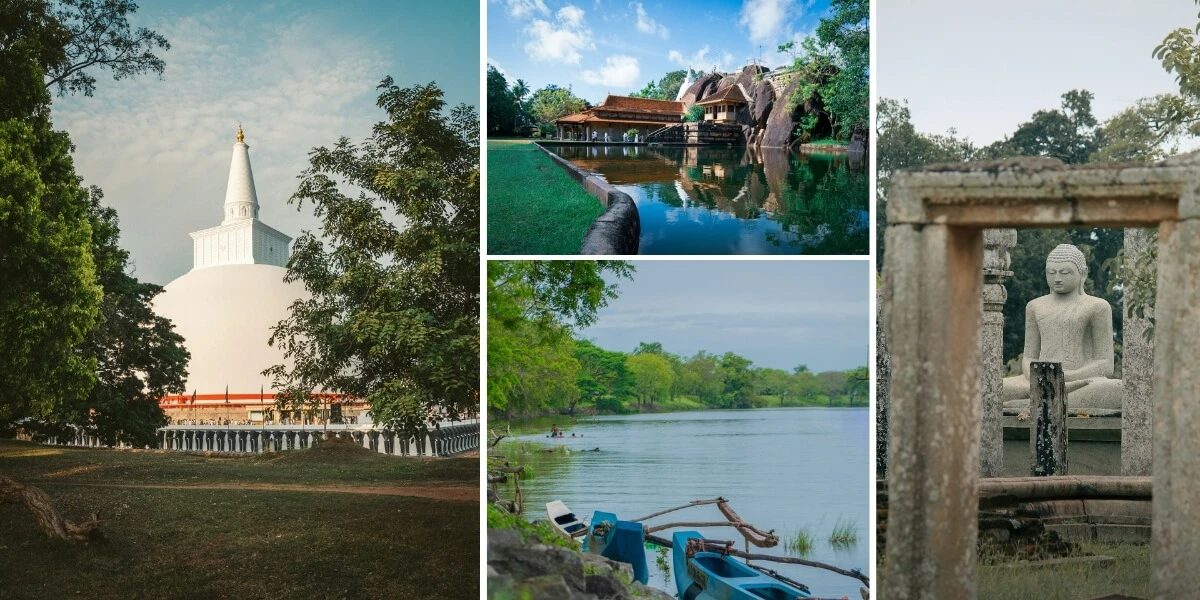
The ancient capital of Sri Lanka for over 1,300 years — from the 4th century BCE to the 11th century CE. Anuradhapura is not a ruin site with clear boundaries; it's a living city built among the ruins of an ancient one. Sacred temples operate alongside crumbling palaces. Monks tend gardens beside 2,000-year-old stupas. The Sri Maha Bodhi — a fig tree grown from a cutting of the tree under which the Buddha achieved enlightenment — is the oldest historically documented tree in the world, planted in 288 BCE.
The scale of Anuradhapura is difficult to convey. The Jetavanaramaya stupa, when built in the 3rd century, was the third-tallest structure in the ancient world after the pyramids of Giza. The Ruwanwelisaya stupa is 55 metres tall and blindingly white. These are not modest ruins — they're monuments that rival anything in Egypt or Rome.
What It Costs
Entrance fee: $25–30 USD for the archaeological zone. However, many individual temples and stupas — including the Sri Maha Bodhi — can be visited for free or for a small donation, as they're active religious sites rather than archaeological exhibits.
Budget hack: If you're on a tight budget, you can see several of Anuradhapura's most impressive sites (the Sri Maha Bodhi, Ruwanwelisaya stupa, and several smaller temples) without purchasing the archaeological zone ticket. The ticket is primarily needed for sites like the Jetavanaramaya complex and the museum. Many budget travellers choose this approach and come away satisfied.
How Long You Need
A full day (6–8 hours) to see everything. Half a day if you focus on the highlights: Sri Maha Bodhi, Ruwanwelisaya, Jetavanaramaya, and the Abhayagiri complex.
How to Get Around
Bicycle — the best option. Anuradhapura's ruins are spread across a wide area, and cycling between them is the most efficient and enjoyable way to explore. Rentals cost $2–5/day from guesthouses and shops near the old town. The terrain is flat.
Honest Assessment
Anuradhapura is the Cultural Triangle site that rewards the most historically curious travellers and frustrates those looking for a quick highlight. It's vast, spread out, and requires context to fully appreciate. Without understanding that the Sri Maha Bodhi is the oldest documented tree on earth, or that the Jetavanaramaya was once the third-tallest building ever built, the site can feel like "more stupas, more ruins."
If you have three or more days in the Cultural Triangle and care about history, Anuradhapura is essential. If you have two days and limited historical appetite, prioritise Sigiriya/Pidurangala, Dambulla, and Polonnaruwa.
The Money Question: What Everything Actually Costs
Here's the number that shocks people: visiting all four Cultural Triangle sites costs approximately $90–110 per adult in entrance fees alone.
SiteAdult Fee (Non-SAARC)Time NeededSigiriya$302–3 hoursPidurangala$2–31–1.5 hoursDambulla Cave Temples~$101–1.5 hoursPolonnaruwa$253–5 hoursAnuradhapura$25–304–8 hoursTotal~$92–98~3–4 days
Add transport between sites, accommodation, food, and bicycle rentals, and you're looking at a 3–4 day Cultural Triangle itinerary costing $150–250 per person (mid-range) or $80–130 (budget).
The Round Ticket Option
The Central Cultural Fund offers a combined round ticket covering Sigiriya, Polonnaruwa, and Anuradhapura (plus some smaller sites) for $50 USD. This represents significant savings versus buying individual tickets ($80–85 total) — but only if you're visiting all three sites. The ticket is valid for 14 days. Dambulla is not included and requires a separate ticket.
Buy the round ticket at the Central Cultural Fund office in Colombo (11 Independence Avenue) or at the first site you visit, if available. Note: availability and pricing of the round ticket has historically fluctuated. Ask at the ticket counter before purchasing individual tickets.
If You Can Only Afford Two Sites
Sigiriya + Dambulla. Total cost: ~$40. Total time: one day. You get the Cultural Triangle's single most iconic experience (Sigiriya) plus its most intimate and culturally rich one (Dambulla), and they're 20 minutes apart. Add Pidurangala for sunrise ($3 extra) and you have a perfect day.
How to Plan Your Cultural Triangle Visit
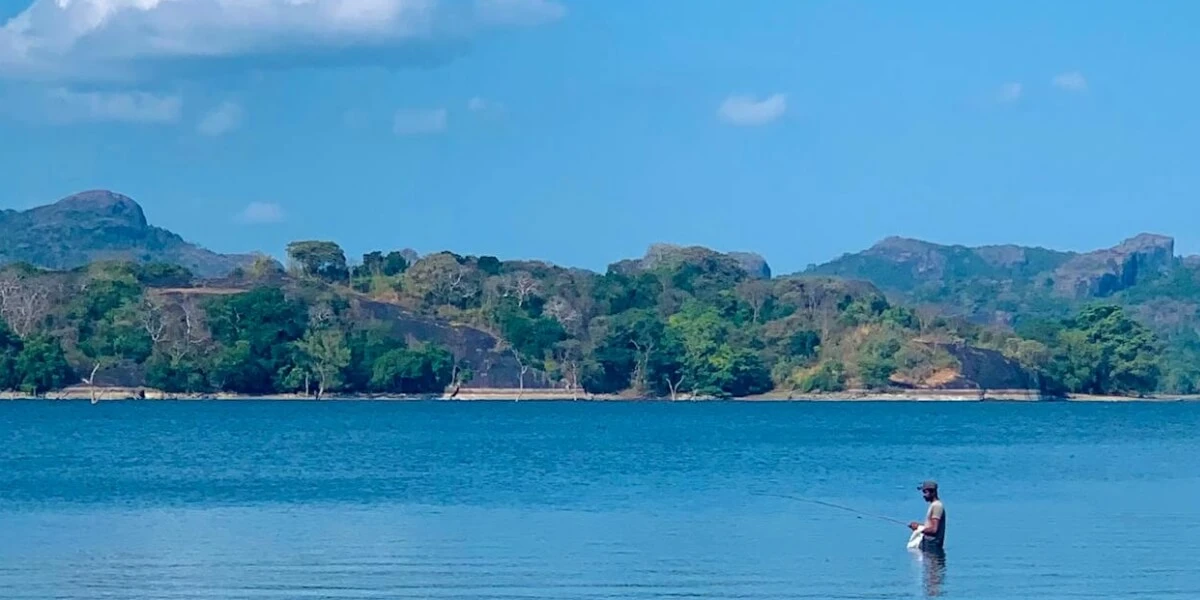
Where to Base Yourself
Dambulla is the most practical base — centrally located, well-connected by bus to all four sites, and the cheapest for accommodation. Budget guesthouses start at $8–15/night.
Sigiriya is the most atmospheric base — smaller, quieter, and surrounded by the jungle landscape that makes the Cultural Triangle feel ancient. Budget: $10–25/night. Mid-range: $30–80.
Habarana sits between Sigiriya and Dambulla and serves as a convenient junction for visiting all sites, plus Minneriya National Park (for the famous elephant Gathering, August–September).
Suggested Itineraries
Two days (Minimum Cultural Triangle):
Day 1: Pidurangala sunrise → Sigiriya → Dambulla afternoon
Day 2: Polonnaruwa by bicycle (full morning, return by mid-afternoon) → onward travel
Three days (Comfortable Cultural Triangle):
Day 1: Pidurangala sunrise → Sigiriya → Dambulla afternoon
Day 2: Polonnaruwa by bicycle (full day)
Day 3: Anuradhapura by bicycle (full day) → onward travel
Four days (Complete Cultural Triangle + Wildlife):
Day 1: Pidurangala sunrise → Sigiriya → Dambulla afternoon
Day 2: Polonnaruwa by bicycle
Day 3: Anuradhapura by bicycle
Day 4: Minneriya or Kaudulla National Park safari (elephants) → onward travel to Kandy
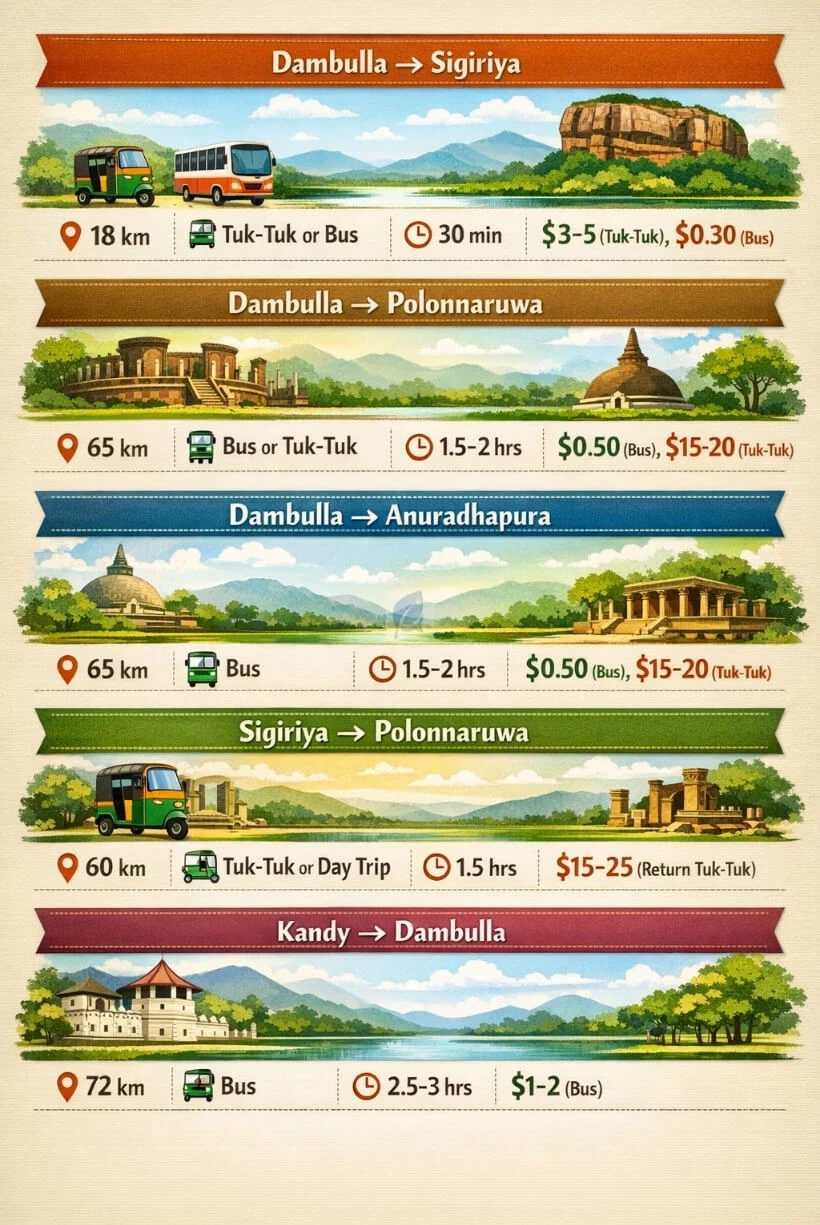
Getting Between Sites
What to Wear and Bring
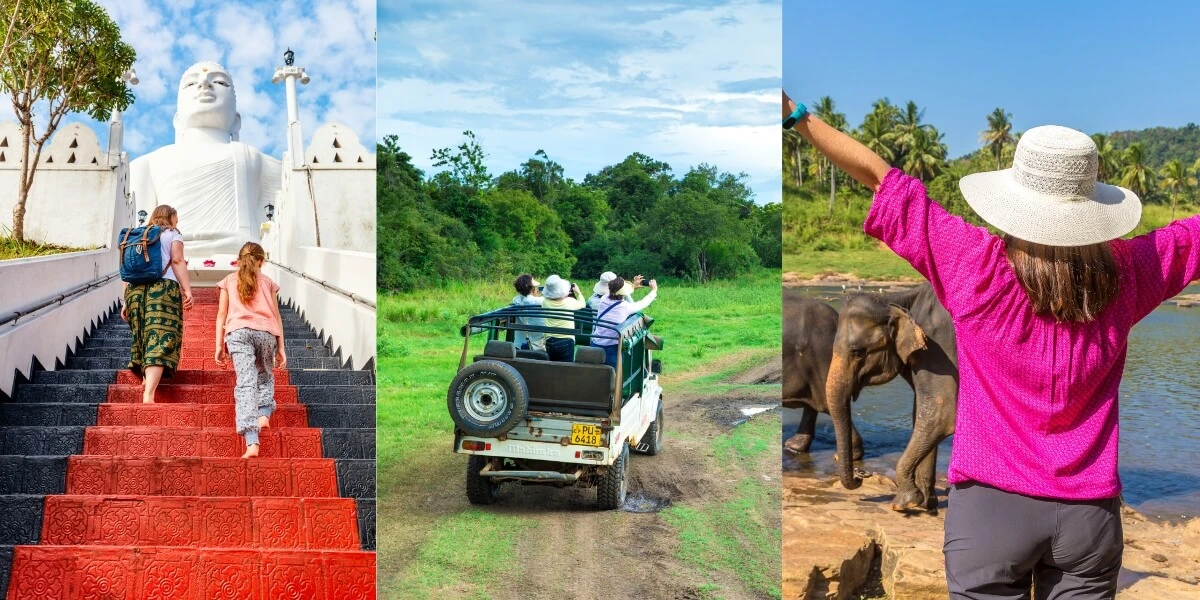
Clothing: Modest dress is required at all religious sites — shoulders and knees must be covered. Carry a lightweight long-sleeved shirt or sarong for temple visits. Shoes must be removed before entering temples and some ruins (the stone can be scorching hot — socks help).
Sun protection: Non-negotiable. Sigiriya's summit, Polonnaruwa's ruins, and Anuradhapura's stupas offer minimal shade. SPF 50, a hat, and sunglasses are essential.
Water: Bring at least 1.5 litres per person per day. Refill stations are rare between sites. Dehydration is the most common tourist complaint in the Cultural Triangle.
Footwear: Comfortable walking shoes with grip for Sigiriya's metal stairs and Pidurangala's boulder scramble. Flip-flops for easy on/off at temples.
Cash: ATMs exist in Dambulla and the main towns but not at the ruins themselves. Carry enough cash for entrance fees, bicycle rentals, tuk-tuks, and water. Some ticket counters accept cards; many don't.
The Bottom Line
The Cultural Triangle is the part of Sri Lanka that most beach-focused tourists either skip entirely or rush through in a single day on a tour bus. Both are mistakes.
Skipping it means missing the historical foundation that makes Sri Lanka more than a beach destination. Rushing it means seeing ancient wonders through a bus window while a guide rattles off dates you won't remember.
The Cultural Triangle deserves two days minimum, three if you can spare them. Arrive early, before the heat and the crowds. Rent a bicycle. Carry water. And give yourself permission to sit quietly in front of the Gal Vihara sculptures at Polonnaruwa or beneath the Sri Maha Bodhi at Anuradhapura and simply absorb what 2,500 years of continuous civilisation looks like.
Because the beaches will be there when you're done. And they'll mean more after you've climbed a dead king's sky fortress and stood beneath the oldest documented tree on earth.
This article is part of our comprehensive Sri Lanka travel series. For route planning that includes the Cultural Triangle, see our Sri Lanka 10/14-day itinerary. For the train journey from the Cultural Triangle to the Hill Country and coast, see our Kandy to Ella train guide.
Key Takeaways for Quick Reference:
Total entrance fees for all four sites: ~$90–110 per adult. Budget for this specifically.
Round ticket (Sigiriya + Polonnaruwa + Anuradhapura): $50. Only worth it if visiting all three.
If you only have one day: Pidurangala sunrise ($3) → Sigiriya ($30) → Dambulla ($10). Total: ~$43.
If you only have two days: Add Polonnaruwa by bicycle ($25 + $3 bike rental).
Sigiriya: 1,200 steps, 2–3 hours, arrive by 7 AM or after 3:30 PM. No shade at top.
Pidurangala: 30–40 min climb, $2–3, better view of Sigiriya than from Sigiriya.
Dambulla: Best value in the Cultural Triangle. ~$10 for 2,000 years of cave art.
Polonnaruwa: Rent a bicycle ($3–5). Gal Vihara sculptures are the highlight.
Anuradhapura: Largest site, needs a full day. Some areas are free (active temples).
Best base: Dambulla (cheapest, best-connected) or Sigiriya (most atmospheric).
Bring: 1.5L water per person, sunscreen, hat, modest clothing, cash, comfortable shoes.
Best months: January–March (dry, clear, manageable heat). May–September also works (hotter, fewer crowds).
Places Mentioned(5)
Sigiriya
Sigiriya, Sri Lanka
Pidurangala Rock
Sigiriya, Sri Lanka
Ancient City
Ancient City, 2 Anula Mawatha, Anuradhapura 50000, Sri Lanka
Polonnaruwa Ancient City
X223+QWM, Sudarshanarama Puranagama Rd, Polonnaruwa, Sri Lanka
Dambulla Cave Temple
Kandy - Jaffna Hwy, Dambulla, Sri Lanka
Tap a place card to see more details • Swipe to see all 5 places