We spend our lives building interfaces. We construct dashboards to monitor our days, establish environments—a public one for production, a private one for development—and render our experiences through the heavy server-side machinery of our own perceptions. We crave optimal user experiences in the app of our existence, yet we so often feel entirely disconnected from the underlying code of the universe.
When we pack our bags for a distant shore, what are we truly searching for? The trending queries in the digital ether tell a story of seeking: Is it safe? Where is the best view? How do I find meaning? We are looking for a disruption in our daily programming. We are looking for a place that does not just offer a change of scenery, but a profound shift in how we relate to space and time.
There is perhaps no geography on Earth that reconfigures the human interface quite like Sri Lanka. Here, on this teardrop suspended at the bottom of the Indian subcontinent, the strict boundaries we draw between the "inside" and the "outside" begin to dissolve. To travel through Sri Lanka is to step into a masterclass of sensemaking, a physical and spiritual journey curated by two forces that seem disparate but are intimately entwined: the spatial poetry of architectural genius Geoffrey Bawa, and the temporal cartography of Vedic Astrology.
Welcome to OneCeylon.space, where we do not merely map the physical coordinates of the island, but the coordinates of the soul.
I. The Permeable Self: Geoffrey Bawa and the Eradication of Boundaries
"A building is not a static object but a living, breathing entity—a vessel for the fluid dance of light, air, and human experience."
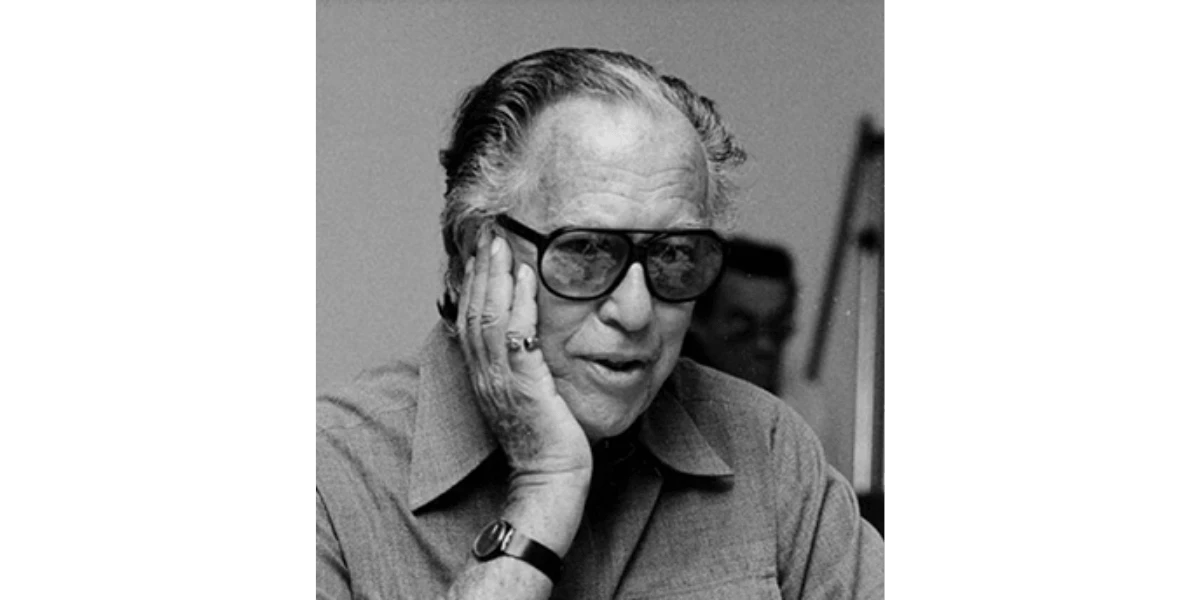
To understand the spatial magic of Sri Lanka, one must understand Tropical Modernism, and to understand Tropical Modernism, one must walk through the mind of its reluctant pioneer, Geoffrey Bawa.
Before Bawa, colonial architecture in Sri Lanka was an exercise in defiance. The British and the Dutch built thick-walled fortresses and closed-off bungalows to keep the tropics out. They treated nature as a hostile environment, something to be walled off, air-conditioned, and dominated.
Bawa fundamentally rewrote this source code.
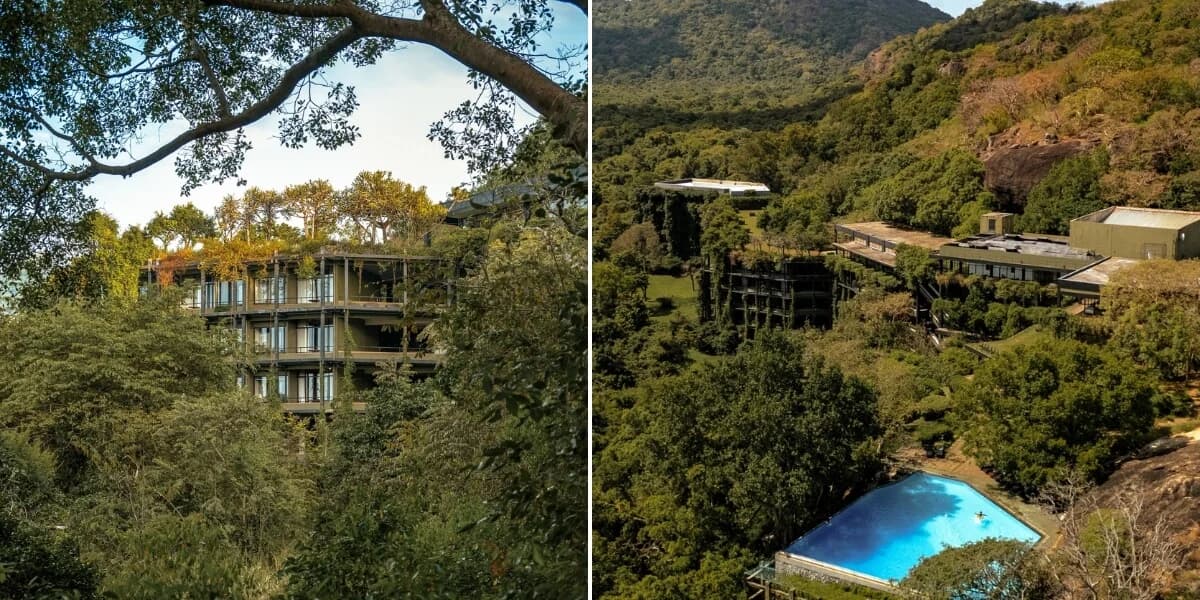
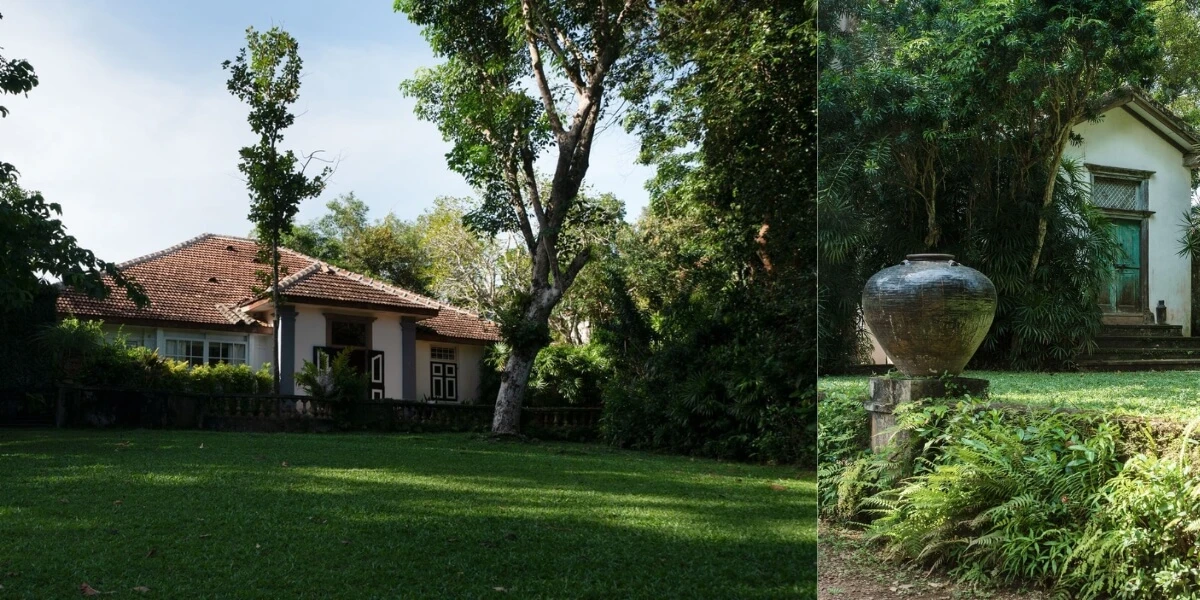
When you step into a Bawa structure—be it the staggering Heritance Kandalama rising organically from the bedrock like a slumbering beast of vines and concrete, or his deeply personal country estate, Lunuganga—you immediately realize that the walls are an illusion. He designed spaces where the roof is a sky, the corridor is a jungle path, and the living room is a courtyard swept by the monsoon breeze. He understood that our environment is not something we look at; it is something we are embedded within.
In UI/UX design, there is a concept of "frictionless experience"—the idea that a user should move through a digital space without encountering jarring obstacles. Bawa created frictionless experiences between the human ego and the natural world. He utilized reflecting pools to bring the sky down to the earth, and manipulated perspective so that a framed doorway perfectly captured an ancient Bodhi tree miles away.
For the traveler, this architectural philosophy is profoundly therapeutic. We spend our lives in boxes—apartments, cubicles, cars, screens. We construct rigid psychological environments to protect ourselves from the chaos of the world. But when you sit in a Bawa courtyard, feeling the rain fall in the center of the room while remaining perfectly dry on the periphery, a quiet psychological unspooling occurs. You realize that you do not need to be walled off to be safe. You realize that the boundaries between your internal landscape and the external world are permeable.
In Sri Lanka, the architecture insists that you are a part of the ecology, not an observer of it. This is the first step in the island's quiet alchemy: it reconfigures your relationship with space.
II. Jyotish: The Science of Light and the Architecture of Destiny
If Bawa teaches us how to inhabit space, Sri Lanka’s deep-rooted tradition of Vedic Astrology—Jyotish—teaches us how to inhabit time.
Western culture treats time as a linear commodity. It is something we spend, save, waste, or kill. We view the future as a blank canvas waiting for us to paint our absolute free will upon it. But on the island, time operates on a different frequency. It is cyclical, rhythmic, and deeply connected to the celestial mechanics of the cosmos.
Jyotish translates from Sanskrit to "The Science of Light." It is the study of how the light of the planets and stars reflects upon the human condition. Unlike Western astrology, which is often reduced to personality parlor tricks, Vedic astrology is a staggeringly complex mathematical system—a cosmic dashboard that maps the precise gravitational and energetic forces present at the exact latitude, longitude, and millisecond of your birth.
When tourists search for "spiritual travel in Sri Lanka," they are often met with recommendations for silent Vipassana retreats or Ayurvedic cleanses. While these are magnificent, the true spiritual undercurrent of the island is the ubiquitous presence of this cosmic clockwork.
Here, major life decisions—when to break ground on a new house, the exact minute to sign a business contract, the auspicious hour to begin a journey—are not made blindly. They are calculated to align with the rhythms of the universe. It is an acknowledgment that we are not isolated agents acting upon a dead world, but participants in a vast, interconnected, moving system.
To the modern, hyper-rational mind, this can feel confronting. We want to believe we are the sole authors of our fate, writing our code from scratch. But Jyotish suggests something more nuanced: that we are handed a specific set of raw materials, a specific environment, and a specific season of life.
Consider it the ultimate back-end architecture. Vedic astrology does not strip us of our agency; rather, it provides a meteorological report for the soul. If you know a storm is coming, you do not try to stop the rain; you build a stronger roof. If you know a season of expansion is upon you, you plant the seeds.
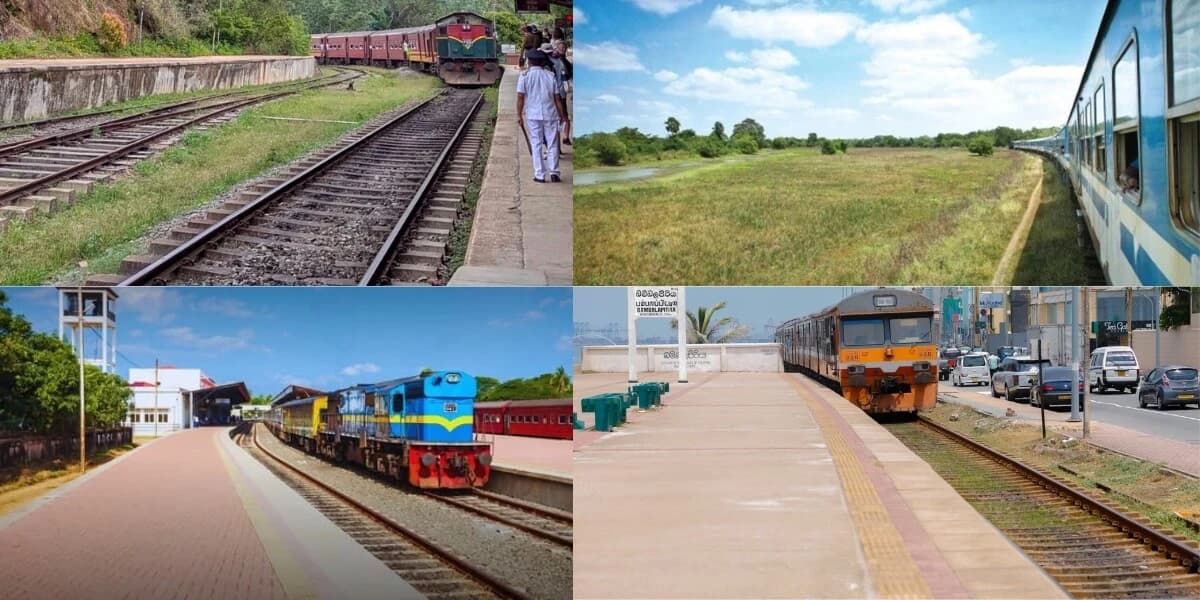
For the traveler moving through the tea-draped hills of Ella or standing before the ancient brick stupas of Anuradhapura, understanding this cultural framework changes everything. You stop fighting the delays of the local trains. You stop trying to force the itinerary. You begin to surrender to the pacing of the island, recognizing that perhaps you are exactly where the planetary geometry demands you to be. You learn to synchronize your internal clock with the ancient, turning wheels of the sky.
III. The Convergence: Walking the Middle Path
What happens when we merge the spatial liberation of Bawa with the temporal surrender of Jyotish? We arrive at the true essence of the Sri Lankan experience.
Travel, at its best, is an act of integration. We leave our homes not to become someone else, but to peel back the layers of heavy rendering we have applied to ourselves over the years.
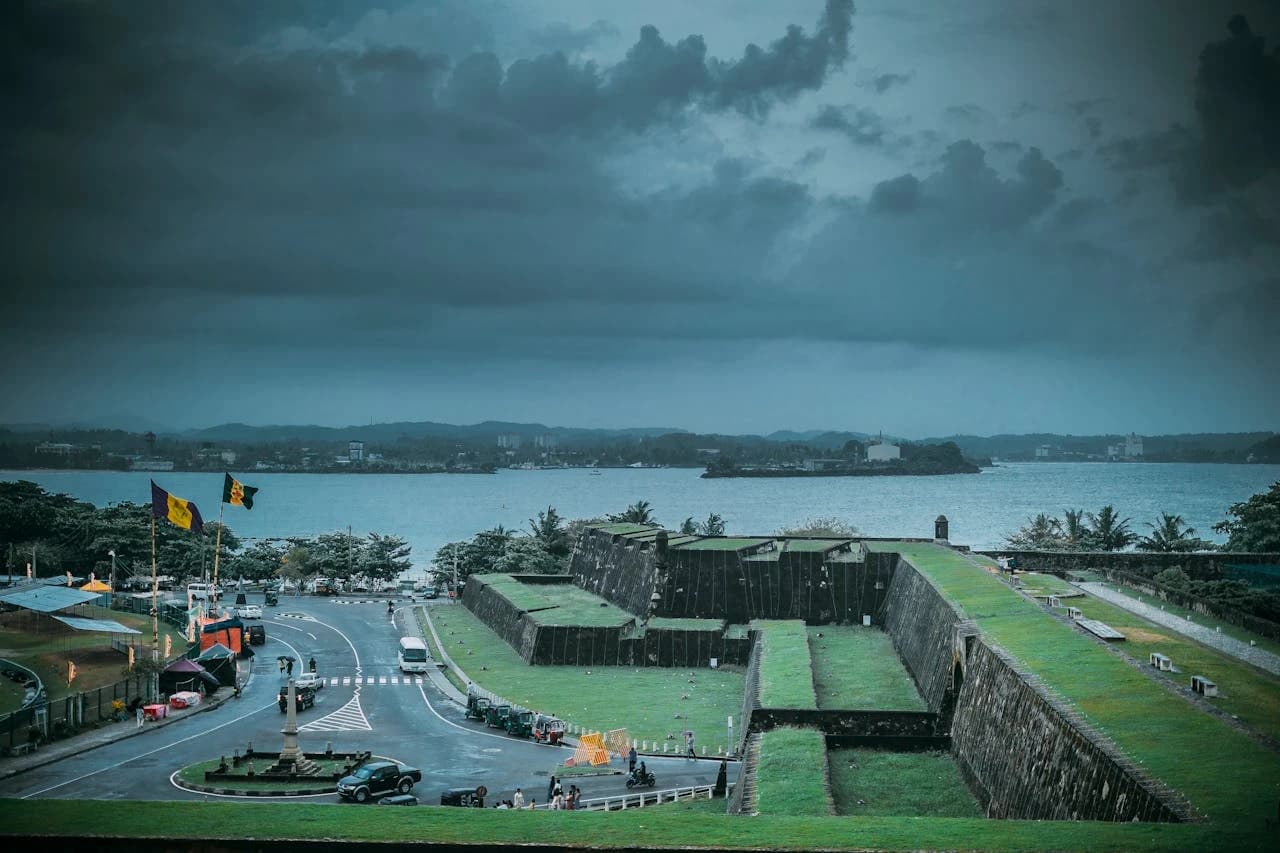
Imagine waking up in a boutique hotel in Galle Fort, the walls breathing with centuries of history, designed so that the morning light cuts perfectly across the polished concrete floor—a spatial blessing. Now imagine stepping out into the street, knowing that the rhythm of the town around you is moving in accordance with ancient, mathematically calculated auspicious times—a temporal blessing.
You are no longer just a tourist passing through a pretty landscape. You are a localized point of consciousness, fully aware of your placement in both space and time. You are participating in the grand, beautiful user experience of being alive.
This is why, when we set out to build platforms, apps, or guides for navigating this island, we must go beyond mere geolocation. Pointing someone to a beautiful beach is helpful, but pointing them toward a new way of seeing the world is transformative. The true map of Sri Lanka requires no screen at all. It requires only that you open the doors you have built around your heart, look up at the ancient light of the stars, and allow the island to do what it has done for millennia: guide you, gently, back to yourself.
As you plan your journey—whether you are an architect of digital spaces or a seeker of quiet shores—remember that the truest destination is never a place on a map. It is a new way of looking at things. Let the teardrop island wash away the rigid lines of your reality. There is only one Ceylon, and it is waiting to show you the architecture of your own soul.
Places Mentioned(2)
Heritance Kandalama
Heritance Kandalama 11, Dambulla 21106, Sri Lanka
Lunuganga
Dedduwa, Bentota 80500, Sri Lanka
Tap a place card to see more details • Swipe to see all 2 places