Every year, roughly two million tourists arrive in Sri Lanka. Roughly 1.5 million of them end up standing at the base of Sigiriya Lion Rock, staring up at a 200-metre granite plug that once held a king's palace in the sky, and asking themselves the same question: is this worth thirty-five American dollars?
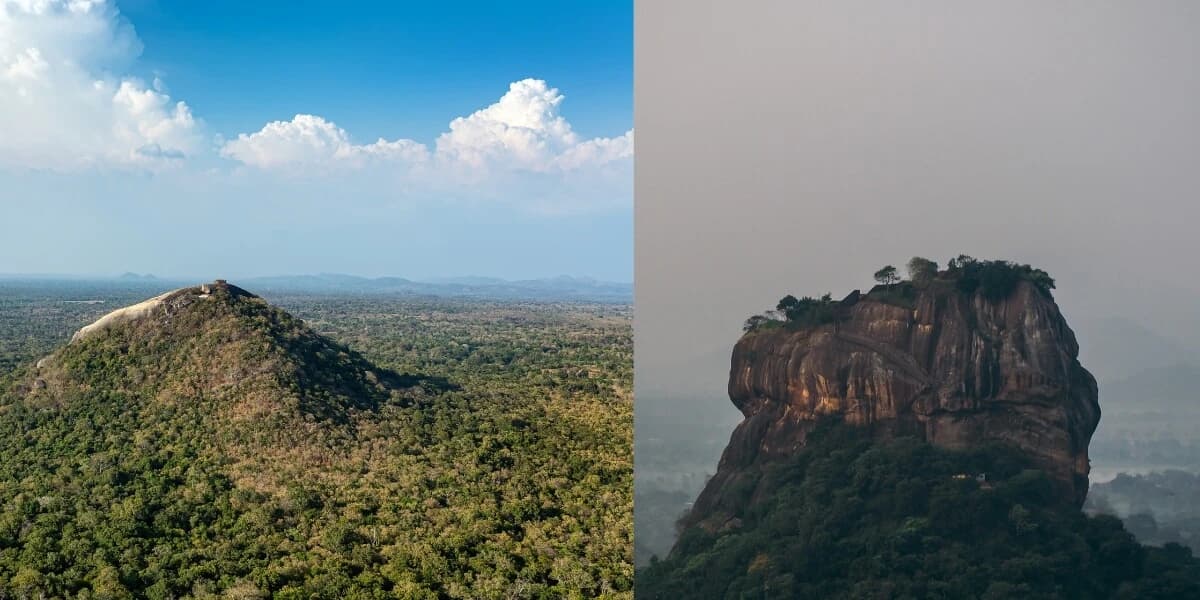
Across the road, almost within shouting distance, sits Pidurangala Rock. Same height. Same jungle. Same 360-degree views. Three dollars.
This guide will answer the question honestly — because the answer is not as simple as either the budget blogs or the tourism brochures make it sound.
The Story That Makes the Rock Worth Understanding
If you climb Sigiriya without knowing the story, you will see some nice old stones, some faded paintings, a pair of enormous carved paws, and a view. You will have paid $35 for an uphill walk and a panorama. You will feel slightly cheated.
If you climb Sigiriya knowing the story, everything changes.
In the fifth century AD, a prince named Kashyapa murdered his father — King Dhatusena of Anuradhapura — by walling him up alive. His half-brother Moggallana, the rightful heir, fled to India to raise an army. Kashyapa, knowing his brother would eventually return with vengeance, abandoned the royal capital and retreated to the most defensible piece of terrain he could find: a sheer-sided granite monolith rising 200 metres from the jungle floor, surrounded by ramparts, moats, and gardens designed to impress, intimidate, and delay anyone who came to kill him.
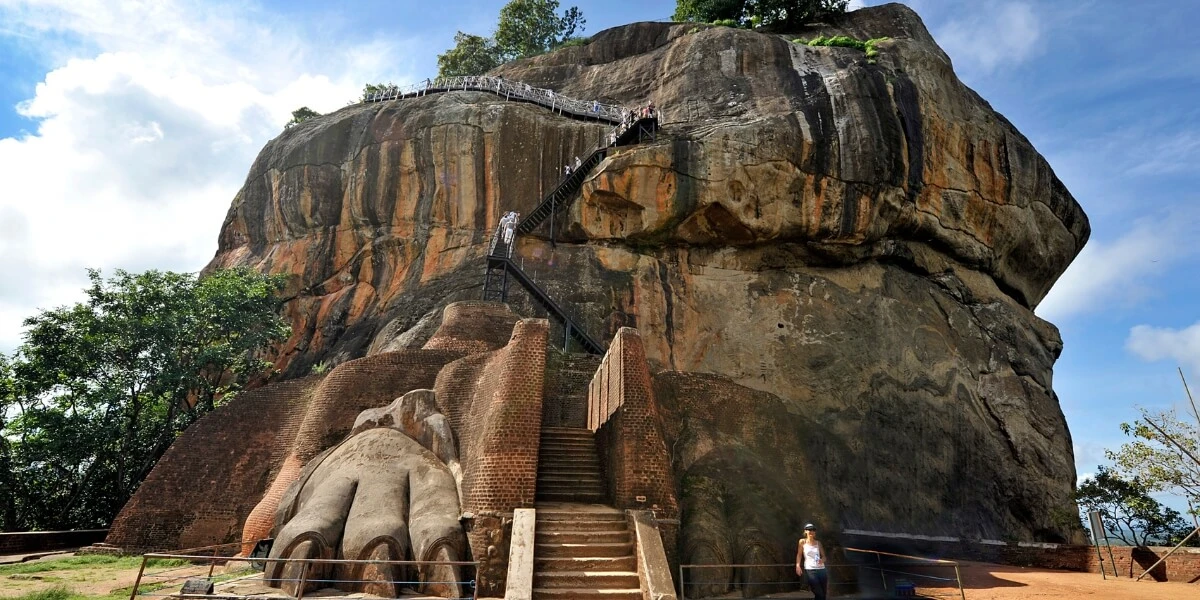
He built a palace on the summit. He built pleasure gardens at the base with hydraulic systems so advanced that the fountains still work when the water table is high enough — fifteen hundred years later. He commissioned frescoes of celestial women on the rock face, paintings so vivid and technically accomplished that they are among the finest surviving examples of ancient art in South Asia. He polished an entire wall of rock to a mirror finish so smooth that visitors could see their reflections in it — and then he or his courtiers scratched graffiti into it, some of which reads like fifth-century TripAdvisor reviews.
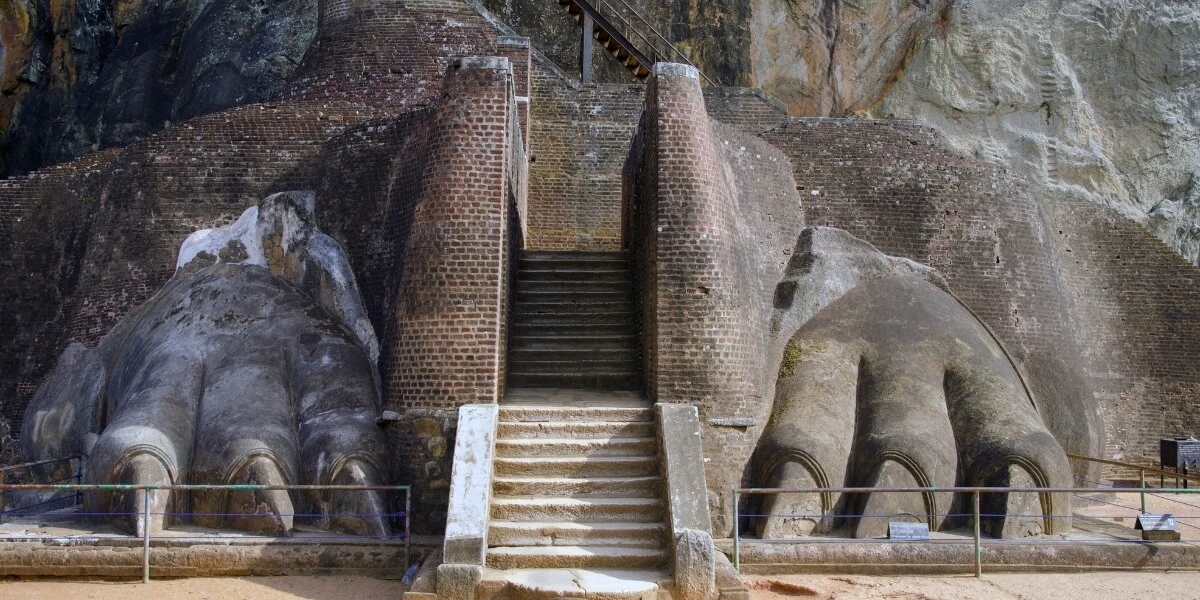
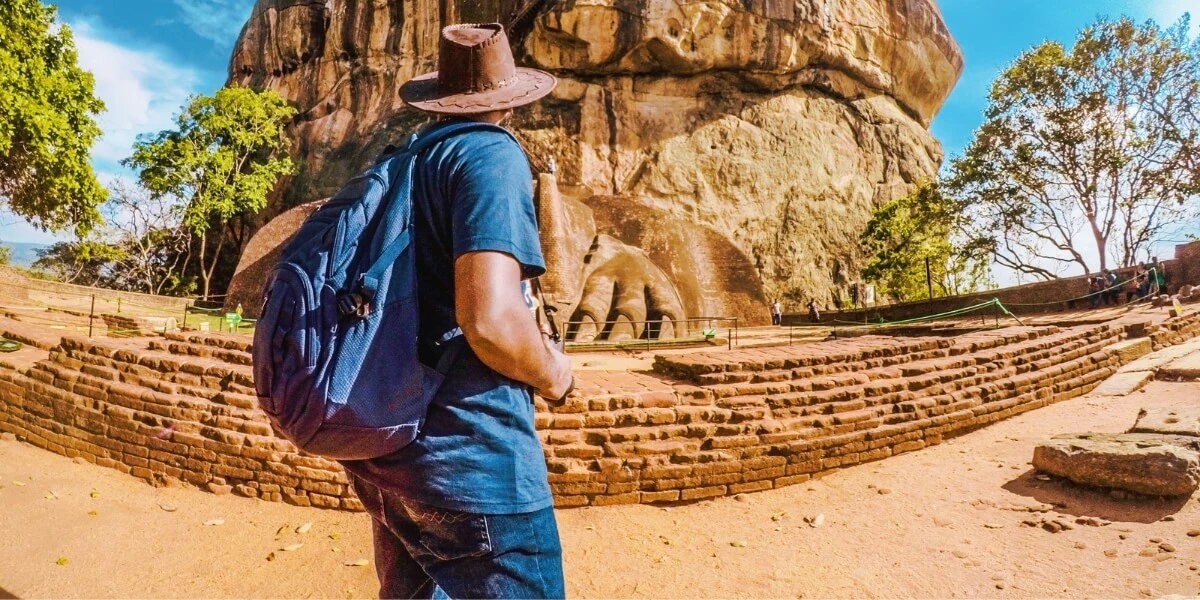
He built an entrance in the shape of a colossal lion. You walked between its paws and through its mouth to reach the summit. The paws survive. The rest of the lion does not.
After eighteen years of living in his fortress in the sky, Kashyapa rode out to meet Moggallana's invading army on the plains below. His elephant turned aside to avoid a marsh. His troops, thinking he was retreating, fled. Surrounded, Kashyapa drew his dagger, slit his own throat, and sheathed the blade. The palace in the sky was abandoned. The jungle swallowed it for thirteen centuries until a British colonial officer stumbled across it in 1831.
That is why Sigiriya is a UNESCO World Heritage site. That is why it has been called the eighth wonder of the world. And that is why climbing it with no context is like visiting the Colosseum and seeing only a broken arena.
Visit the museum first. It takes fifteen minutes. It is included in your ticket. It transforms everything you see afterwards.
Climbing Sigiriya: What to Actually Expect
The climb involves approximately 1,200 steps. It takes between ninety minutes and two and a half hours depending on your fitness, the heat, and how long you linger at each level.
The experience unfolds in stages, and each one is distinct.
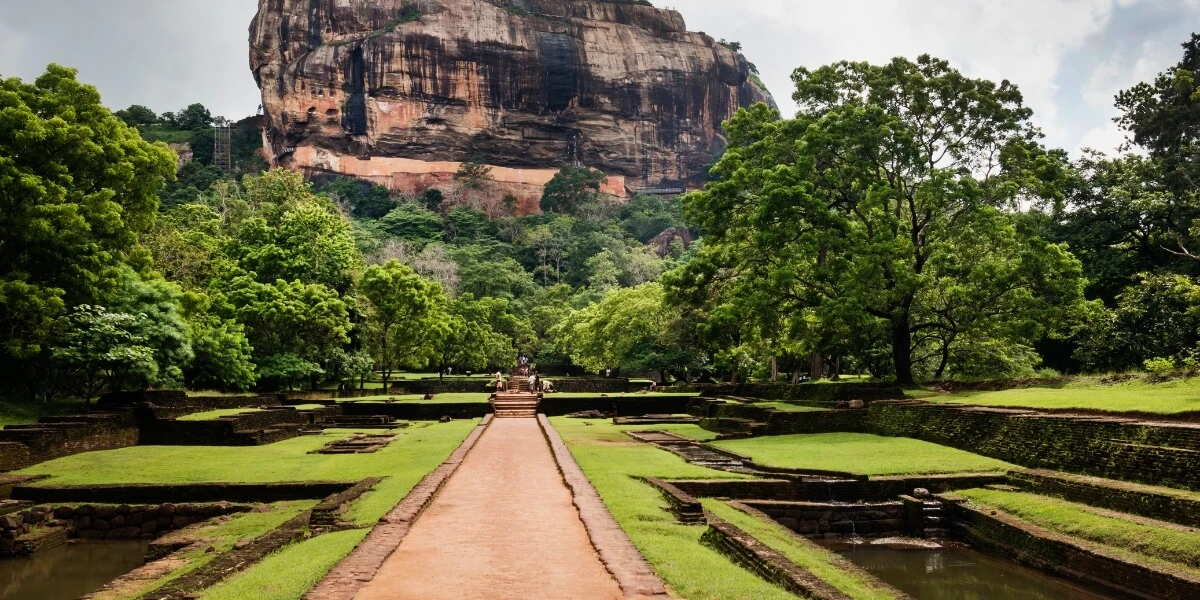
The Water Gardens. You enter through the most sophisticated ancient landscape architecture in Sri Lanka. Symmetrical pools, fountain systems, and terraced gardens stretch out beneath the rock. In a country where most archaeological sites are single monuments, this is an entire designed landscape. Allow yourself to slow down here. Most tourists rush through.
The Boulder Gardens. The path climbs through enormous rocks — natural formations that were incorporated into the fortress design. Monks lived in these caves before Kashyapa arrived. You can still see drip ledges carved to divert rainwater, meditation platforms, and faint traces of ancient plaster.
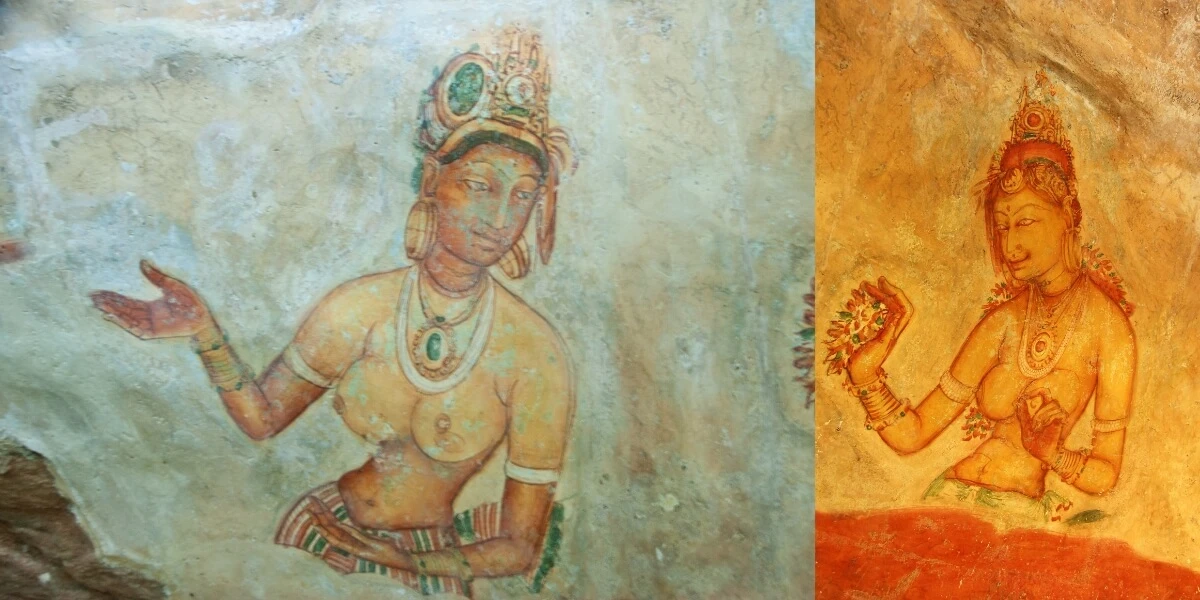
The Frescoes. Roughly halfway up, a metal spiral staircase leads to a sheltered gallery painted with images of women — the famous Sigiriya maidens. They are 1,500 years old, painted with pigment mixed into wet lime plaster, and they are exquisite. Twenty-two survive from what was once an estimated 500. Photography is prohibited at this point, which is frustrating but necessary for preservation.
The Mirror Wall. Below the frescoes runs a polished stone wall that once reflected the paintings above. It no longer reflects anything except its age, but it carries centuries of graffiti — verses, observations, and declarations scratched by visitors from the eighth century onwards. It is considered one of the oldest collections of secular writing in the Sinhalese language.
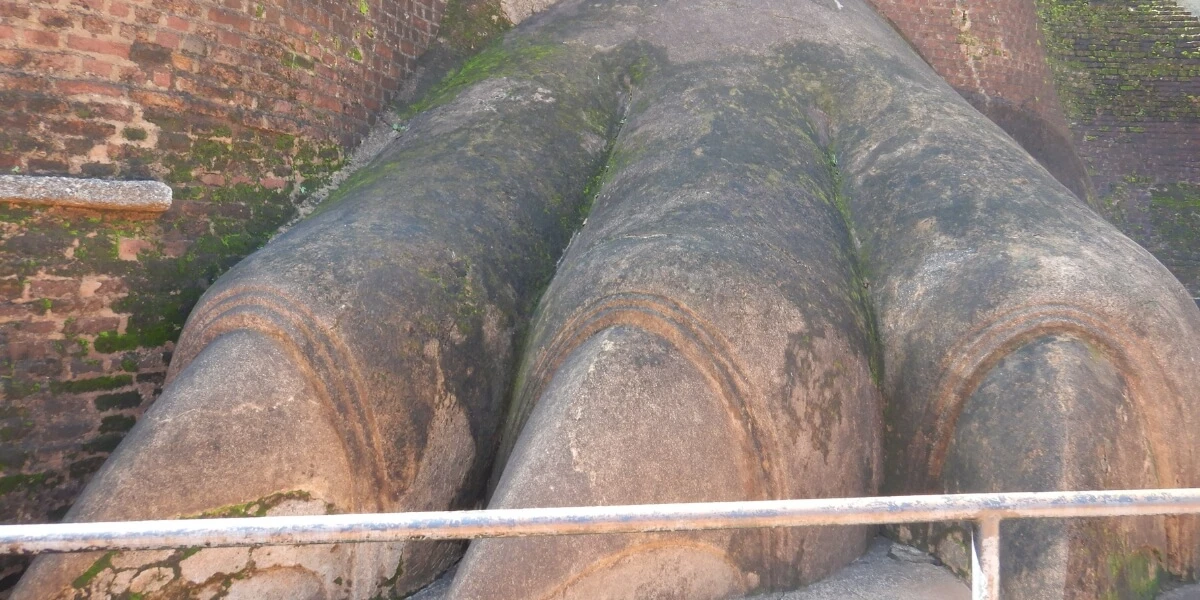
The Lion Platform. This is the moment. Two massive paws, each the size of a small car, carved from the living rock, flank the final staircase. Above them, where a full lion once stood in brick and plaster, there is now only sky. You are standing at the entrance to an ancient sky palace, and even fifteen centuries of decay cannot diminish the scale of it.
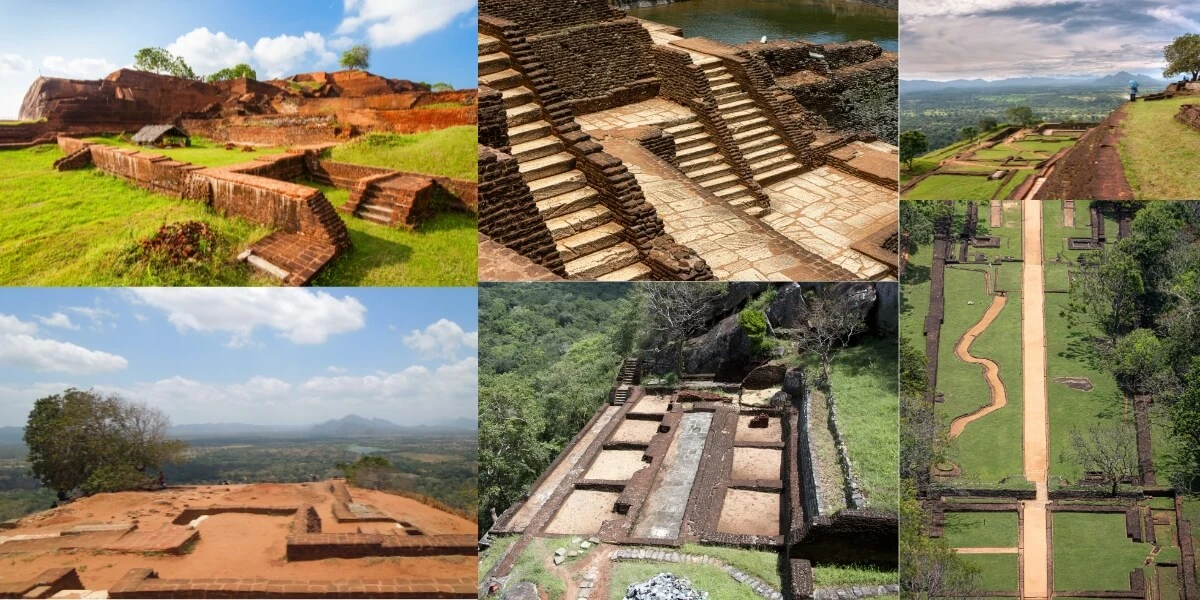
The Summit. The final ascent is via metal staircases bolted to the rock face. If you dislike heights, this section will test you — the drop is real and the railing is the only thing between you and a long fall. At the top, the foundations of Kashyapa's palace spread across a plateau the size of a football pitch. The royal swimming pool is still identifiable. The views extend in every direction — a flat green carpet of jungle punctuated by the distant thumb of Pidurangala, the lakes of the ancient irrigation system, and, on a clear day, the faint suggestion of the central highlands.
It is magnificent. Whether it is thirty-five-dollars magnificent depends entirely on what you value.
Climbing Pidurangala: The Budget Alternative That Is Not Really an Alternative
Pidurangala Rock sits roughly two kilometres north of Sigiriya. It is almost exactly the same height. It was a Buddhist monastery before Kashyapa commandeered the area — the monks were relocated here from Sigiriya when the king needed their rock for his fortress, and he compensated them with a monastery that legend says was gilded in gold. The name Pidurangala translates loosely as "offered piles of gold."
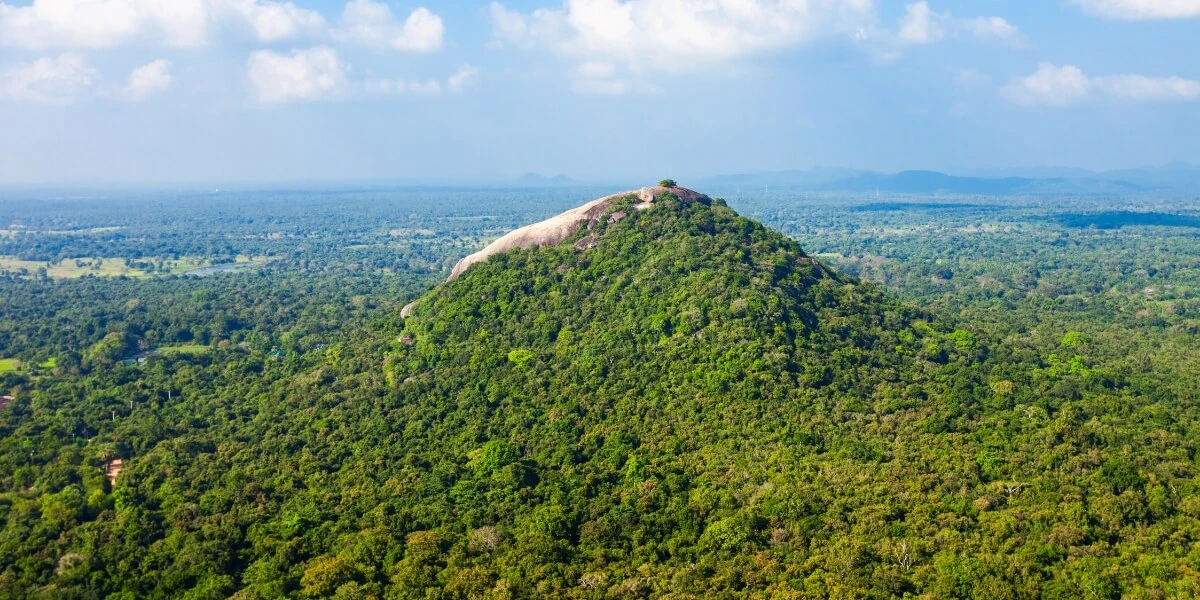
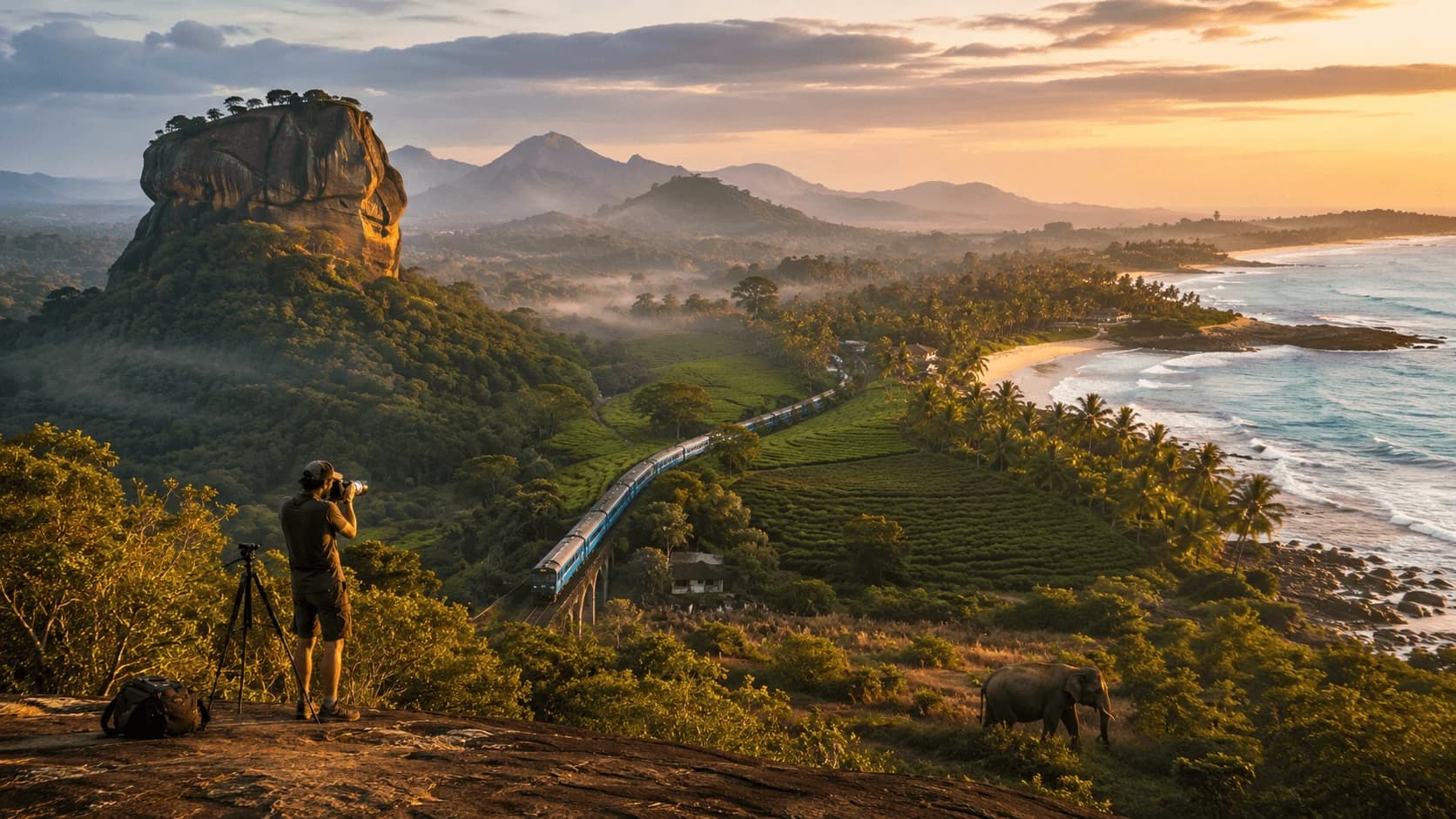
The climb takes thirty to forty minutes. The entrance fee is approximately 500-1,000 LKR (roughly $2-3 USD). And the view from the top includes the single most photographed perspective in Sri Lanka: Sigiriya Lion Rock in full profile, rising from the jungle like a geological fist, glowing in the early morning light.
This is the photograph you have seen on every Instagram account, every travel blog, every Sri Lanka tourism poster. It can only be taken from Pidurangala.
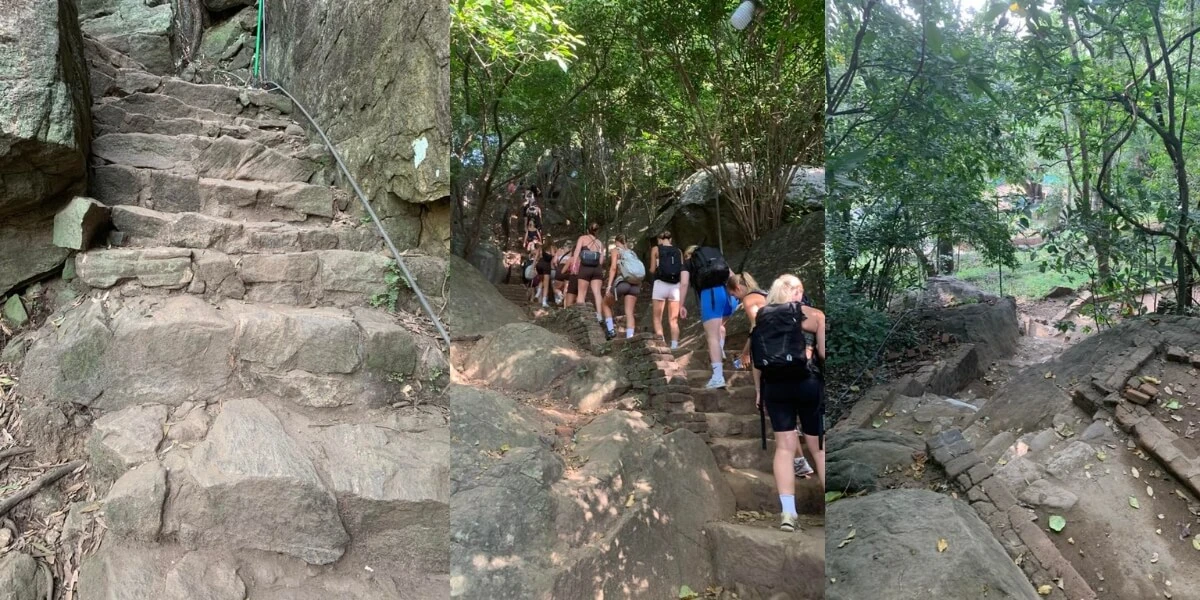
The hike is shorter than Sigiriya but more physically demanding at the end. The final section requires scrambling over large boulders — genuine hands-and-feet rock climbing, nothing technical, but not suitable for anyone with limited mobility. There are no metal staircases. There are no railings. In the dark (and most people climb Pidurangala for sunrise, in the dark), you need a headlamp and proper shoes.
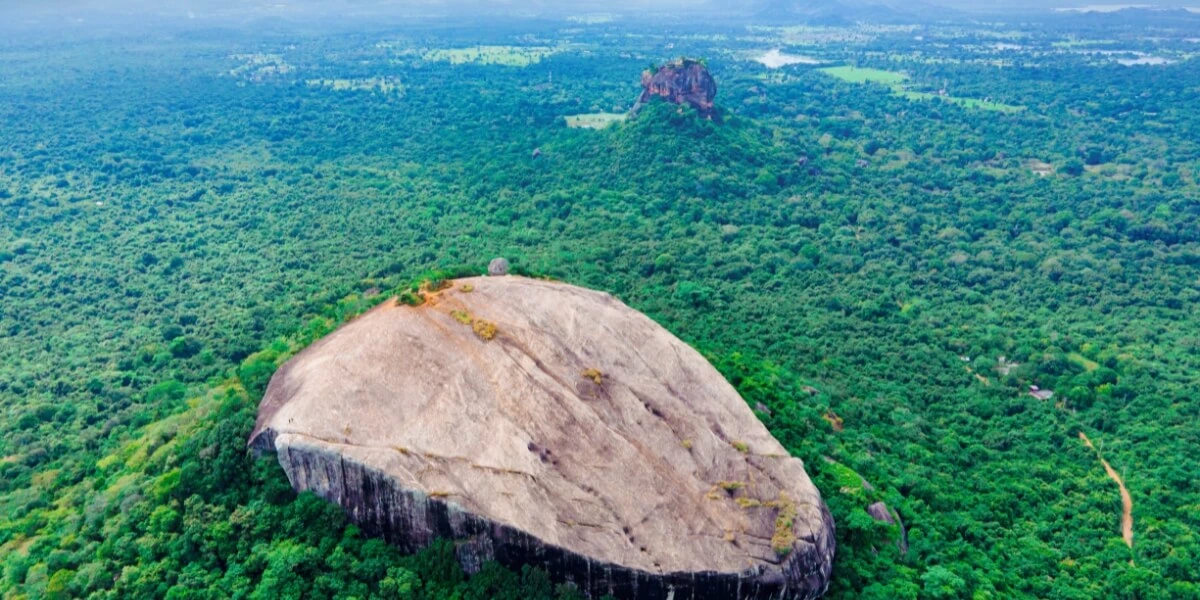
At the top, the summit boulder is large enough for several dozen people. The view is extraordinary. The sunrise over the jungle, with Sigiriya materialising from the mist below, is one of those moments that makes you understand why people travel.
But here is the thing that every "skip Sigiriya and do Pidurangala instead" blog post leaves out: they are not the same experience.
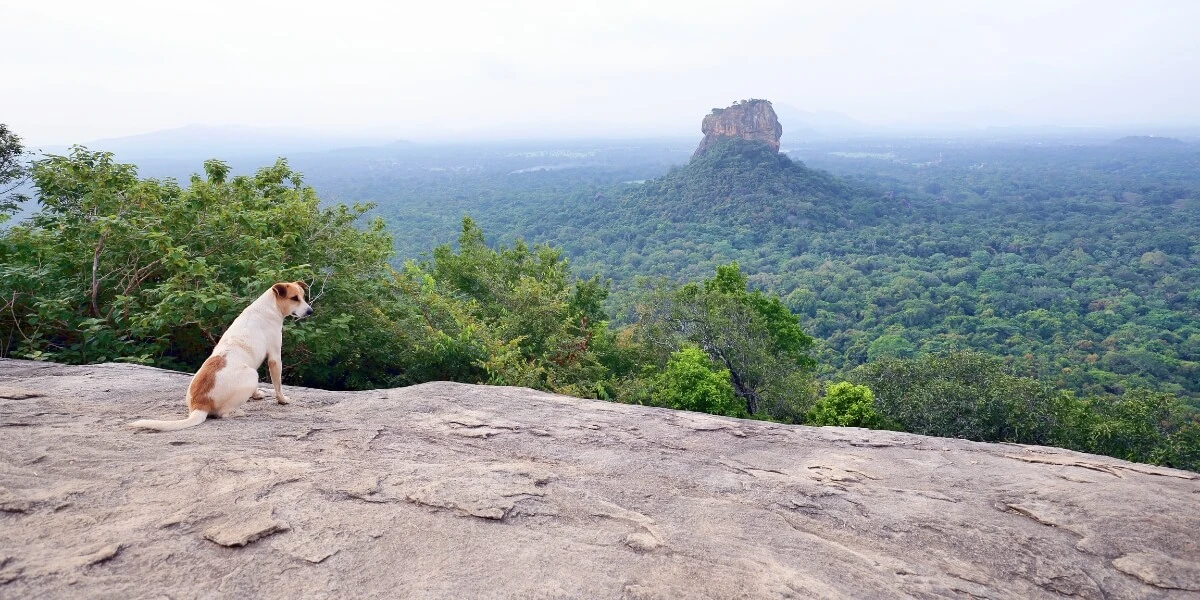
Pidurangala gives you a view of Sigiriya. Sigiriya gives you Sigiriya. The water gardens, the frescoes, the mirror wall, the lion paws, the palace ruins, the fifteen centuries of history carved into stone — none of that exists on Pidurangala. Climbing Pidurangala instead of Sigiriya because it is cheaper is like looking at a cathedral from across the street instead of walking inside because the donation box asks for more than you wanted to spend.
They complement each other. They do not substitute for each other.
The Smart Way to Do Both (In One Morning)
The optimal sequence, which experienced travellers and local guides consistently recommend, is this:
4:30 AM: Leave your accommodation in Sigiriya town by tuk-tuk. The drive to Pidurangala's entrance takes roughly ten minutes. Do not walk — wild elephants roam the area before dawn, and they are not sentimental about pedestrians.
5:00 AM: Arrive at Pidurangala ticket office when it opens. Buy your ticket (cash only). Begin the hike in darkness with a headlamp. Pass the Pidurangala temple — you will not see much in the dark, but note its location for the way down.
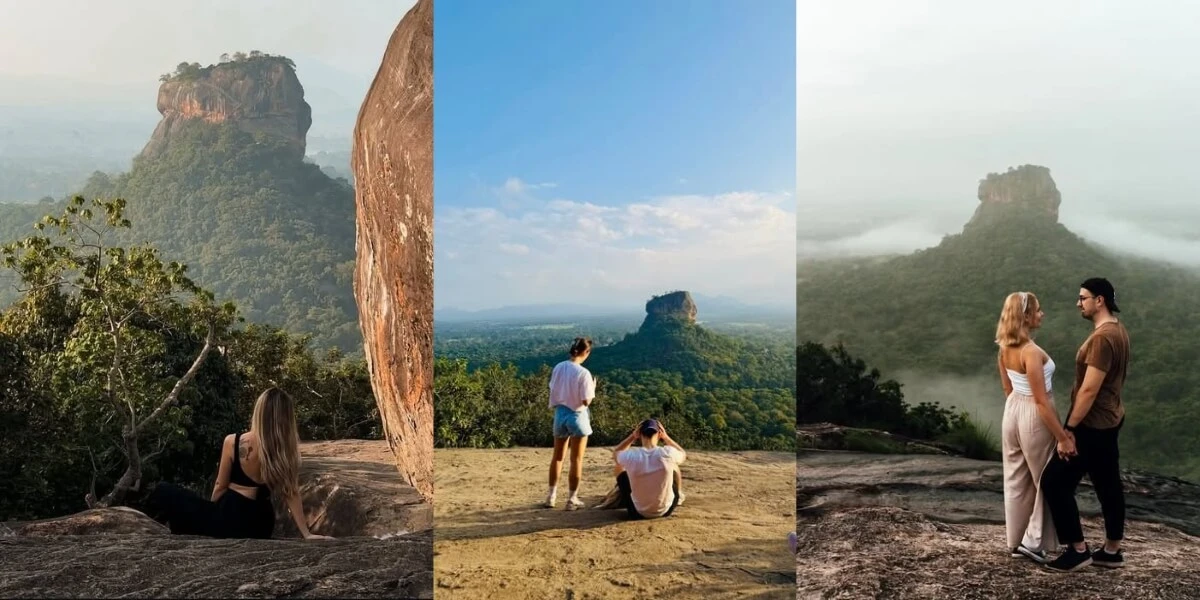
5:30 AM: Reach the summit. Find a spot on the main boulder. Wait.
5:45–6:15 AM: Watch the sunrise. Photograph Sigiriya materialising from the mist. Stay as long as you like. On the way down, stop at the cave temple to see the twelve-metre reclining Buddha.
7:00 AM: Return to your accommodation. Eat breakfast. Drink a lot of water. Rest.
7:30 AM (or 3:30 PM): Head to Sigiriya. The gates open at 7:00 AM, but you can also enter as late as 5:00 PM for a sunset climb. Two entry windows work best: early morning before the tour buses arrive (7:00-8:00 AM), or late afternoon (3:30-4:00 PM) when the heat breaks and the golden light makes the summit magical.
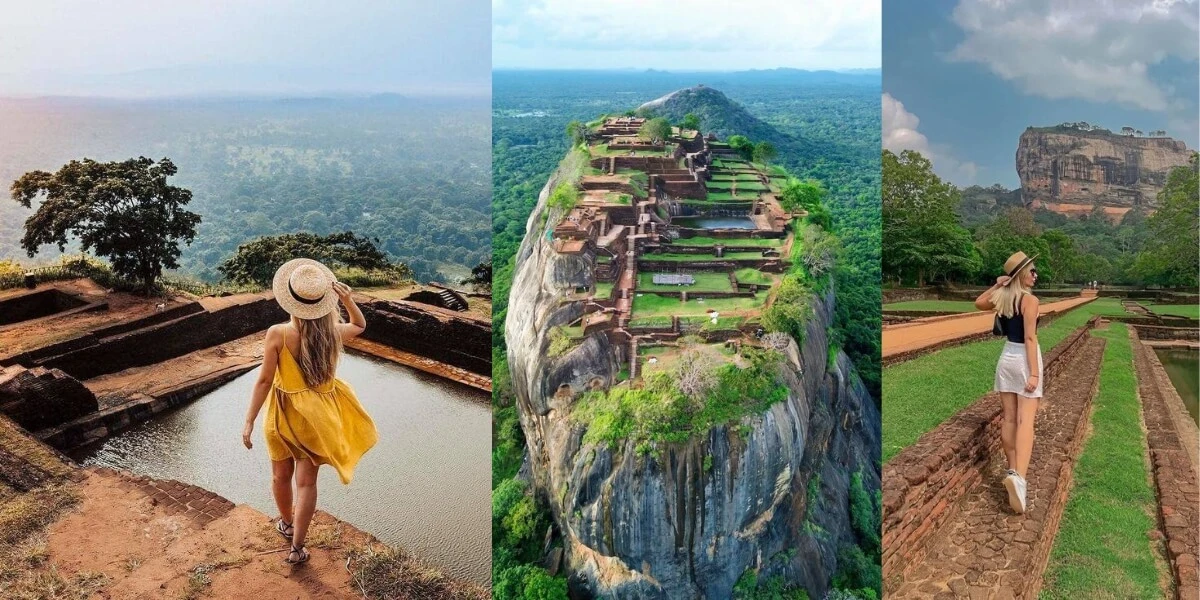
9:30 AM (or 5:30 PM): Summit. Explore the palace ruins. The late afternoon light is particularly beautiful at the top.
Total cost for both: approximately $38 USD. Total time: one extraordinary morning, or a split sunrise/sunset day. You will have seen Sri Lanka's most iconic view and explored its most important archaeological site, all before most tourists have finished queuing for their first tuk-tuk.
The $35 Question, Answered Honestly
Is Sigiriya worth $35?
If you visit the museum first, understand the story, arrive early or late to avoid the worst crowds, and have any interest in history, architecture, or the physical evidence that a mad king once built a palace in the sky to delay his own assassination — yes. Without hesitation.
If you are on a strict backpacker budget where $35 represents an entire day's spending, and you can only choose one, and you value the sunrise photograph over the historical experience — Pidurangala alone is a rational choice. It is not the better choice. It is the cheaper one.
If you can afford both, do both. They are two sides of the same story, and the combined experience is worth more than the sum of its parts.
One comparison is useful. Angkor Wat in Cambodia charges $37 for a one-day pass. Bagan in Myanmar charges $25 for unlimited access. Machu Picchu in Peru charges approximately $50. Sigiriya, at $30-35, is priced in the same bracket as the world's other great ancient sites, and it belongs in that company. The visitors who leave disappointed are almost invariably the ones who climbed without context, arrived at midday in the crushing heat, and saw only rocks where they should have seen a story.
Practical Details: Everything Else You Need to Know
Entrance fee (2026): $30 USD for non-SAARC foreign adults. $15 for SAARC nationals. $15 for foreign children aged 6-12. Free for children under 6. Paid in Sri Lankan rupees at the gate rate. Cash only — do not rely on the ATM near the entrance.
Opening hours: 7:00 AM to 5:30 PM daily. Ticket office closes at 5:00 PM. The frescoes area closes at 5:45 PM. Allow at least two hours for a thorough visit.
Best times to visit: 7:00-8:30 AM (coolest, fewest crowds) or 3:30-4:30 PM (golden light, tolerable heat, tour buses departing). Avoid 10:00 AM to 2:00 PM. The heat on the exposed rock is punishing and the crowds are at their worst.
Also Read: The Best Time to Visit Sigiriya Rock Fortress in 2026: A Local’s Secret Guide
Fitness required: Moderate. The 1,200 steps are not steep but they are relentless. The final metal staircases are exposed and may trouble anyone with vertigo. Children regularly complete the climb. Elderly visitors manage it at a slower pace. There is no shame in turning around at the lion paws if the final section is too much — the views from there are already extraordinary.
What to bring: Two litres of water minimum. A hat. Sunscreen. Cash for the ticket. Comfortable shoes with grip — the rock is smooth in places. A camera (but note that photography is prohibited at the frescoes). A light snack. There is nowhere to buy food or water inside the complex after the entrance.
What to wear: Whatever is comfortable. There is no temple dress code for the main Sigiriya complex, but if you visit Pidurangala first, you will need to cover shoulders and knees when passing the Buddhist temple at the base.
Guides: Available at the entrance for approximately $20 USD, negotiable. Not necessary for navigation — the path is obvious — but a good guide transforms the experience by explaining what you are looking at. If your budget allows it, hire one. If it does not, the museum provides enough context to climb intelligently.
Wasps and bees: Wild bee colonies live on the rock face near the Lion Platform and summit. Attacks are rare but not unheard of. If you see warning signs posted by park staff, follow them. If bees become active, crouch low, cover your head, and stay calm. Running provokes them. This is not a reason to skip Sigiriya — it is a reason to pay attention.
Getting there: Sigiriya is roughly 170 kilometres northeast of Colombo (four to five hours by car), 90 kilometres from Kandy (two to three hours), and 15 kilometres from Dambulla (thirty minutes). Most visitors base themselves in Sigiriya town or Dambulla. A tuk-tuk from Sigiriya town to the entrance costs 300-500 LKR.
The Dambulla Cave Temple: If you are in the area, the Dambulla Royal Cave Temple — a UNESCO site with five caves filled with Buddha statues and painted ceilings dating back to the first century BC — is twenty minutes away and costs $10 for foreigners. It pairs naturally with Sigiriya as a day trip, and the two together make a compelling argument for spending at least one night in the Cultural Triangle.
Also Read: Sri Lanka's Cultural Triangle: Sigiriya, Dambulla, Polonnaruwa, and Anuradhapura Without the $110 Surprise (2026)
The Wild Elephants Nobody Mentions
Here is something the guide books underplay. The area around Sigiriya and Pidurangala is home to wild elephants. They roam freely, particularly at dusk and dawn. Walking between your accommodation and either rock in the dark is genuinely dangerous. Several locals have warned travellers about this, and the risk is not theoretical.
Take a tuk-tuk to Pidurangala for the sunrise hike. Do not walk. Do not cycle in the dark. The elephants in this area are not the gentle giants of the national parks. They are wild animals moving through their territory, and they do not appreciate being startled by a backpacker with a headlamp.
During daylight hours, the walk between Sigiriya town and the rock is perfectly safe. But before dawn and after sunset, use a vehicle.
Frequently Asked Questions
Is Sigiriya worth the entrance fee?
Yes, provided you visit the museum first, understand the history, and arrive outside the midday heat. The archaeological site is genuinely world-class — ancient hydraulic gardens, 1,500-year-old frescoes, and the ruins of a fifth-century sky palace. Visitors who feel disappointed typically climbed without context in the worst heat. Those who understand the story rarely regret the investment.
Should I climb Sigiriya or Pidurangala?
Both, if possible. Pidurangala offers the iconic external view of Sigiriya Lion Rock and is best at sunrise. Sigiriya offers the archaeological and historical experience of the site itself. They are complementary, not interchangeable. If forced to choose one, choose based on your priority: the photograph (Pidurangala) or the history (Sigiriya).
How hard is the Sigiriya climb?
Moderate. Approximately 1,200 steps over 90 minutes to 2.5 hours. No technical climbing is required — metal staircases and pathways cover the entire route. The final section involves steep metal stairs with exposure to height. Children and older adults regularly complete the climb. Bring water and take breaks.
How hard is the Pidurangala climb?
The walk up takes 30-40 minutes and ends with genuine rock scrambling over large boulders. No ropes, no railings, no steps for the final section. A good level of mobility is required. Not recommended for anyone with significant knee or hip issues. Wear proper shoes and bring a headlamp if climbing for sunrise.
What time should I arrive at Sigiriya?
Either 7:00 AM when the gates open, or 3:30 PM for a sunset visit. The midday period (10 AM to 2 PM) is hot, crowded, and unpleasant. Tour buses arrive between 9 and 11 AM — being there before them makes a meaningful difference.
Can I pay by card at Sigiriya?
Do not count on it. Bring cash in Sri Lankan rupees. The ATM near the entrance is unreliable. Withdraw money in Dambulla or your previous town before arriving.
Are there toilets at Sigiriya?
There are public toilets outside the complex near the ticket office. There are no facilities inside the complex once you begin climbing. Plan accordingly.
Is there an online ticket option?
Yes, tickets can be purchased through the Central Cultural Fund website and the proceeds go to preservation. However, the system can be unreliable, and most visitors still buy tickets at the gate.
Places Mentioned(2)
Sigiriya
Sigiriya, Sri Lanka
Pidurangala Rock Temple Ticket Office
Pidurangala Rajamaha Viharaya Road, Pidurangala, Sigiriya 21120, Sri Lanka
Tap a place card to see more details • Swipe to see all 2 places