Why Sri Lanka
Most whale watching destinations require hours of open-ocean travel, rough seas, and a generous definition of "sighting." Sri Lanka is different, and the reason is geological.
The island sits beside one of the deepest submarine canyons in the Indian Ocean. These underwater trenches channel nutrient-rich currents close to the continental shelf, attracting krill and plankton in enormous quantities — and the whales that feed on them. The result is that blue whales, sperm whales, Bryde's whales, and multiple dolphin species regularly travel within 10–20 kilometres of the Sri Lankan coast.
At least 26 whale and dolphin species have been recorded in Sri Lankan waters. On a good morning, you can be watching a blue whale surface within 90 minutes of leaving the harbour.
That proximity is what makes Sri Lanka one of the world's great whale watching destinations. It's also what makes the industry's growing pains — overcrowding, aggressive boat approaches, insufficient regulation — worth understanding before you book.
The Two Coasts: When and Where
Sri Lanka's dual monsoon system means whale watching shifts between two coasts depending on the season. Get this right and your chances are excellent. Get it wrong and you'll spend four hours on rough seas seeing nothing.
Mirissa (South Coast): November to April
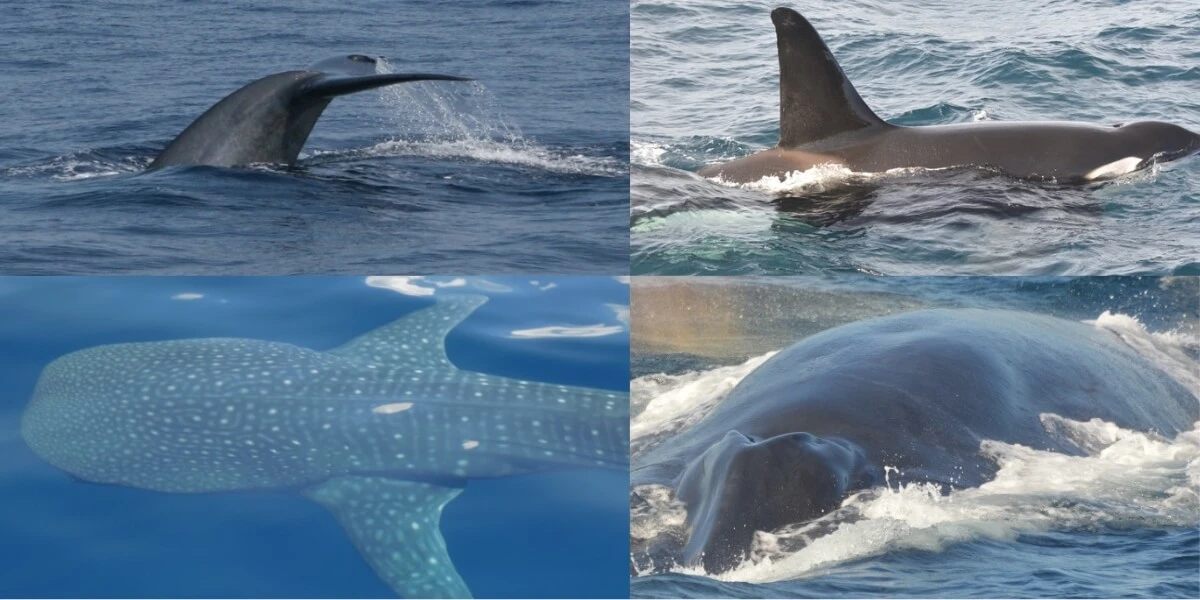
Mirissa is Sri Lanka's whale watching capital. This small south-coast town, about 150 kilometres from Colombo and 40 minutes from Galle, is the departure point for most whale watching trips in the country.
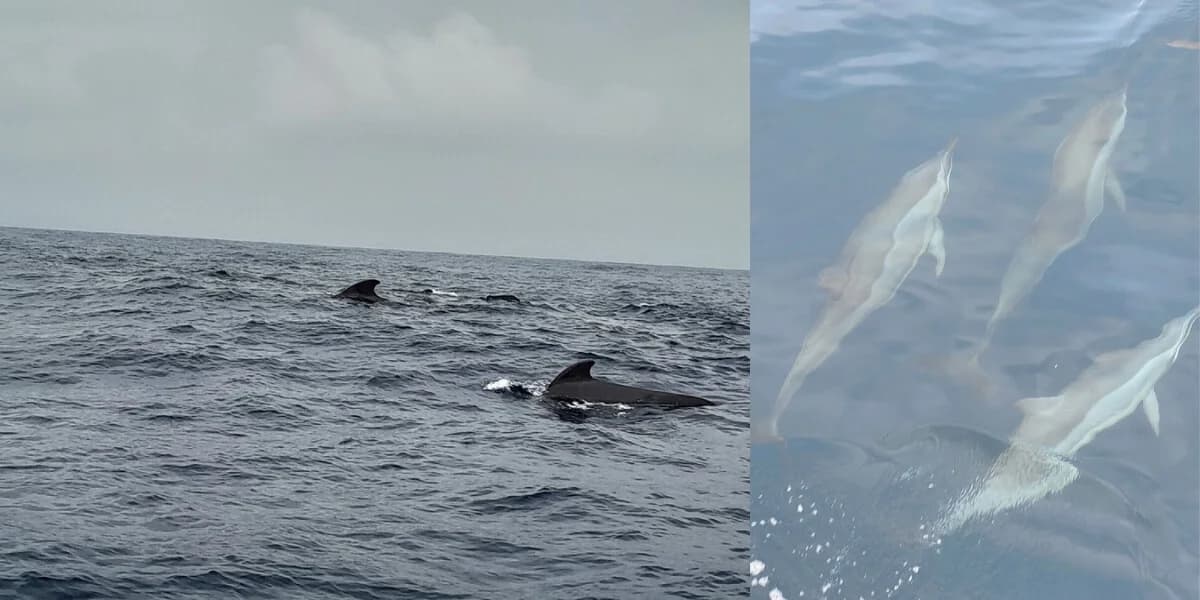
What you'll see: Blue whales are the headline act — the largest animals ever to have lived, longer than a basketball court, with hearts the size of a small car. Sperm whales, Bryde's whales, and large pods of spinner dolphins are also regularly spotted. Occasional orca sightings occur but are rare.
Peak months: December through March offer the calmest seas and highest sighting rates. November and April are bookend months — still possible but with rougher conditions and lower odds.
Sighting success rate: Operators claim 90%+ during peak season, though this deserves a caveat. Blue whale sighting frequency has declined in recent years — researchers noted a significant drop beginning around 2018, likely connected to increased boat traffic and changing migration patterns. You're still very likely to see whales (Bryde's whales and sperm whales have become more frequently spotted), but guaranteeing a blue whale specifically is no longer as reliable as it once was.
The reality check: Mirissa is popular. During peak months, dozens of boats head out each morning, and crowding around whale sightings is a legitimate concern. Multiple studies have documented boats approaching too fast, too close, and in ways that provoke avoidance behaviour from the whales. This doesn't mean you shouldn't go — it means you should choose your operator carefully.
Trincomalee (East Coast): May to September
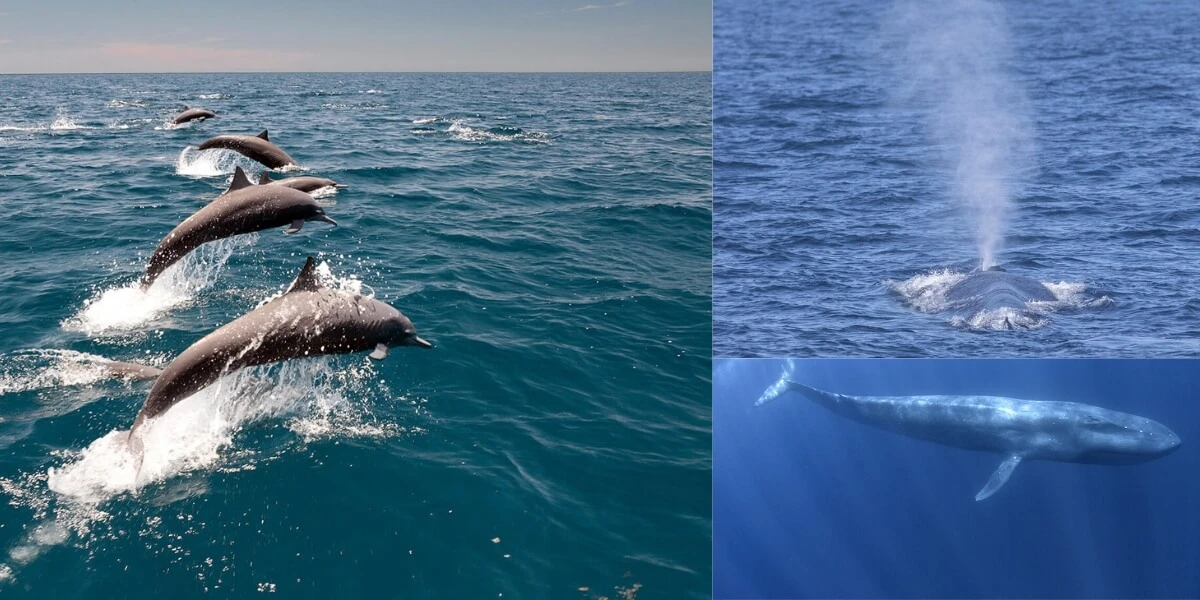
Trincomalee is Mirissa's quieter, less-developed counterpart on the northeast coast. The deep natural harbour — one of the world's deepest — attracts blue whales and sperm whales just 6–8 nautical miles from shore, roughly a 30-minute boat ride.
What you'll see: Blue whales, sperm whales, and dolphins. Trincomalee is considered the better location for sperm whale sightings and offers the best (though still rare) chance of seeing orcas.
Peak months: June through September. The east coast is calm and dry while the south coast is being battered by the Yala monsoon.
The advantage: Far fewer boats, a more relaxed experience, and arguably a more ethical encounter. The whale watching industry here is smaller and less commercialised. If the spectacle matters less to you than the quality of the experience, Trincomalee is the better choice.
The trade-off: Fewer operators, less infrastructure, and slightly lower overall sighting rates than peak-season Mirissa. Trincomalee is also harder to reach — it's a 6–7 hour drive from Colombo, compared to 2–3 hours for Mirissa.
Kalpitiya (Northwest Coast): November to March
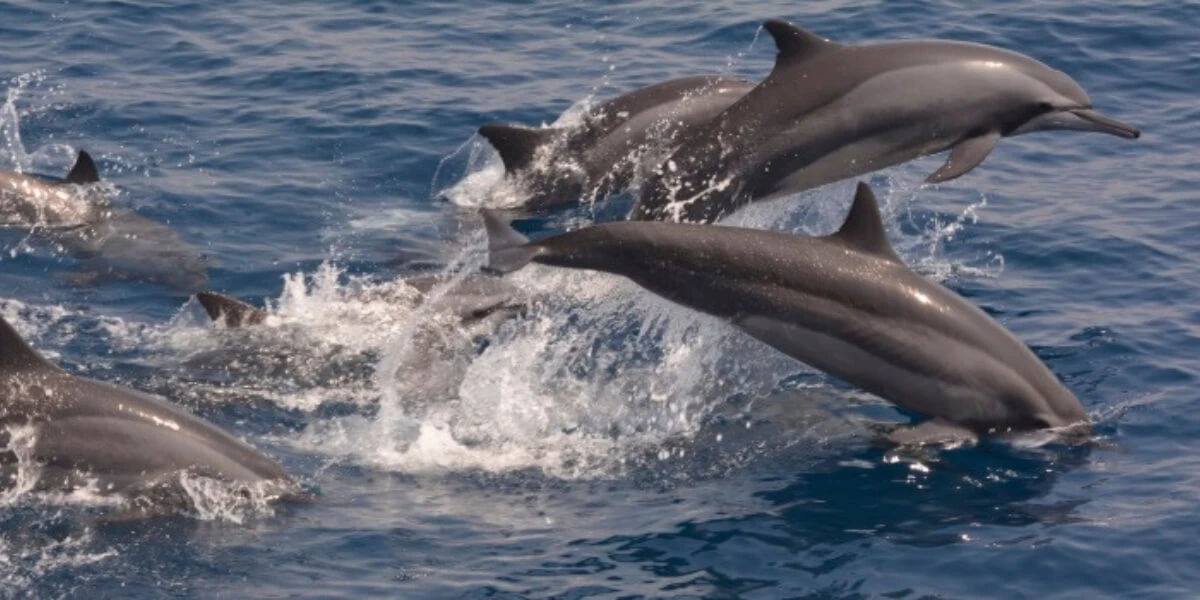
A third, lesser-known option. Kalpitiya is famous primarily for massive spinner dolphin pods — sometimes numbering in the hundreds — with occasional blue whale and sperm whale sightings as a bonus. If dolphins excite you more than whales, or if you want something off the tourist trail, Kalpitiya is worth investigating. Sperm whale sightings here are most consistent from December to February.
Quick Reference: Which Coast, When
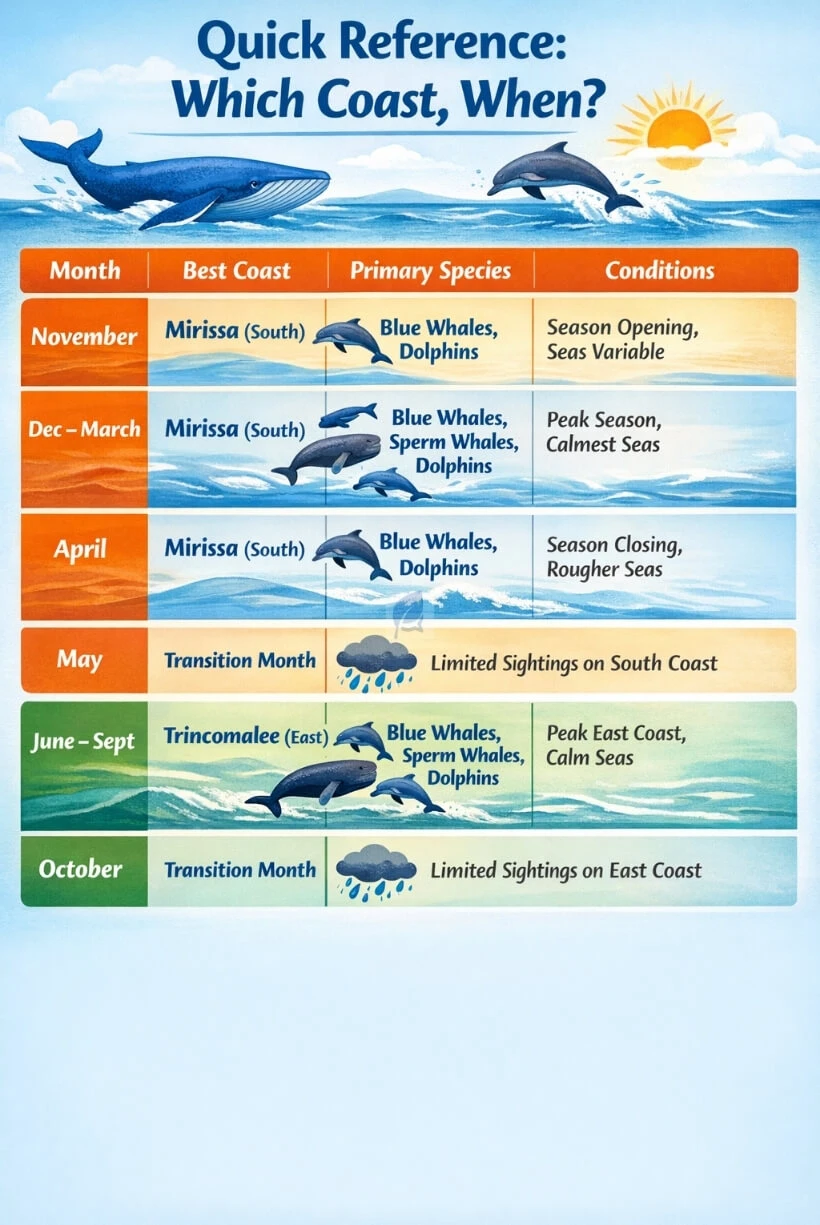
Year-round possibility: By switching coasts with the seasons, whale watching in Sri Lanka is theoretically possible for roughly 10 months of the year. May and October are the transition months where neither coast is ideal.
What a Typical Trip Looks Like
Regardless of which coast you choose, the format is similar.
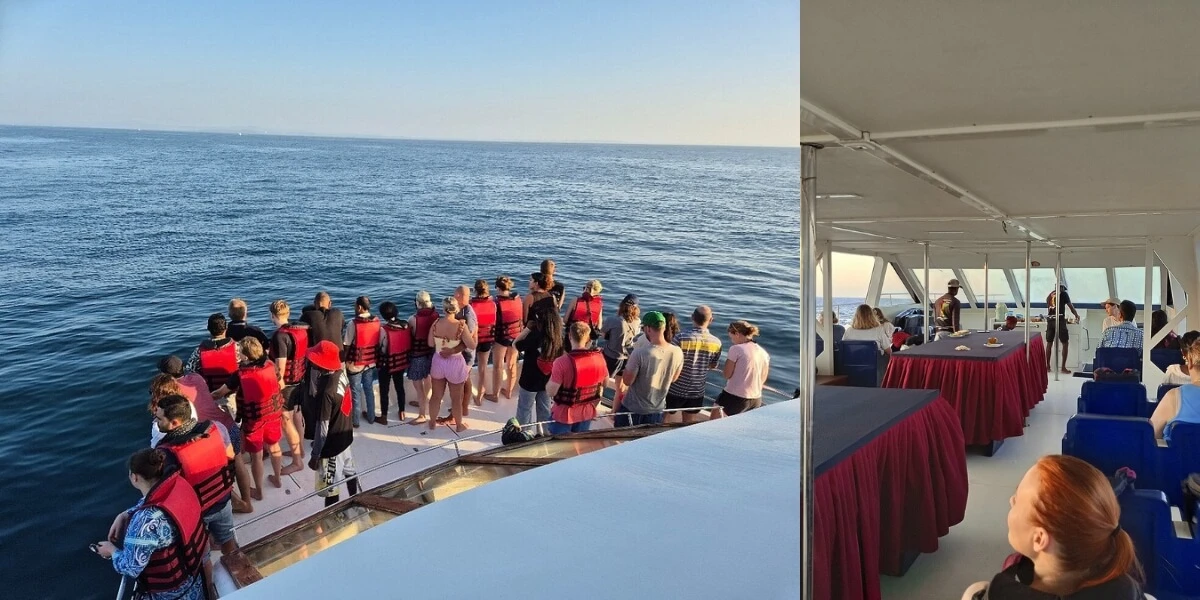
5:30–6:00 AM: Pickup from your hotel or meeting at the harbour. Yes, it's painfully early. This is non-negotiable — morning seas are calmest, light is best, and whales are most active near the surface.
6:00–6:30 AM: Departure from the harbour. Most operators provide a simple breakfast — usually bread, fruit, and water — eaten on the boat as you head out.
6:30–8:00 AM: Transit to the whale watching area. In Mirissa, this means heading 10–20 kilometres offshore, roughly 45–90 minutes of travel. In Trincomalee, the deep water is closer — sometimes just 30 minutes out.
8:00–10:00 AM: The watching. When whales are spotted, the boat slows and approaches. A blue whale sighting typically involves watching the whale surface to breathe — a massive exhalation followed by the slow arching of the back and, if you're fortunate, the dramatic tail fluke rising as the whale dives. Sperm whales are more dramatic divers and show their tail flukes more reliably. Dolphins often approach the boat and ride the bow wave.
10:00–11:00 AM: Return to harbour. Total trip duration: 3.5 to 5 hours, depending on how far the whales are that day.
What it feels like: Nothing prepares you for the scale. When a blue whale surfaces beside your boat, the sheer size — 25 to 30 metres of animal, longer than the vessel you're sitting on — is disorienting. The blowhole spray. The slow, unhurried movement. The knowledge that this animal's heart weighs as much as a car. It doesn't matter how many documentaries you've watched. Being there is categorically different.
Choosing an Operator: This Matters More Than You Think
This is the single most important decision you'll make about your whale watching experience, and it has consequences beyond your own enjoyment.
The Problem
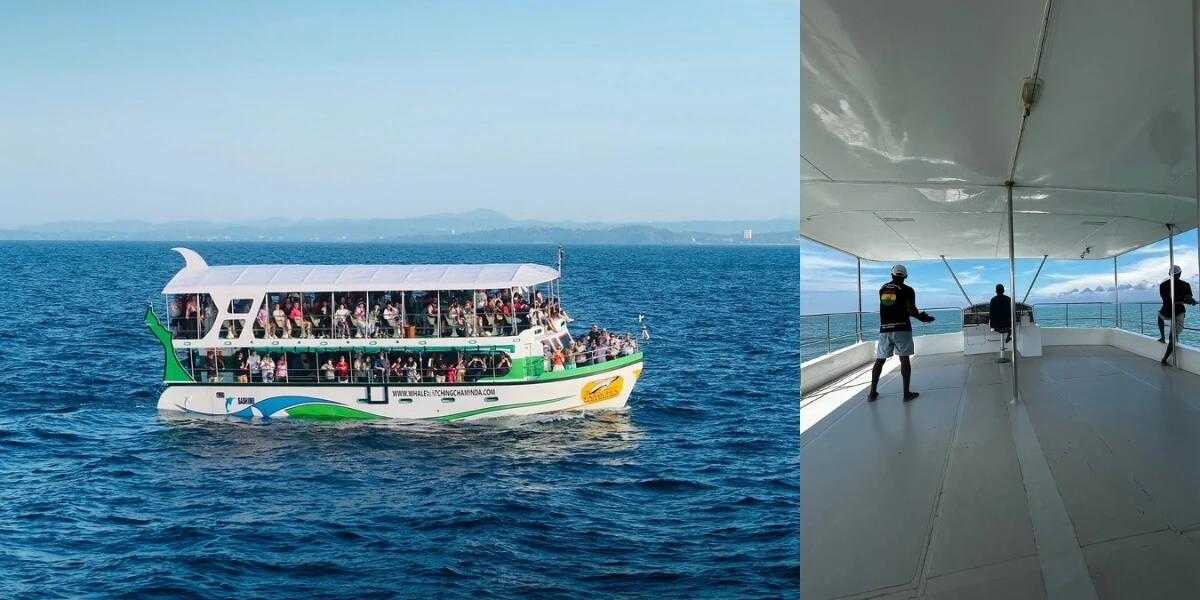
Sri Lanka's whale watching industry has grown faster than its regulation. Multiple peer-reviewed studies have documented problematic boat behaviour: vessels approaching too fast, getting too close, surrounding whales from multiple directions, and pursuing whales that are clearly trying to avoid contact. Researchers have linked this persistent harassment to changes in whale distribution and increased strandings.
Regulations exist — Sri Lanka published whale watching guidelines — but enforcement has been inconsistent.
What to Look For
A licensed, certified operator. Ask specifically. Sri Lanka Tourism Board accreditation is the minimum.
A naturalist or marine biologist on board. The best operators include someone who can identify species, explain behaviour, and — crucially — instruct the captain on appropriate approach distances. This is the clearest signal of a quality operation.
Appropriate boat speed and distance. Responsible operators maintain at least 100 metres from the whale and approach from the side, never head-on or from behind. They cut engines when close and let the whale determine the interaction. If an operator's marketing boasts about "getting up close" or features photos taken from obviously too-close distances, choose someone else.
Reasonable group sizes. Smaller boats (10–20 passengers) generally offer a better, less chaotic experience than the large double-decked vessels carrying 100–300 passengers. The trade-off: smaller boats are less stable in rough seas, and passengers prone to seasickness may prefer the larger vessels.
A sighting guarantee. Many reputable operators offer a free second trip or partial refund if no whales are sighted. This is standard practice during peak season and a sign of confidence, not desperation.
What to Avoid
Boats that chase whales aggressively. If you're on a boat and the captain is racing toward whales at speed, pursuing whales that are clearly moving away, or competing with other boats to get closest — you've chosen the wrong operator. You can't undo this once you're on the water, which is why research before booking matters.
The cheapest option. In Mirissa especially, some operators compete purely on price by cutting corners — fewer safety measures, overcrowded boats, aggressive whale approaches to satisfy passengers quickly. The difference between a budget operator and a responsible one is often only $10–20. Spend it.
Costs (2026)
Mirissa: Standard shared boat: $50–80 per person. Usually includes hotel pickup from nearby accommodation, simple breakfast, water, and the trip itself. Children (5–11) typically half price.
Premium/small-group boats: $80–120 per person. Smaller vessels, naturalist guide, better food, more space.
Private charter: $200–400+ for the boat, depending on size and operator. Worth considering for groups of 4–6.
Trincomalee: Generally 10–20% cheaper than Mirissa. Standard trips: $35–60 per person.
Kalpitiya: Dolphin-focused trips: $25–45 per person.
The Seasickness Question
Let's address this directly, because it derails more whale watching trips than bad weather.
The ocean off Sri Lanka's south coast, even in peak season, has swell.
The boats are not cruise ships. The trip lasts 3.5 to 5 hours. Seasickness is common, and if you're susceptible, it can turn a life-changing experience into a miserable ordeal.
Prevention (start the night before): Take seasickness medication the evening before your trip and again in the morning. Dramamine (dimenhydrinate) or meclizine are widely available. Ginger tablets are a milder alternative. Scopolamine patches (prescription in most countries) are the most effective option for severe sufferers.
On the boat: Sit on the upper deck where you can see the horizon. Stay in the centre of the boat where motion is least extreme. Face forward. Avoid looking at your phone or camera screen for prolonged periods — many people feel fine until they start reviewing photos.
The night before: Don't drink alcohol. Get a full night's sleep. Eat a light breakfast — not too much, not empty. The early start helps with this; you're unlikely to want a large meal at 5 AM anyway.
If you're severely prone to motion sickness: Consider Trincomalee, where the distance to whales is shorter (30 minutes vs. 60–90 from Mirissa), or choose a larger, more stable vessel.
Photography Tips
Bring a camera with optical zoom. Phone cameras, even excellent ones, struggle to capture whales at the distances you'll be observing from (50–200 metres on a responsible boat). A camera with a 200mm+ lens makes an enormous difference.
Shoot continuously when a whale surfaces. Blue whales surface for only a few seconds between dives. The tail fluke — the iconic shot — happens fast. Set your camera to burst mode and shoot the entire surfacing sequence. You'll delete 50 photos to keep one, and it's worth it.
Protect your gear. Salt spray is constant. Bring a dry bag for your camera between sightings, and wipe lenses frequently with a microfibre cloth.
The light is best early. The golden morning light off Mirissa's coast is genuinely beautiful. By mid-morning, the light is harsh and flat. Another reason the early start matters.
Accept that some moments are better experienced than photographed. When a blue whale surfaces 100 metres from your boat and you can hear the exhalation — a sound like a pressure valve releasing — put the camera down for a moment. This is one of the great wildlife encounters on the planet. Your memory of it will outlast any photograph.
Practical Details
What to bring: Sunscreen (SPF 50, apply before departure — you'll be on open water with no shade for hours), sunglasses, hat, light jacket or windbreaker (the morning boat ride is windy), seasickness medication, camera with zoom lens, dry bag, water bottle, and light snacks.
What to wear: Light layers. It can be cool and windy on the morning departure, warming quickly as the sun rises. Shoes that grip (boat decks get wet).
Where to stay the night before: Mirissa has accommodation at every budget level and is the most practical base — you can walk to the harbour in the morning. Galle is 40 minutes away and works if you arrange early pickup with your operator. Unawatuna is between the two.
For Trincomalee, stay in the town itself — there are options from budget guesthouses to comfortable hotels.
Booking: Book 2–3 days in advance during peak season (December–February especially). During shoulder months, next-day booking is usually fine. Book directly with operators when possible — hotel concierges and touts add commissions of 20–30%.
Children: Most operators accept children 5 and up. The trip is exciting for kids but long (4+ hours), and the early start requires commitment. Bring snacks and entertainment for the transit portions.
The Ethical Dimension
Whale watching, done well, is one of the most powerful wildlife experiences available to ordinary travellers. It generates revenue that creates economic incentive to protect whales rather than hunt them. It can fund research and conservation. It can transform people's relationship with the ocean.
Done poorly, it harasses animals, disrupts feeding and migration patterns, and contributes to the very problems it claims to celebrate.
Sri Lanka's whale watching industry is somewhere in between. The regulatory framework exists but enforcement is weak. The best operators are genuinely excellent — responsible, educational, conservation-minded. The worst are reckless and profit-driven.
Your choice of operator is not just a consumer decision. It's a vote for which version of this industry survives.
Choose the responsible operator. Pay the extra $15. Accept the 100-metre viewing distance. Understand that the whale is not there for your Instagram. And if you see a boat behaving badly — racing at whales, surrounding them, getting dangerously close — report it to the Sri Lanka Tourism Development Authority.
The blue whales were here before the boats. Whether they stay depends partly on decisions that look, from the outside, as simple as which tour you book on a Tuesday morning in Mirissa.
The Species You Might See
Blue Whale — The main attraction. Up to 30 metres long and 150 tonnes. The largest animal that has ever lived on Earth, including all dinosaurs. Identified by mottled blue-grey skin and a small dorsal fin set far back on the body. Relatively shallow diver — surfaces frequently, making sightings more sustained than other large whales.
Sperm Whale — Up to 18 metres. The largest toothed predator on Earth. Distinctive box-shaped head comprising one-third of body length. Dramatic divers — they arch their backs and raise their tail flukes high before deep dives that can last 45 minutes or more. More commonly seen at Trincomalee.
Bryde's Whale — 12–15 metres. Often confused with blue whales by excited first-time watchers. More commonly seen in recent years as blue whale numbers in Mirissa have fluctuated. Faster-moving and more unpredictable than blues.
Spinner Dolphin — Travel in large pods, sometimes hundreds strong. Named for their acrobatic spinning leaps. Almost guaranteed on any trip. They frequently ride the bow wave of the boat, which is as delightful as it sounds.
Bottlenose Dolphin — Smaller pods, curious and playful. Regularly seen.
Occasional sightings: Orcas (killer whales), fin whales, minke whales, and various beaked whale species have all been recorded in Sri Lankan waters. These are genuine rarities — if you see one, appreciate the luck.
This article is part of our comprehensive Sri Lanka travel series. For planning your south coast visit, see our Galle Fort guide and best beaches in Sri Lanka. For route planning that includes whale watching, see our Sri Lanka 10/14-day itinerary. For seasonal timing, see our best time to visit Sri Lanka guide.
Key Takeaways for Quick Reference:
Mirissa (south coast): November to April. Peak: December–March. $50–80/person. Most popular, most developed, most crowded.
Trincomalee (east coast): May to September. Peak: June–August. $35–60/person. Quieter, fewer boats, closer whale approaches (30 min transit).
Kalpitiya (northwest): November to March. Best for dolphin pods. Occasional whales. Most off-the-beaten-path.
Trip duration: 3.5–5 hours. Departure 6:00–6:30 AM. Non-negotiable early start.
Species: Blue whales (headline), sperm whales, Bryde's whales, spinner dolphins, bottlenose dolphins. 26 species recorded total.
Sighting rates: 90%+ during peak season (any whale species). Blue whale specifically less guaranteed than historically.
Seasickness: Take medication the night before AND morning of. Sit upper deck, face forward, watch horizon.
Operator choice matters: Licensed, naturalist on board, appropriate approach distances. The extra $15 for a responsible operator is the best money you'll spend.
Booking: 2–3 days ahead in peak season. Book direct, not through hotel concierges.
Bring: SPF 50, hat, sunglasses, camera with optical zoom, dry bag, seasickness medication, light jacket, water.