The Honest Truth About Yala
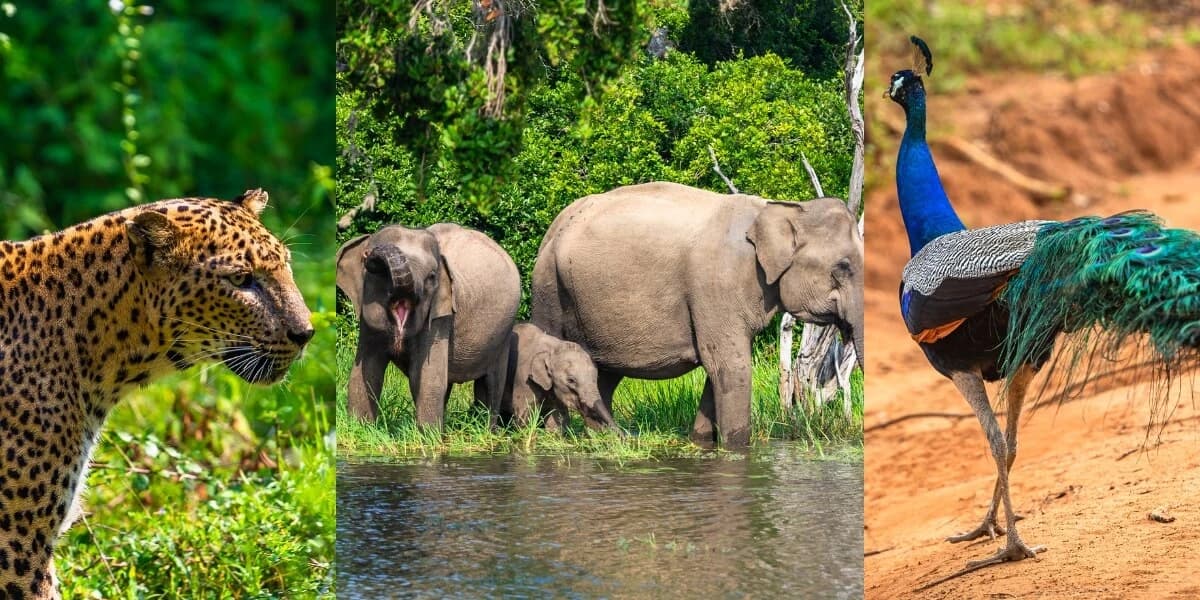
Somewhere in the scrubland of southeastern Sri Lanka, a leopard is draped across a granite boulder. It's mid-morning. The light is warm and golden. The cat's eyes are half-closed, its spotted coat the colour of old honey.
Thirty metres away, fourteen jeeps are parked in a semicircle. Sixty tourists are leaning out of open-top vehicles, cameras clicking. Someone's phone rings. A driver revs his engine to get a better angle.
The leopard yawns — not from boredom, but from the kind of weary indifference that only an apex predator with no natural enemies can muster.
This is Yala National Park. The best place on Earth to see a leopard in the wild. And one of the most frustrating safari experiences you can have if you don't plan it properly.
Yala attracted 466,437 visitors in 2023 alone, generating over LKR 1.7 billion in revenue. It was the most visited national park in Sri Lanka by a considerable margin. The reason is simple: the park's Block 1 contains approximately one leopard per square kilometre — the highest density recorded anywhere on the planet. Unlike their African cousins, which share territory with lions, hyenas, and wild dogs, Sri Lankan leopards are the top predator in their ecosystem. They don't hide. They walk down open tracks. They rest on exposed rocks in broad daylight.
This makes them unusually easy to see. It also makes them a magnet for every safari operator in southern Sri Lanka, which is why the "jeep jam" problem is real and worth understanding before you book.
This guide explains how to see Yala's extraordinary wildlife — leopards, elephants, sloth bears, and over 200 species of birds — while avoiding the worst of the crowds, the scams, and the disappointments that poorly planned safaris deliver.
What Actually Lives in Yala
Before we talk logistics, let's address the question that brings most people here.
The Sri Lankan Leopard (Panthera pardus kotiya)
This is a subspecies found nowhere else on Earth. Slightly smaller than the African leopard, with a tawnier coat and closely spaced rosettes, the Sri Lankan leopard occupies every habitat type within Yala — from dense monsoon forest to open scrubland to coastal dunes.
Block 1 of Yala hosts an estimated 30 to 50 leopards in approximately 40 square kilometres. These animals are territorial, and experienced trackers know which rocky outcrops (locally called kopjes) specific males use as resting spots. A good guide doesn't search for leopards randomly. They read the landscape — checking known territories, watching the behaviour of deer and monkeys (whose alarm calls signal a predator's presence), and positioning the jeep before the cat even appears.

Leopard sightings in Block 1 are common. They're not guaranteed, but during the dry season, the probability on a full-day safari is high enough that most visitors see at least one.
The Sri Lankan Elephant
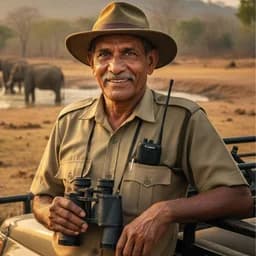
Yala has a resident population of roughly 350 elephants. You will see them. Solitary bulls wander the scrubland. Family herds gather at waterholes in the afternoon. Occasionally, during the dry season, elephants are spotted on the beach at the park's southern edge — one of the few places in the world where this happens.

The Sloth Bear
The rarest and most elusive of Yala's big three. The Sri Lankan sloth bear is a shaggy, nocturnal insect-eater that spends most of its time deep in the jungle. Sightings are uncommon for most of the year, with one critical exception: during the Palu fruit season (May to July), when the trees bear sweet fruit that draws the bears into the open. If seeing a sloth bear matters to you, plan your visit around this window.

Everything Else
Yala hosts 44 mammal species and 215 bird species. On a single safari, you might reasonably expect to see spotted deer, wild boar, water buffalo, mugger crocodiles, jackals, toque macaques, grey langurs, land monitors, peacocks, painted storks, and — if you're particularly fortunate — a black-necked stork, one of Asia's rarest wading birds.

The commonly asked question: "Are there tigers in Sri Lanka?" The answer is no. There have never been tigers in Sri Lanka. The leopard fills the top-predator role entirely, which is precisely why they behave so differently from leopards elsewhere.
The Five Blocks: Where to Go and Why It Matters
Yala covers 979 square kilometres divided into five blocks. Most tourists visit only Block 1. This is a strategic choice, but not always the right one.
Block 1
Best for: Leopards. Unambiguously. This is where the highest density of cats lives, where the most experienced trackers operate, and where your odds of a sighting are highest.
The trade-off: Block 1 is also where the highest density of jeeps operates. On a busy morning during peak season, you may find yourself in a queue of 15–20 vehicles at a leopard sighting. The experience can feel less like a wildlife encounter and more like a car park with a cat.
Who should go here: First-time visitors who came specifically for leopards. Serious wildlife photographers (bring a long lens — 300mm minimum). Anyone willing to enter the park at gate-open (6:00 AM) to beat the crowds.
Block 5
Best for: Elephants, scenery, and solitude. Block 5 features taller trees, river crossings, and far fewer vehicles. The landscape is greener and more varied than Block 1's dry scrubland.
The trade-off: Leopard sightings here are significantly less common. Sloth bears are rare. If you came for the big cat, Block 5 may leave you wanting.
Who should go here: Travellers who hate crowds. Families with children who will enjoy seeing elephants and birds without the competitive intensity of Block 1. Anyone on their second or third Yala visit who has already seen leopards.
Blocks 2, 3, and 4
These blocks are less accessible, less visited, and offer a genuinely wild experience for those willing to travel further and accept lower sighting odds. Block 2 features beautiful "Willu" lakes and is excellent for birding. These blocks suit serious naturalists and photographers looking for solitude rather than guaranteed sightings.
When to Go: The Timing That Changes Everything
Season
February to June (Dry Season): This is the prime window. As the rains stop and waterholes shrink, animals concentrate around the remaining water sources. Vegetation thins out, making wildlife easier to spot. Leopard sightings peak during this period, as do elephant gatherings at the lagoons.
May to July (Palu Season): The overlap period when Palu trees fruit is the best time for sloth bear sightings. If your goal is to see all three of Yala's signature species — leopard, elephant, and sloth bear — May and June offer the best statistical chance.
July to September: Still decent for wildlife, though the park often closes for four to six weeks (typically September into October) for maintenance and drought relief. Always verify current closure dates before booking.
December to March: Coincides with Sri Lanka's peak tourist season. Wildlife sightings are moderate, but jeep numbers are at their highest. The northeast monsoon can bring occasional rain.
Time of Day
Morning safari (5:30–6:00 AM start): The best choice for leopards and sloth bears. Predators are active in the cooler hours, and the early-morning light produces the best photography conditions. Most serious visitors choose the morning drive.

Afternoon safari (2:00–2:30 PM start): Elephants and crocodiles are more active in the afternoon heat, congregating at waterholes to drink and cool off. The light in the last hour before closing (around 6:00 PM) can be spectacular.
Full-day safari (6:00 AM to 6:00 PM): The ultimate option. Research suggests that full-day drives increase sighting odds by approximately 30% compared to half-day trips. You cover more ground, catch both morning and afternoon activity peaks, and have time to explore quieter sections of the park that half-day visitors miss.
What It Actually Costs (The Transparent Breakdown)
This is the section most tourists search for, and the one most safari operators keep vague for obvious reasons. Yala's pricing structure has two separate components, and understanding this prevents the most common complaint: "Why was it more expensive at the gate than they quoted me?"
Government Entrance Fees (Paid to Department of Wildlife Conservation)

These fees are set by the government and are non-negotiable. They change periodically, and the LKR-to-USD conversion fluctuates. Expect to pay the equivalent of roughly $35–45 per adult once all charges are included.
Jeep Hire (Paid to Safari Operator)

Total Realistic Budget Per Person

The scam to avoid: some roadside operators in Tissamaharama offer suspiciously cheap jeep rates ($25–30), then add "unexpected" fees at the park gate, use poorly maintained vehicles, or cram strangers into a shared jeep without telling you in advance.
Book through your accommodation, a reputable online platform, or a recommended operator — the small premium buys you a functional vehicle, a knowledgeable guide, and an honest final price.
How to Book Without Getting Ripped Off
Option 1: Through Your Accommodation
Hotels and guesthouses near Yala — particularly in Tissamaharama, the gateway town — have relationships with local safari operators. Many can arrange morning pickups, pack breakfast boxes, and recommend guides they trust. This is the most common and generally reliable method.
Ask specifically: Is the jeep private or shared? What's included in the price? Is the guide a certified naturalist or just a driver? Does the quoted price include park entrance fees?
Option 2: Pre-Book Online
Several reputable platforms offer advance booking with transparent pricing. This suits travellers who want certainty and don't want to negotiate on arrival. Prices are slightly higher than local rates, but the convenience and guarantee of a quality vehicle may justify the premium.
Option 3: Walk-Up in Tissamaharama
The town is full of safari operators. You can negotiate a deal the evening before your safari. This gives you the most price flexibility but also the highest risk of a substandard experience. If you go this route, inspect the jeep before agreeing (check the condition, the roof opening for photography, and whether it has decent suspension), confirm the final price in writing, and ask for the guide's certification number.
The Crowd Problem: How to Avoid Yala's Worst Habit
Let's address the elephant in the room (and the thirty jeeps surrounding it).
Yala's popularity is both its greatest strength and its most significant weakness. Block 1 can feel overcrowded during peak season, with jeeps racing from sighting to sighting and converging in large groups whenever a leopard is spotted.
Here's how to minimise the frustration:
Enter at gate-open. The park gate opens at 6:00 AM. The first vehicles in have the best chance of finding leopards before the main crowd arrives. By 7:30 AM, the tracks are significantly busier.
Choose a private jeep with a good guide. A naturalist who knows leopard territories will position you ahead of the crowds, not behind them. Cheap shared jeeps tend to follow other vehicles rather than track independently.
Consider a full-day safari. Half-day visitors leave by midday, and the park empties dramatically in the early afternoon. The hours between 1:00 and 3:00 PM can be surprisingly productive and almost entirely free of other jeeps.

Visit in shoulder season. February and March are excellent for wildlife but less crowded than the December–January tourist peak. May and June offer outstanding sightings (including sloth bears) with even fewer visitors.
Try Block 5 for your second drive. If you're spending multiple days near Yala, do Block 1 first for the leopard experience, then Block 5 for the contrast. The peace alone is worth it.
Yala vs. The Other Parks: An Honest Comparison
Sri Lanka has several excellent national parks. Yala is the most famous, but depending on your priorities, it may not be the best choice.
Yala vs. Udawalawe
Udawalawe is the elephant park. If your primary goal is to see elephants in large numbers, Udawalawe delivers more consistently than Yala. The park hosts around 500 elephants, and sightings are virtually guaranteed — some travellers report seeing 30 or more in a single drive. The landscape is open grassland around a large reservoir, making spotting easy.
Udawalawe does not have leopards in meaningful numbers. It's quieter, cheaper, and closer to Ella (about two hours by road). For families or travellers with limited time, Udawalawe offers a more relaxed, equally rewarding safari experience.
Choose Yala if: You want leopards. Choose Udawalawe if: You want elephants with certainty and calm.
Yala vs. Minneriya/Kaudulla
Minneriya National Park (and nearby Kaudulla) is famous for "The Gathering" — a seasonal congregation of up to 300 elephants around Minneriya Tank between June and October. It's one of the largest gatherings of Asian elephants in the world and is located in the Cultural Triangle, making it easy to combine with visits to Sigiriya and Dambulla.

Choose Minneriya if: You're visiting the Cultural Triangle and want a safari without travelling to the south coast.
Yala vs. Wilpattu
Wilpattu National Park in the northwest is Sri Lanka's largest park and arguably its most beautiful, with a series of natural lakes (villus) set in dense forest. Leopard density is lower than Yala's, but the park is dramatically less crowded. Serious wildlife photographers often prefer Wilpattu for its atmosphere and the quality of its sightings — fewer jeeps means less stress on the animals and more natural behaviour.
Choose Wilpattu if: You're a returning visitor, a keen photographer, or someone who values wilderness atmosphere over sighting statistics.
Where to Stay
Tissamaharama (Budget to Mid-Range)
The closest town to Yala's main entrance, about 20 kilometres away. "Tissa" has the widest range of accommodation — from $8 guesthouses to $50 boutique hotels. Most safari operators are based here, and morning pickups are standard.
Advantage: Price, variety, and convenience.
Disadvantage: It's a small town with limited restaurants and nightlife. You're here for the safari, not the town.

Eco-Lodges Near the Park (Mid-Range to Luxury)
Several properties are located on the park's boundary, offering proximity that eliminates the early-morning drive from Tissa. Some — like the tented camps run by specialist operators — provide all-inclusive packages with naturalist-guided drives, meals, and the extraordinary experience of hearing leopards call from your bed at night.
Advantage: Proximity, atmosphere, and expertise. Some camps see wildlife (elephants, peacocks, monitor lizards) within the property itself.
Disadvantage: Premium pricing. Expect $150–400+ per night for the better camps.
Ella or South Coast Beaches (Day Trip)
Many travellers visit Yala on a day trip from Ella (about two to three hours by road) or south coast towns like Mirissa or Tangalle. This works but involves an extremely early start (3:00–4:00 AM departures are common to reach the park gate by 6:00 AM).
Advantage: No extra accommodation cost. Convenient if Yala is a one-day addition to a broader itinerary.
Disadvantage: Exhausting. You spend three to four hours in transit on top of four to six hours on safari. The afternoon drive back happens when you're already tired. If your safari is disappointing, you don't get a second chance the next morning.
What to Bring
A good camera with a zoom lens. Leopards are often spotted 30–80 metres away. A 200mm lens will capture the moment; a 300mm or longer will capture the detail. Phone cameras are inadequate for serious wildlife photography at Yala's typical sighting distances.
Binoculars. Essential for birding and for scanning rock formations where leopards rest. Even a cheap pair transforms the safari experience.
Neutral-coloured clothing. Khaki, olive, grey, or brown. Bright colours and white can disturb wildlife. Long sleeves and trousers also protect against sun and insects.
Sun protection. Open-top jeeps offer no shade. Bring sunscreen (high SPF), a hat, and sunglasses. The heat between 10:00 AM and 2:00 PM can be intense.
Water and snacks. Some safari operators provide water; many don't. Bring at least two litres per person for a full-day drive, plus snacks. There are no shops inside the park.
Patience. This is the most important thing you can bring. Wildlife doesn't operate on a schedule. Some safaris produce a leopard sighting in the first twenty minutes. Others require four hours of driving before the moment arrives. The waiting is part of the experience, and the payoff is worth every quiet hour.

Frequently Asked Questions
Is Yala National Park worth visiting?
Yes — with the right planning. A well-timed, well-guided safari in Yala is one of the finest wildlife experiences available anywhere in Asia. A poorly planned visit during peak season in a cheap shared jeep can be genuinely disappointing. The difference is entirely in the preparation.
What are my chances of seeing a leopard?
In Block 1 during the dry season (February–June), a full-day safari with an experienced tracker gives you a strong probability of at least one sighting. No ethical guide will guarantee a sighting — these are wild animals — but the odds at Yala are higher than at any other location in the world.
Is a half-day or full-day safari better?
Full-day, without question, if your budget and stamina allow it. You see more territory, catch both morning and afternoon activity peaks, and benefit from the quiet midday hours when most half-day visitors have left.
Can I combine Yala with Udawalawe?
Yes, and many itineraries do. Udawalawe is roughly two hours from Yala by road. A common pattern is to visit Udawalawe first (for elephants), then continue to Yala (for leopards), spending a night near each park.
Is Yala safe?
Yes, provided you stay in the vehicle. The park contains mugger crocodiles, venomous snakes, elephants, and — obviously — leopards. None of these pose a threat if you remain inside the jeep and follow your guide's instructions. The most common injury at Yala is sunburn.
When is the park closed?
Block 1 typically closes for four to six weeks between September and October for maintenance and drought relief. The exact dates change annually. Always verify current status before booking, either through the Department of Wildlife Conservation or your accommodation.
The Ethical Question
It would be dishonest to write a Yala guide without addressing this: the park has a jeep-crowding problem, and responsible tourism matters.
When thirty vehicles converge on a single leopard, the animal's behaviour changes. It may move into denser cover. It may alter its hunting patterns. Over time, chronic disturbance affects breeding success and territory use. The problem isn't that tourists visit Yala. The problem is that too many jeeps chase the same individual cats at the same time.
What you can do: Choose an operator whose guides maintain respectful distances from wildlife. Avoid operators who speed through the park or break off-road to get closer to animals. If you arrive at a sighting with more than ten vehicles already present, ask your guide to move on and return later. Support the park by paying entrance fees without complaint — that revenue funds conservation and ranger salaries.
Since January 2024, Sri Lanka has required all Yala jeep drivers to hold current certification and adhere to speed limits and crowd-management checkpoints. This is a step forward. The enforcement is imperfect but improving.
The leopards of Yala have survived for millennia. They can survive tourism too — but only if visitors choose operators who treat the park as a privilege, not a commodity.
The Moment That Makes It Worth Everything
You will remember the moment you see your first wild leopard. Not the way you remember a photograph or a film. The way you remember something your body experienced.
The jeep stops. Your guide points. You scan the scrubland and see nothing. Then your eyes adjust, and there it is — a leopard, walking along a sandy track with the fluid, unhurried gait of an animal that has never been hunted. The spots are sharper than any picture prepared you for. The muscles move beneath the coat like something mechanical and perfect. The eyes, when they glance at your jeep, are the palest gold you've ever seen.
The leopard crosses the track twenty metres ahead of you. It pauses, looks back once, and disappears into the thorny scrub without a sound.
The entire sighting lasts perhaps forty seconds.
You will think about it for years.
Planning a wildlife trip to Sri Lanka? This guide is part of our comprehensive Sri Lanka travel series. Bookmark this page — we update it as park regulations, prices, and conditions change.
Key Takeaways for Quick Reference:
Yala has the highest leopard density on Earth (~1 per km² in Block 1)
Best time for leopards: February to June (dry season)
Best time for sloth bears: May to July (Palu fruit season)
Enter at 6:00 AM — first jeeps in have the best sightings with fewest crowds
Full-day safaris increase sighting odds by ~30% over half-day trips
Budget: $55–75 shared; $75–140 private; $200+ luxury
Block 1 for leopards; Block 5 for elephants and peace; Udawalawe for guaranteed elephants
Book through accommodation or reputable platforms — avoid roadside touts in Tissa
Park typically closes September–October — always verify dates
Bring a zoom lens (300mm+), binoculars, water, sunscreen, and patience
Places Mentioned(4)
Yala National Park
Sri Lanka
Minneriya National Park
Sri Lanka
Udawalawe National Park
Sri Lanka
Kaudulla National Park
4V6P+78Q, Galoya Rd, Galoya 50150, Sri Lanka
Tap a place card to see more details • Swipe to see all 4 places