I shall not waste your time with the usual travel-blog throat-clearing. No sunrise metaphors. No breathless declaration that I have "discovered" a place five thousand locals have known about their entire lives.
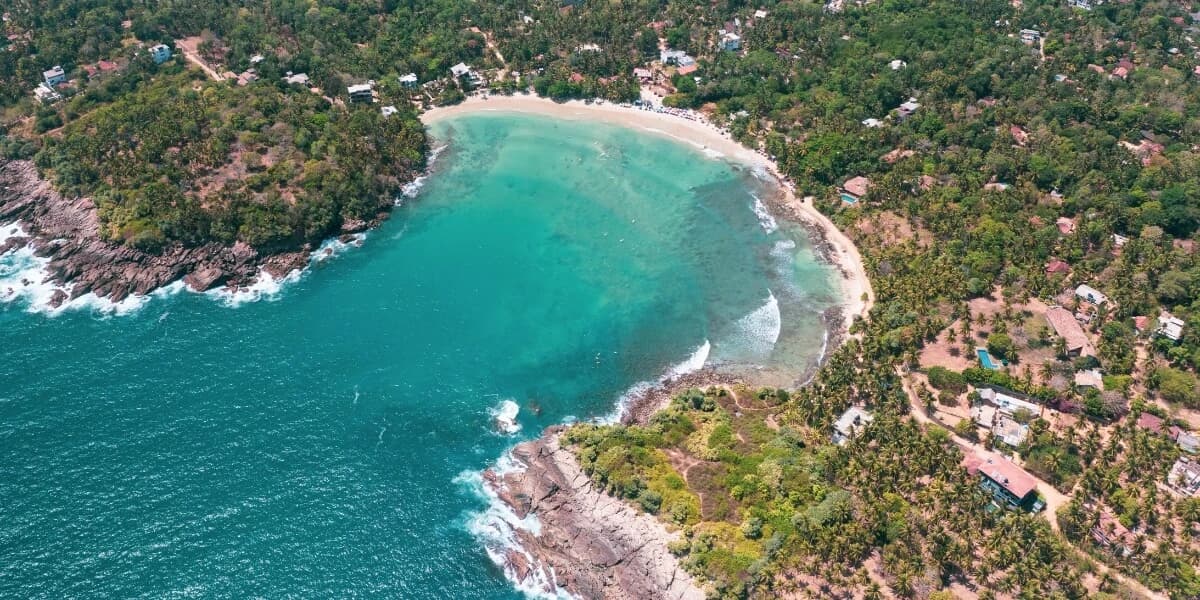
Instead, I shall tell you a fact. And the fact is this: Hiriketiya, a horseshoe bay on the south coast of Sri Lanka barely wide enough to park two cricket pitches side by side, has become the most talked-about small beach town in Asia. Not through any marketing campaign. Not through a viral reel, though plenty exist. It happened because the place delivers something travellers have been chasing for decades — and failing to find in the usual suspects.
It delivers genuine ease.
The geography of a perfect accident
Hiriketiya sits just off the main Matara–Tangalle road, a short tuk-tuk ride from the workaday town of Dickwella. Getting there requires a deliberate turn off the highway, down a narrow lane flanked by jungle and the occasional stray dog with an entrepreneurial spirit. This geographic inconvenience is precisely what saved it.
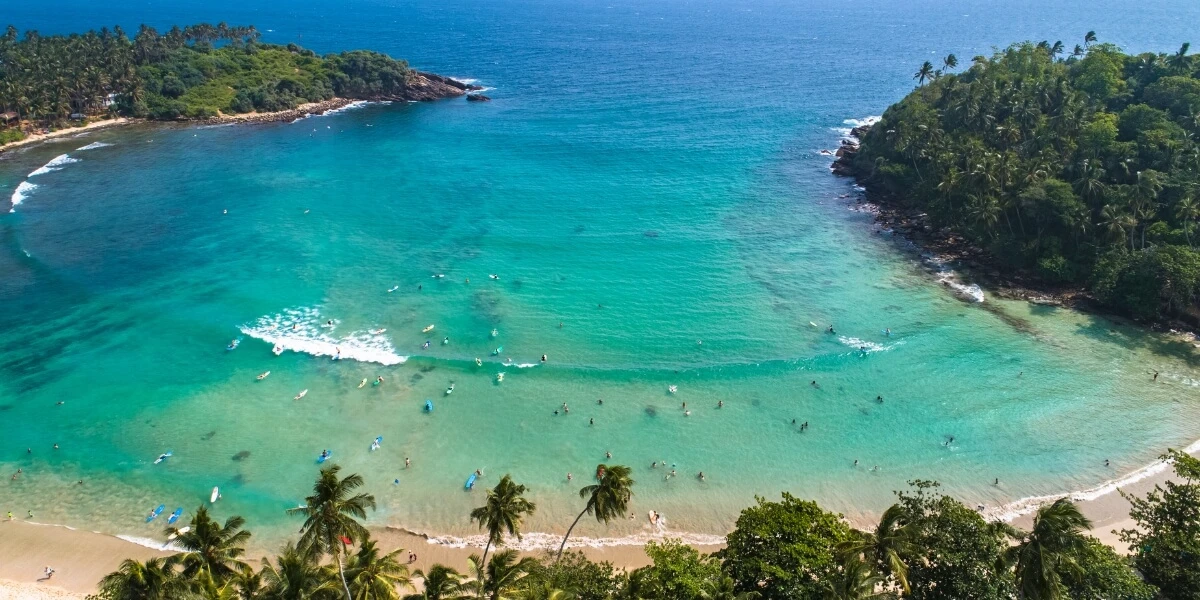
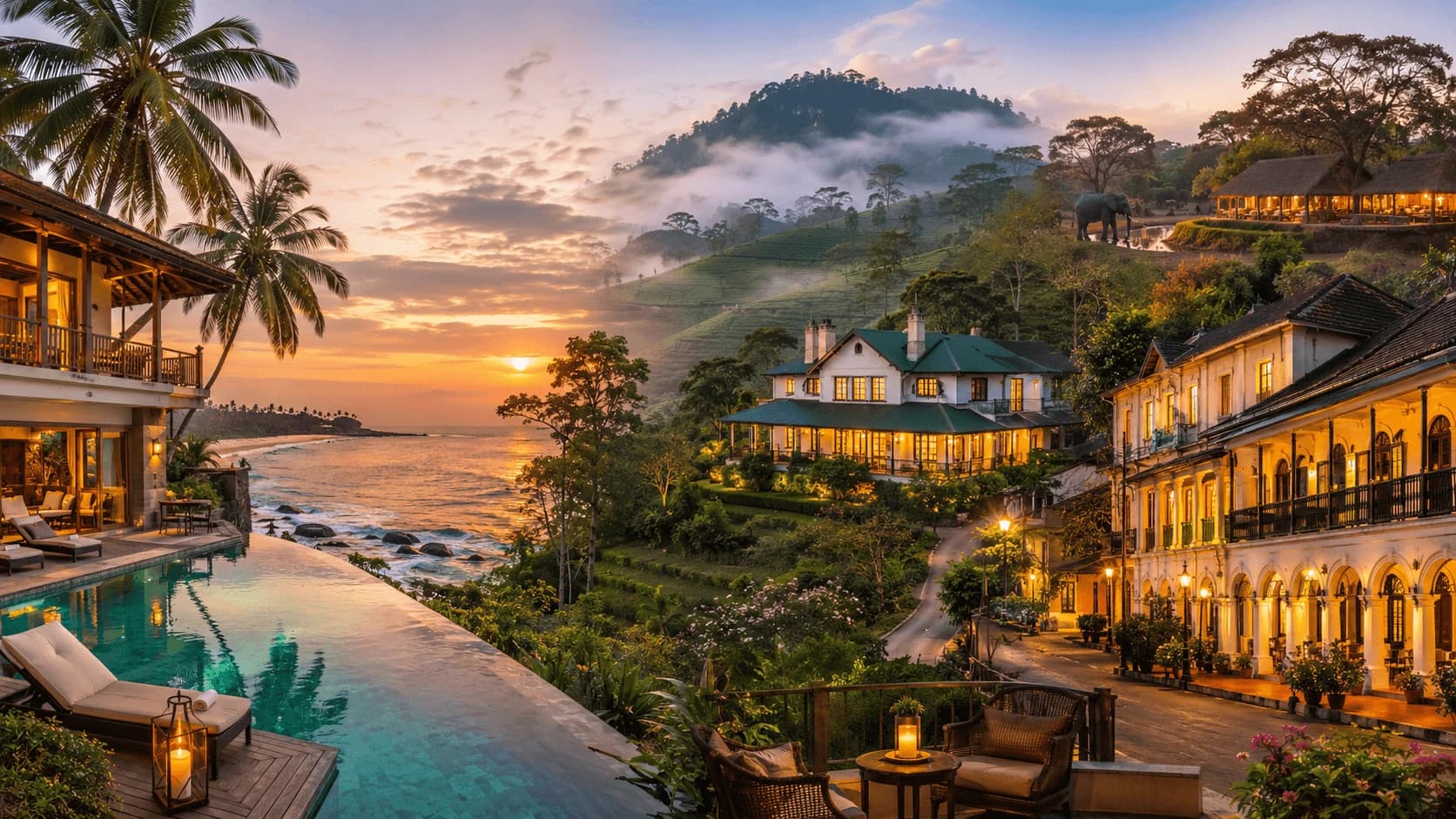
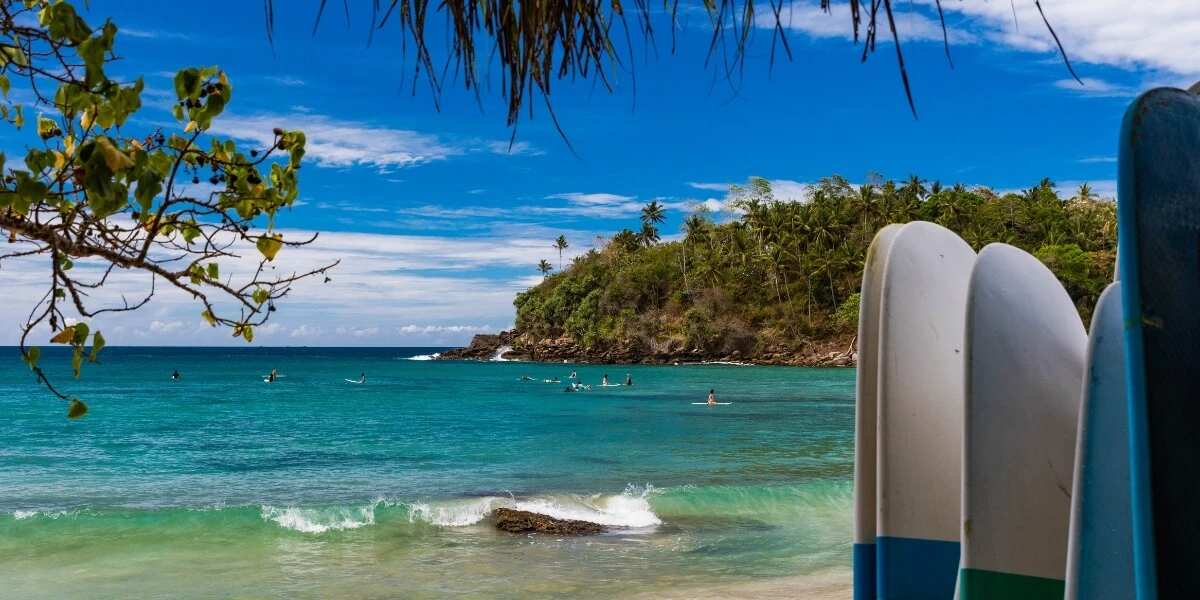
While Mirissa and Unawatuna absorbed the tour-bus crowds and the resort developers who follow them, Hiriketiya stayed small. The bay is crescent-shaped, framed by coconut palms and rocky headlands. The sand is pale. The water is the colour of the gemstones Sri Lanka is famous for. You can swim here — actually swim, not dodge rocks and riptides and jet skis — which is rarer on this coast than you might imagine.
For years, only a handful of surfers knew the place existed. They kept quiet about it in the way surfers always do, guarding their break the way a Parisian guards his boulangerie. That era is over. But the bay's compact size has, paradoxically, become its greatest protection. There is only so much room. And so Hiriketiya has grown upward in quality rather than outward in sprawl.
Who goes to Hiriketiya, and why they stay longer than planned
Every beach town attracts a type. Kuta gets the teenagers. Tulum gets the influencers. Byron Bay gets the people who used to be influencers and now sell kombucha.
Hiriketiya gets the people who are tired of all that.
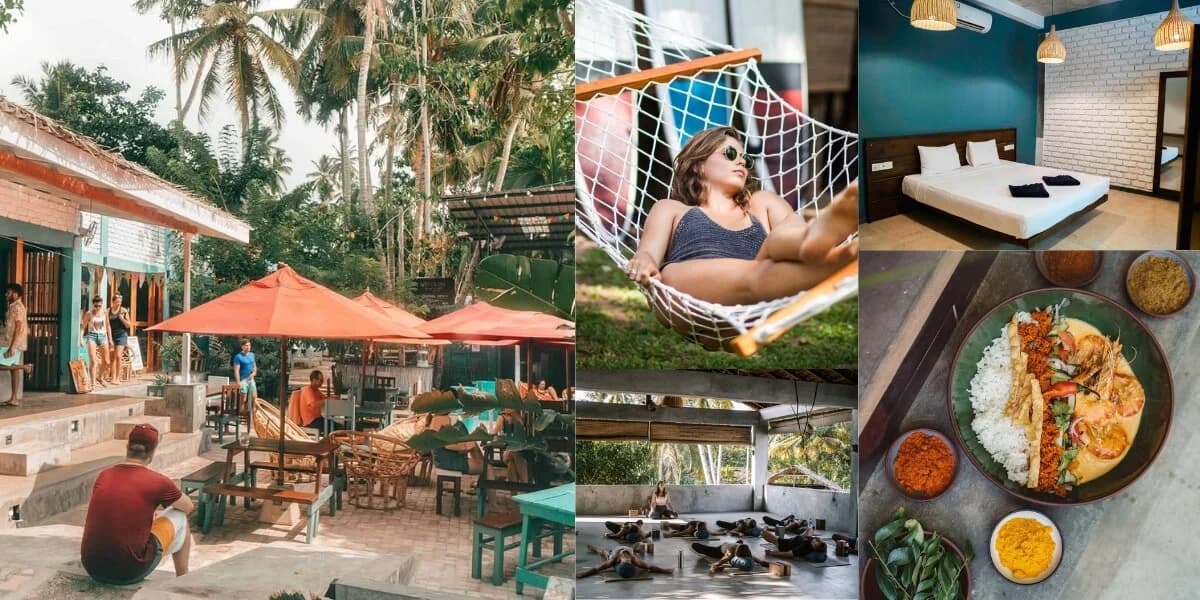
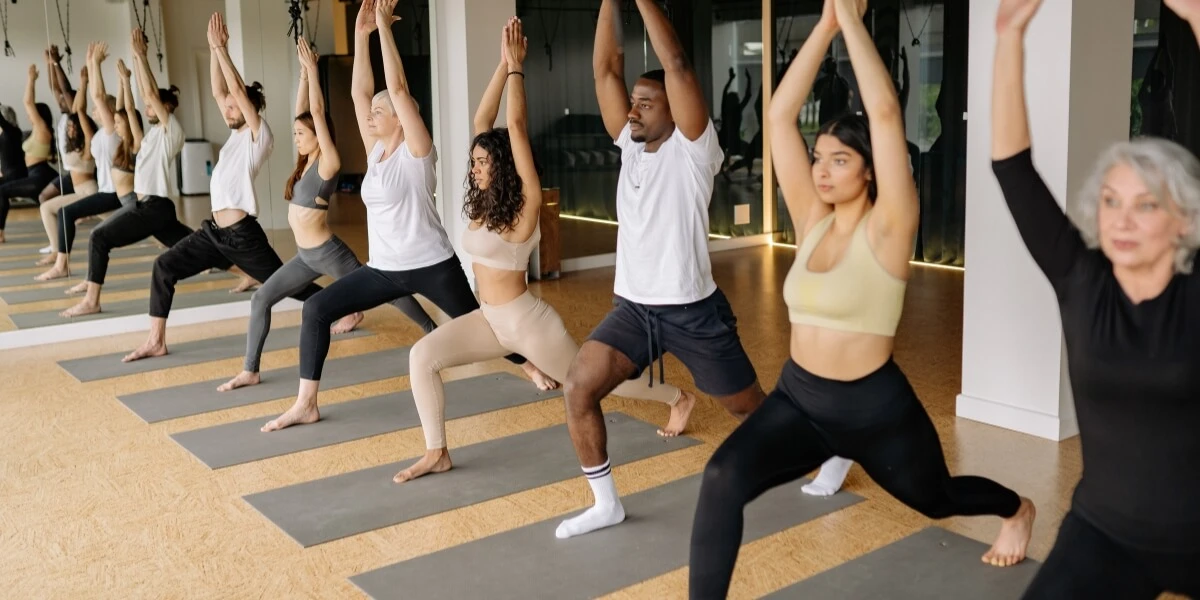
The crowd here skews late twenties to early forties. Many are digital nomads — designers, developers, copywriters, and the assorted laptop class — who discovered that a month's rent in Hiriketiya costs less than a week in Canggu. Others are surfers, drawn by waves that are forgiving enough for beginners yet interesting enough for intermediates. Still others are yoga practitioners, wellness seekers, or simply people on holiday who want a proper beach without a DJ ruining it.
What unites them is a preference for substance over spectacle. Hiriketiya has no beach clubs with thousand-dollar bottle service. It has no all-night raves, no neon-lit party strips. What it has is a rice-and-curry lunch for three dollars, a sunset that costs nothing, and the kind of community where you recognise faces by your second day and know names by your third.
The remote work equation
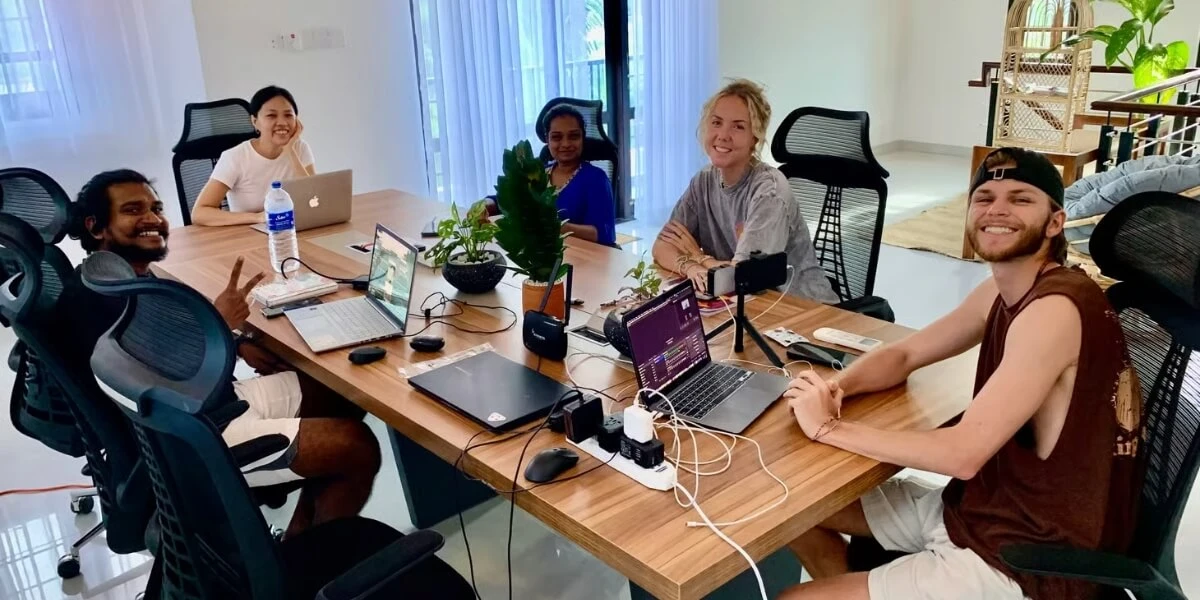
Sri Lanka introduced a digital nomad visa in early 2026, and towns like Hiriketiya are the reason it exists. The infrastructure for remote work has grown remarkably fast. Coliving spaces like Nomadico's Slow Living and the community-driven houses scattered around the bay offer fibre-optic internet, ergonomic workstations, and the kind of environment where "I'll just stay one more week" becomes a monthly ritual.
Cafes double as coworking spots. The Salty Pelican earned a reputation for reliable wifi and strong coffee. Verse Collective, over in neighbouring Dickwella, blends a hotel, coworking space, and cafe under one roof with the kind of ease that makes you wonder why anyone bothers with WeWork.
The time zone helps, too. Sri Lanka Standard Time sits five and a half hours ahead of UTC — manageable for European clients, tolerable for Americans willing to take a morning call at an unusual hour. And the cost of living remains a fraction of Bali's, despite recent price increases driven by popularity.
A word of candour: the internet is not Tokyo. Power cuts happen during the midday heat. Backup generators are common but not universal. If your livelihood depends on uninterrupted four-hour video calls, you will need to choose your workspace carefully. But for the vast majority of remote work — writing, designing, coding, thinking — Hiriketiya delivers more than adequately.
The surf, without the snobbery
I have little patience for surf culture as it is often marketed: the $200 board shorts, the tribal tattoos, the absurd hierarchy of who caught which wave when. Hiriketiya is blessedly free of this nonsense.
The bay produces a gentle, rolling break that is ideal for learning. Board rental costs a couple of dollars. Lessons are affordable and taught by locals who grew up in the water. For more experienced surfers, neighbouring breaks at Kabalana and Lazy Left offer greater challenge within a short scooter ride.
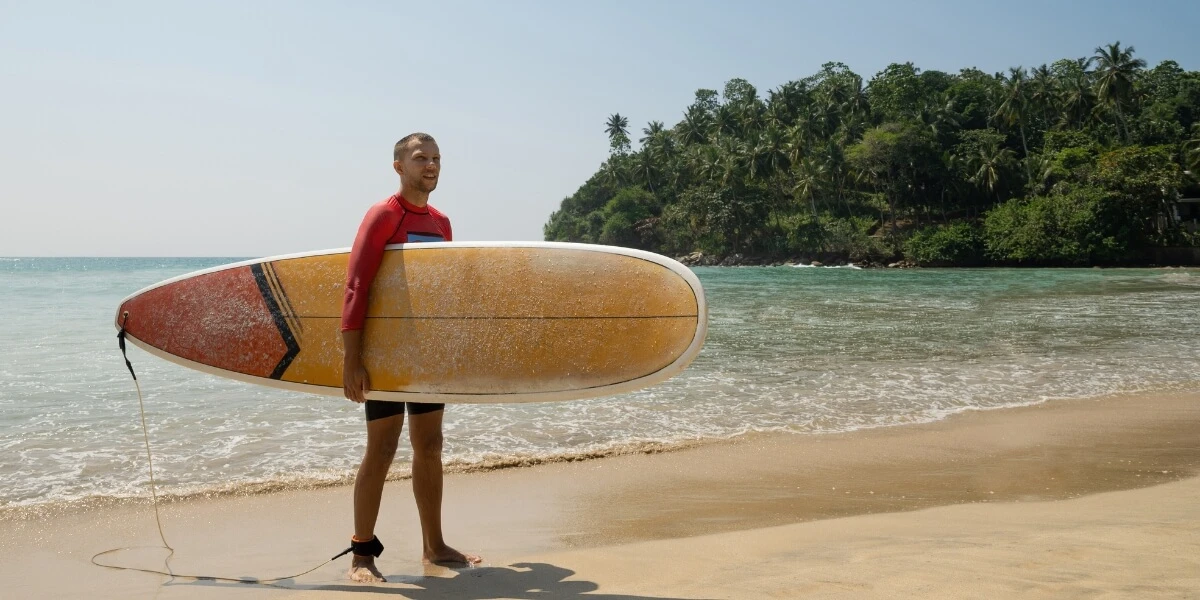
What matters more than the wave quality, though, is the atmosphere. Nobody cares whether you can stand up. Nobody is jockeying for position with the aggression you'll find at more established breaks. You paddle out, you try, you fall, you laugh, you paddle out again. The pretension has been washed away by the simplicity of the place.
What you eat, and why it matters
I have always believed that you can judge a place by the quality of its cheapest meal. By this measure, Hiriketiya is outstanding.
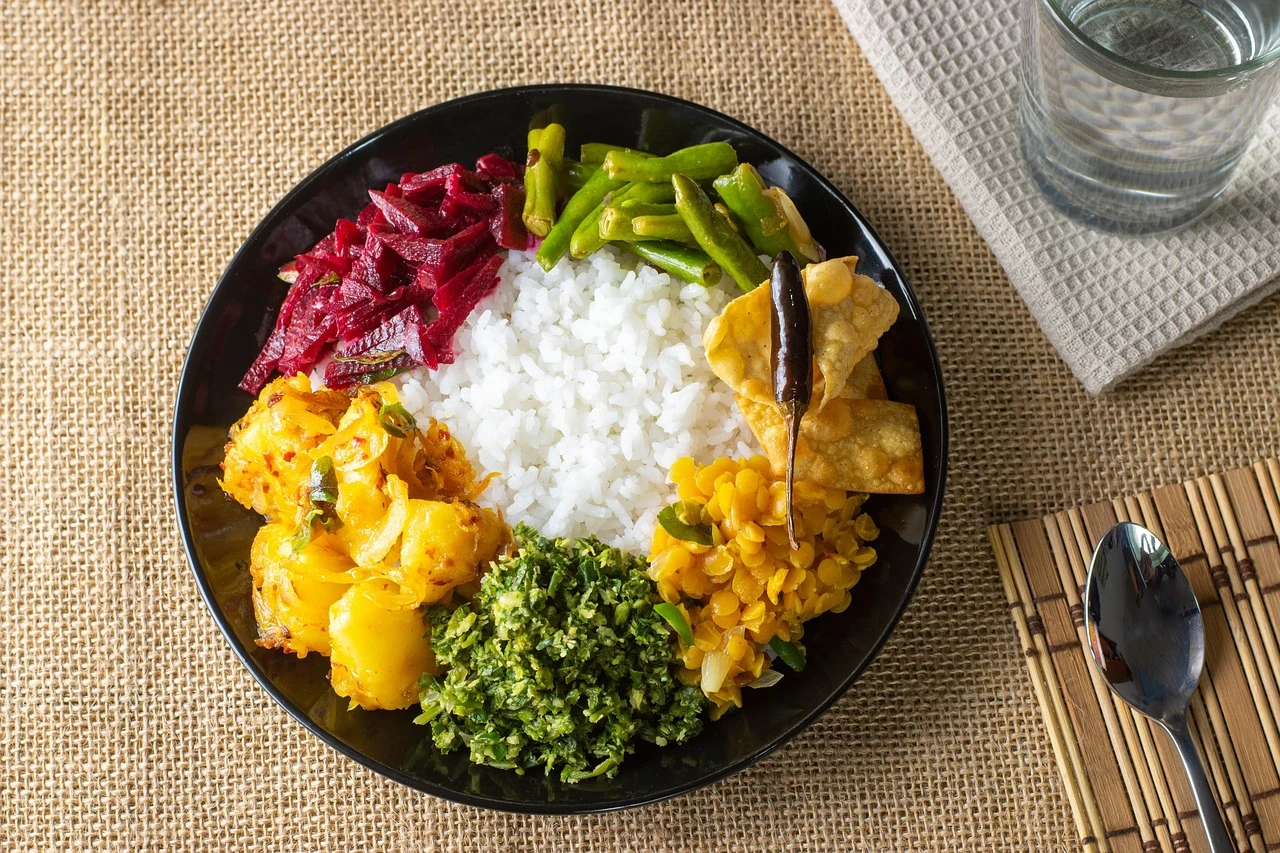
The local rice and curry — served on a plate the size of a hubcap, with four or five side dishes, a poppadum, and a sambol that will rearrange your understanding of chilli — costs between two and five dollars. Garlic Café, tucked under bamboo covers a short walk from the beach, offers an all-you-can-eat buffet of Sri Lankan dishes that would embarrass restaurants charging ten times the price in Colombo.
For those whose palates lean Western, the cafe scene is remarkably developed for a village of five hundred people. Smoothie bowls, sourdough toast with avocado, specialty coffee — the vocabulary of the modern nomad-café is fully spoken here. Smoke & Bitters, perched on the edge of Dickwella Beach, has been ranked among the finest cocktail bars in Asia, which is the sort of claim that sounds absurd until you taste the drinks and realize it isn't.
The trick, as seasoned residents will tell you, is to alternate. Eat local for lunch, treat yourself at a cafe for breakfast, cook at your guesthouse when you feel like it. This way you eat magnificently without spending more than you would on groceries in a mid-sized European city.
The honest problems
I distrust any article about a place that reads like a tourism brochure. You deserve the truth, so here it is.
Hiriketiya is growing fast. Construction sites have multiplied. The sound of hammers and cement mixers is now as much a part of the morning soundtrack as birdsong. New hotels, restaurants, and boutique shops appear with each passing season, and the pace shows no sign of slowing. Whether this transforms the village into another overdeveloped coastal strip or matures into something sustainably charming depends entirely on decisions being made right now.
Prices have risen. High season accommodation can feel steep for Sri Lanka, particularly if you're booking last minute. Budget options exist but fill quickly. The days of a five-dollar beachfront room are over — if they ever existed outside of traveller mythology.
The roads leading in are rough. Potholes are plentiful. If you rent a scooter, which most people do, ride carefully. The local traffic operates by rules that are best described as aspirational.
And during peak season — December through February — the bay gets crowded. That quiet, secret-feeling atmosphere the early visitors wrote about is harder to find when every guesthouse is full and every cafe table is occupied.
None of these problems are fatal. But you should know about them before you arrive, not after.
Why you should go now
There is a window in the life of every great small place. It opens after the pioneers have built the cafes and the wifi but before the chain hotels and the package tourists arrive. Hiriketiya is in that window right now.
The community is real. The surf is accessible. The food is exceptional. The cost is still reasonable. The beauty of the bay — those palms, that water, the way the light hits the headland at five in the afternoon — is the kind of thing that no amount of development can entirely ruin, though not for lack of trying.
The consumer is not a moron. Neither is the traveller. You know when a place is being oversold. You know when the photographs are doing work the reality cannot support.
Hiriketiya is not being oversold. If anything, the written word undersells it. Because the thing that makes this bay extraordinary is not something you can capture in a photograph or a paragraph. It's the feeling of sitting on warm sand at the end of a working day, watching a surfer catch a wave in golden light, with a three-dollar curry in your near future and nowhere in the world you'd rather be.
That feeling, I'm afraid, you'll have to experience for yourself.
Getting there: Fly into Colombo (CMB), then travel south by car, train, or bus. The journey takes roughly four to five hours. From Matara, a tuk-tuk to Hiriketiya costs a few hundred rupees. Best time to visit: December through April for dry weather and consistent surf.
Places Mentioned(2)
Slow Life Coliving & Coworking by Nomadico
No.1, Bo Sevana, Dodampahala, Hiriketiya Rd, Dikwella, Sri Lanka
Hiriketiya Beach
Hiriketiya Beach, Sri Lanka
Tap a place card to see more details • Swipe to see all 2 places