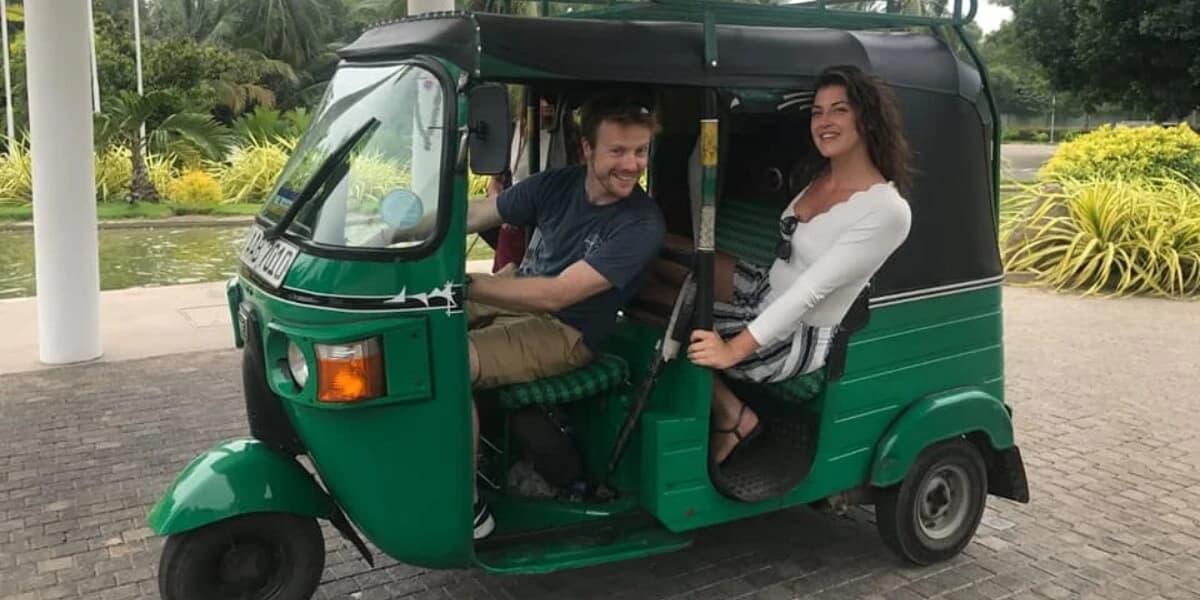
There is a romantic fantasy sold to travelers arriving in Colombo: Rent a colorful, three-wheeled motorized rickshaw, toss your bags in the back, and effortlessly wind your way through emerald tea plantations and sun-drenched coastal roads.
It is the ultimate symbol of travel freedom. It is also a machine that commands absolute respect, specific legal paperwork, and nerves of steel.
If you are planning to drive your own tuk-tuk across Sri Lanka, you are about to embark on the road trip of a lifetime. But before you hand over your credit card, here is exactly what you need to know to survive and thrive on the pearl of the Indian Ocean.
1. Your Home License Is Not Enough (The Paperwork Reality)
You cannot simply arrive, show your driver’s license, and drive away. It is illegal.
To drive a three-wheeler in Sri Lanka as a foreigner, you need a Sri Lankan Temporary Driving Permit.
The Process: You must have an International Driving Permit (IDP) with a "B" (Car) endorsement, or your national license in English. This must be taken to the Automobile Association of Ceylon (AAC) in Colombo to be validated.
The Ogilvy Fix: Do not waste your first day in Colombo standing in government lines. The best rental agencies (like TukTuk Rental) will process this permit for you before you even land for a small fee. Pay the fee. Your time is worth more.
2. It Is Not a Go-Kart; It Is a Manual Transmission
If you have never driven a manual vehicle, a tuk-tuk will be a sharp learning curve. There is no steering wheel and no automatic gearbox. You steer with handlebars. Your right hand controls the throttle (like a motorcycle) and the front brake. Your left hand operates the clutch and physically twists to shift between the four gears. Your right foot operates the rear brakes.
The Golden Rule: Never rent from an agency that hands you the keys without a mandatory driving lesson. You need at least an hour of practice in an empty lot to master the friction zone of a tuk-tuk clutch.
3. The Absolute Law of the Road: Size Dictates Right of Way
In the West, right of way is determined by signs and painted lines. In Sri Lanka, it is determined by physics.
The hierarchy of the road is simple: Buses > Trucks > Cars > Tuk-Tuks > Motorcycles > Bicycles > Dogs. When a red "Crazy Bus" (the local term for private transport buses) is hurtling toward you while overtaking a truck on a blind corner, you do not hold your ground. You move to the shoulder. Yielding is not a sign of weakness; it is the fundamental rule of survival.
4. The 40 km/h Speed Limit is Not a Suggestion
A three-wheeler is incredibly light and possesses a high center of gravity. It is inherently unstable at high speeds.
The legal speed limit for a tuk-tuk in Sri Lanka is 40 km/h (25 mph) across the entire country. The traffic police enforce this strictly with radar guns hidden behind roadside trees. Fines are payable at the local post office, which will cost you a half-day of your itinerary. Drive slowly. The island is small, and the scenery is better when you aren't rushing.
5. Pack Like a Backpacker, Not a Cruise Passenger
A tuk-tuk has a small storage cavity behind the rear passenger seat.
The Luggage Limit: It will comfortably fit two 60-liter soft backpacks and two small daypacks.
The Mistake: Bringing hard-shell, oversized roller suitcases. They will not fit in the trunk, meaning they will have to sit in the passenger cabin, crushing your travel companion’s legs for two weeks. Pack soft, pack light.
Also read: Confessions of a Sri Lankan Traveler: The Plain Truth About Tuk-Tuks
The Bottom Line: Renting a tuk-tuk is not a sanitized, predictable tourist excursion. It is an immersive, loud, wind-in-your-hair adventure that connects you directly with the pulse of the island. Respect the legalities, learn the mechanics, yield to the buses, and it will be the greatest story you take home.