The Seasonal Truth
Arugam Bay is not a year-round destination. This is the single most important thing to know before planning a trip, and most Sri Lanka itineraries get it wrong.
The town — a small surf settlement on Sri Lanka's southeast coast, technically an extension of the fishing town of Pottuvil — operates on a strict seasonal rhythm dictated by the southwest monsoon. From May through September, the monsoon sends consistent swells to the east coast while delivering offshore winds, sunshine, and warm dry weather to Arugam Bay. This is when the town comes alive: surf camps open, restaurants fire up their kitchens, yoga shalas roll out mats, and a shifting community of surfers, backpackers, and digital nomads fills the guesthouses along the main road.
From October, the season ends. The northeast monsoon arrives, bringing rain, onshore winds, and flat seas. Guesthouses close. Restaurants shutter. Board-rental shacks fold up and disappear. By November, Arugam Bay is a quiet fishing village again, with little for visitors beyond empty beach and closed doors.
If you're planning a Sri Lanka trip between November and April, Arugam Bay is not for you — head to the south coast instead. If you're travelling May through September, Arugam Bay might be the highlight of your entire trip.

Getting Here
Arugam Bay is remote by Sri Lankan standards. That remoteness is part of its character, but it requires planning.
From Ella: 2.5–3 hours by car or shuttle van. This is the most common route for travellers coming from the hill country. Tourist shuttle vans run daily during the season ($10–15 per person). Private car or tuk-tuk: $25–40.
From Colombo: 7–8 hours by car. A long drive, but the most direct option from the airport. Some travellers break the journey with a stop in the hill country.
From Kandy: 5–6 hours by car via the interior roads.
From Trincomalee: 4–5 hours along the east coast road. An option for those combining east coast destinations.
By bus: Public and semi-luxury buses run from Colombo, Kandy, and Matara to Pottuvil (the town 3 km north of Arugam Bay). These are cheap ($3–8) but involve 8–10 hours on a bus. Budget travellers use them; everyone else takes a shuttle van or private car.
From Pottuvil to Arugam Bay: Tuk-tuk for 300–500 LKR, or walk the main road (about 20 minutes).
The Town: What to Expect
Arugam Bay is small. The entire surf-town strip runs about 2 kilometres along a single road between the lagoon bridge and the southern end of the bay. Everything — accommodation, restaurants, surf shops, yoga studios — sits along this road or on the beach behind it.
There's no Galle Fort here. No ancient temples (within the town itself). No nightlife infrastructure beyond a handful of beach bars. What Arugam Bay offers instead is a very specific atmosphere: the feeling of a community that has assembled purely around waves, warmth, and the simple pleasure of doing very little, very well.
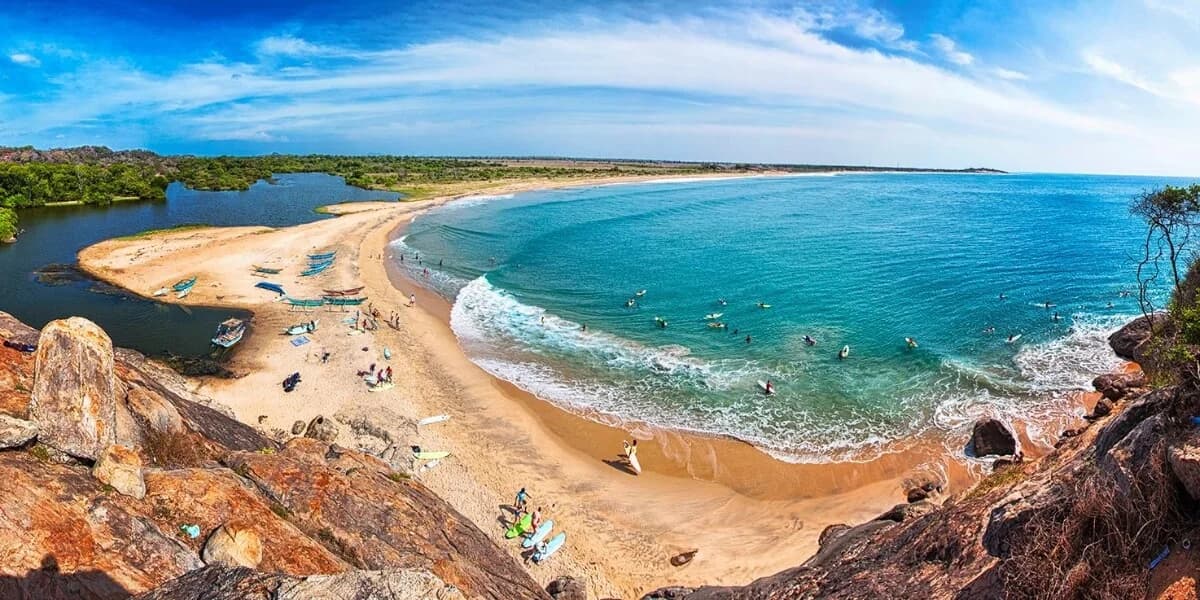
The main road is sand and dust in the dry season. Tuk-tuks and scooters are the standard transport. The beach curves in a crescent shape, with Main Point (the famous surf break) anchoring the southern end. Palm trees line the shore. Cafés serve smoothie bowls and iced coffee in the morning. By evening, the beach bars fill with sunburnt surfers watching the sunset. Sand-floored restaurants serve rice-and-curry buffets for $2 alongside $6 wood-fired pizzas.
It's backpacker bohemia at its most appealing, and its most limited. If you love it, you'll understand people who plan their entire year around the season. If it's not your vibe, you'll be ready to leave after two days. Most people need 3–5 nights to find the rhythm.
The Surf
Surfing is covered in detail in our Sri Lanka surfing guide. Here's the Arugam Bay–specific summary.
Main Point
The wave that made Arugam Bay famous. A long right-hand point break that peels for 300–500 metres on good days, wrapping around the headland at the south end of the bay. The outside section is fast and powerful; the inside (called Baby Point) mellows into a gentle wave suitable for beginners.

Level: Intermediate to advanced for the outside. Beginner at Baby Point.
Best months: July to September (biggest, most consistent swells). The
crowd: 40–80 surfers on a good day in peak season. Respect the lineup.
Whiskey Point
10 minutes north of town by tuk-tuk. A gentler right-hand break over sandy bottom, popular with beginners and intermediate surfers. Several surf camps and guesthouses sit right on this break. The vibe is mellower than the main bay.
Peanut Farm
15 minutes south by tuk-tuk. A right-hand point break similar in quality to Main Point but with fewer surfers and a more spacious, wild setting. Coconut palms, empty beach, occasional wildlife. The best option for intermediate surfers who want quality waves without the crowd.
Elephant Rock
Between Main Point and Peanut Farm. A fast, hollow right suited to experienced surfers. Named for the rock formation at the end of the break. Smaller crowds, bigger consequences.
Okanda
Remote, powerful, and reached through Yala territory. For advanced surfers willing to make an expedition of it. Wildlife — including wild elephants — is part of the experience.
Board rental: $3–5/day in Arugam Bay. Quality varies. Check fins and dings before committing. Surf lessons: $15–30 for a 1.5-hour session with instructor and board. Baby Point is where beginners start.
Beyond Surfing: What Else to Do
Arugam Bay's appeal extends well beyond waves. The surrounding area is one of the most wildlife-rich and least-visited parts of Sri Lanka.
The Lagoon
Cross the bridge from Pottuvil into Arugam Bay and you'll pass over a lagoon that functions as a free, self-guided wildlife encounter. Elephants graze on the banks. Water buffalo stand in the shallows. Crocodiles cruise past with the studied indifference that only crocodiles manage. It's unremarkable to locals and genuinely startling to visitors from countries where the most dangerous animal you encounter on a commute is an aggressive pigeon.
The lagoon is best at dawn and dusk, when wildlife is most active. No entrance fee. No guide needed. Just stand on the bridge and watch.
Kumana National Park
The quieter, less famous neighbour of Yala, located south of Arugam Bay (about 1 hour by car). Kumana is known primarily as a birdwatching destination — its wetlands attract vast numbers of migratory birds between April and September — but leopards, elephants, wild boar, and various deer species also roam the park.

A half-day safari at Kumana costs $20–40 per person (including park fees and jeep), significantly cheaper than Yala and with a fraction of the jeep traffic. For wildlife enthusiasts who've already seen Yala, Kumana offers a completely different, quieter experience.
Muhudu Maha Viharaya
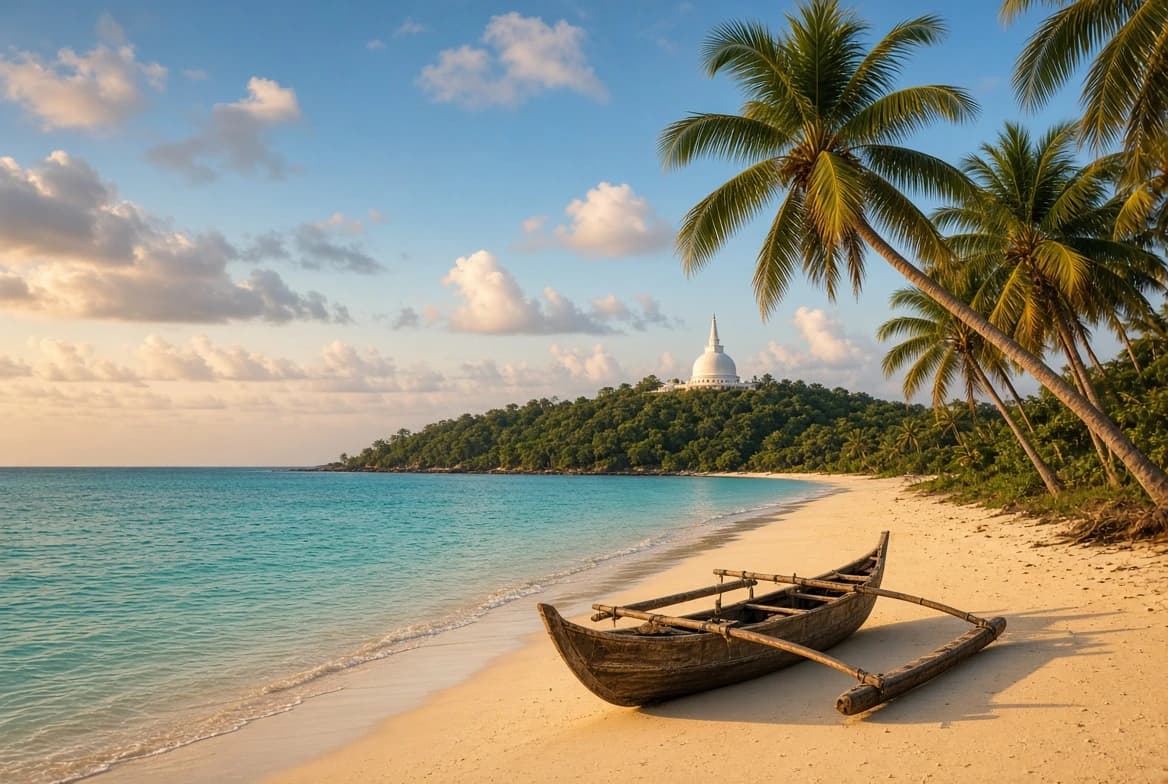
An ancient Buddhist temple set among the sand dunes of Pottuvil Beach, about 10 minutes north of Arugam Bay. Originally built over 2,000 years ago, the site features a white stupa, stone Buddha statues, and a peaceful atmosphere that contrasts sharply with the surf-town energy. A morning visit pairs well with a walk along Pottuvil Beach.

Yoga
Surf towns and yoga studios are inseparable, and Arugam Bay follows the pattern. Multiple studios and retreats offer daily classes — morning sessions before surfing and evening sessions as the light fades. Drop-in classes cost $5–10. Multi-day packages are available at most surf camps.
Elephant Rock Sunset
A short walk from the southern end of the beach, Elephant Rock is a headland formation that provides the best sunset viewpoint in the area. Surfers ride the break below while the sun drops over the Indian Ocean. It's the kind of scene that looks staged but isn't.
Where to Eat
Arugam Bay's food scene is better and more varied than you'd expect from a town this small.

Rice-and-curry buffets: Several local restaurants offer all-you-can-eat rice-and-curry spreads for $2–3. This is the budget traveller's anchor meal and it's consistently good — multiple curries, sambols, rice, and often a fish or chicken option.
Café culture: The town's main road and beach-adjacent backstreets host a growing number of cafés serving smoothie bowls, pancake stacks, avocado toast, and good coffee. Prices are higher than local food ($4–6 for a main) but reasonable by international standards. Shady Lane and Kaffi are popular for brunch and laptop work.
Pizza: Multiple wood-fired pizza operations compete for the evening crowd. Pizza Hub is consistently rated among the best — $5–6 for a genuine wood-fired pie.
Seafood: Fresh catch prepared at beachside restaurants. Grilled fish, prawns, and crab at $5–12 depending on the catch and the restaurant.
Kottu roti: The rhythmic chopping of kottu roti on flat griddles is the soundtrack of Sri Lankan evening food stalls. Arugam Bay's versions are excellent and cheap ($2–3).
General note: Food in Arugam Bay is slightly more expensive than equivalent food in rural Sri Lanka but cheaper than the south-coast tourist towns. A daily food budget of $8–15 feeds you well with a mix of local and café meals.
Where to Stay
Accommodation lines the main road and stretches toward the beach. Most properties are within a 5-minute walk of both the sand and the restaurants. The range covers everything from $8 dorm beds to $100+ boutique properties.

Budget ($8–20/night): Beach huts, basic guesthouses, and hostel dorms. Fan-cooled, simple, and close to the action. Beach Hut is a popular budget option with good reviews.
Mid-range ($25–50/night): Air-conditioned rooms with private bathroom, sometimes a pool. This is where most visiting surfers land. During peak season (July–August), book a few days in advance — the town fills up.
Comfortable ($50–100+/night): Boutique properties with pools, restaurant, and more polished service. Spice Trail and Arugam Bay Roccos offer this level. Still remarkably affordable by international standards.
The peak-season price spike: Accommodation rates in July and August can double compared to shoulder months. May, June, and September offer better value with fewer crowds (and slightly less consistent waves).
The off-season reality: From October to April, most properties close entirely. A handful stay open year-round, but the town's infrastructure essentially hibernates. Don't plan an off-season visit expecting a quiet version of the same experience — it's a fundamentally different place.
Nightlife
Arugam Bay's nightlife is informal, seasonal, and beach-centric. There are no clubs. What exists is better.
Beach bars with sand floors and fairy lights host evening gatherings that start with sunset drinks and build into music, dancing, and social chaos as the night progresses. The specific venues rotate from season to season — ask locally for what's happening. Reggae, electronic music, and surf-rock provide the soundtracks. Full-moon parties and end-of-season parties are the biggest events.
Alcohol prices: beer $2–4 in a bar, cocktails $4–8. The party scene peaks in July and August. May, June, and September are quieter.
Practical Details
How long to stay: 3–5 nights is optimal. Enough to surf multiple breaks, settle into the rhythm, take a day trip, and leave before the laid-back pace starts to feel like stagnation. Surf-focused travellers staying for the season sometimes spend 2–6 weeks.
When to come: May to September. July and August are peak (biggest waves, most people, highest prices). May, June, and September offer shoulder-season value — smaller crowds, cheaper rooms, and less consistent but still surfable waves.
Getting around: The town itself is walkable. Tuk-tuks to satellite breaks (Whiskey Point, Peanut Farm) cost 300–1,000 LKR ($1–3). Scooter rental ($5–8/day) is the preferred mode for surfers chasing breaks.

Connectivity: Wi-Fi is available at most cafés and guesthouses. Speed varies from adequate to frustrating. Data coverage via Dialog or Mobitel SIM cards is generally reliable. Digital nomads work from cafés with varying degrees of productivity.
Money: ATMs exist in Pottuvil (3 km north). Bring enough cash for a few days — ATMs can run out during peak season. Many restaurants accept cash only.
Safety: Arugam Bay is safe. The standard precautions apply — don't leave valuables on the beach, lock your room, and be aware of ocean conditions (rip currents are present at several breaks). Surfboard damage scams exist — photograph rental boards before and after. Wildlife near the lagoon is wild — maintain distance from elephants and give crocodiles an extremely wide berth.
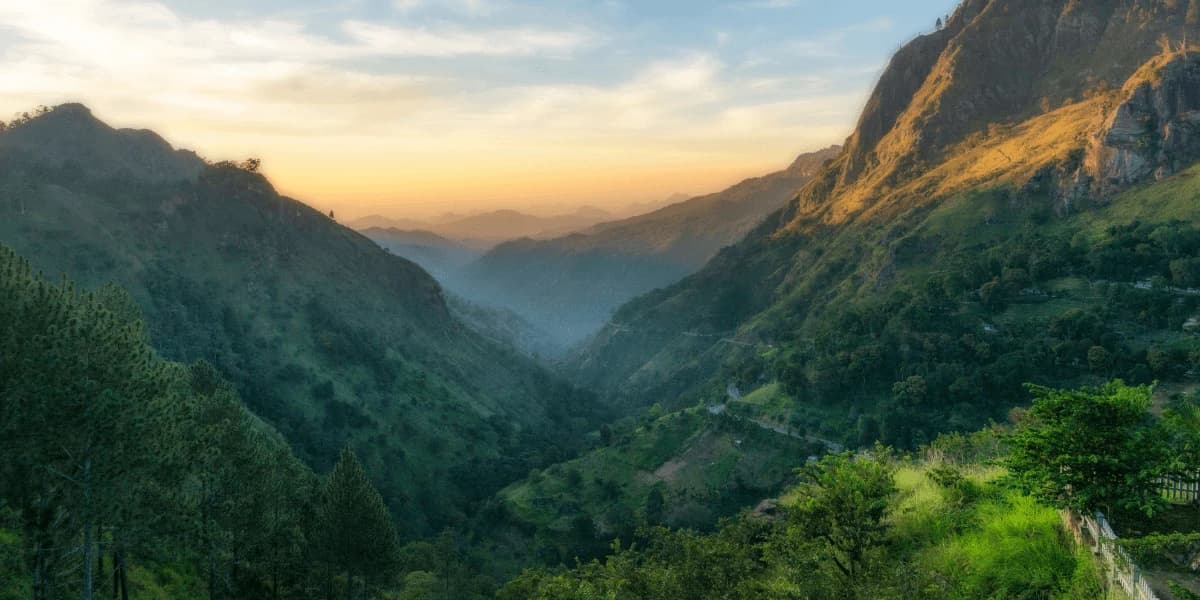
The Ella-to-Arugam connection: Most travellers arrive from Ella (2.5–3 hours), making the east coast a natural addition to a hill-country itinerary. The drive crosses the dry zone — a landscape of scrubby plains, Buddhist stupas, and occasional elephant crossings that feels entirely different from the lush hill country you've just left.
Should You Go?
Arugam Bay is not for everyone, and it doesn't need to be.
If you're travelling between May and September, you can surf, you enjoy backpacker culture, and you have 3–5 nights to spare, Arugam Bay is likely to be a highlight of your trip. The combination of world-class waves, affordable living, wild surroundings, and the particular magic of a seasonal community is difficult to replicate elsewhere in Sri Lanka.
If you're travelling November to April, the east coast offers you nothing that the south coast doesn't do better with vastly more infrastructure.
If you don't surf but you're in the area during the season, Arugam Bay still works for 2–3 nights — the beach, the lagoon wildlife, a Kumana safari, the yoga, and the evening atmosphere are enough to justify the detour.

And if the idea of a sand-floored restaurant, a $2 rice-and-curry buffet, and a sunset watched from a headland while surfers carve the break below sounds like a very good evening — you'll understand why people keep coming back.
This article is part of our comprehensive Sri Lanka travel series. For surf details across both coasts, see our Sri Lanka surfing guide. For route planning that includes the east coast, see our Sri Lanka 10/14-day itinerary. For beach options, see our best beaches in Sri Lanka guide. For seasonal timing, see our best time to visit Sri Lanka guide.
Key Takeaways for Quick Reference:
Season: May to September only. July–August peak. Town effectively closes October–April.
Getting here: 2.5–3 hrs from Ella (shuttle $10–15). 7–8 hrs from Colombo. Bus to Pottuvil, tuk-tuk to the bay.
Main Point: 300–500m right-hand point break. Intermediate to advanced. Asia's best right-hander.
Baby Point: Inside section of Main Point. Beginner-friendly. Where lessons happen.
Peanut Farm: 15 min south. Similar quality, fewer surfers. Best intermediate option.
Whiskey Point: 10 min north. Gentler right. Good for beginners and mellow sessions.
Board rental: $3–5/day. Surf lessons: $15–30.
Kumana National Park: 1 hour south. Quieter than Yala. Birdwatching + leopards. Safari $20–40.
The lagoon: Free wildlife viewing from the bridge — elephants, buffalo, crocodiles.
Food: Rice-and-curry buffet $2–3. Café meals $4–6. Pizza $5–6. Daily food budget $8–15.
Accommodation: $8–20 budget, $25–50 mid-range, $50–100+ comfortable. Book ahead July–August.
How long: 3–5 nights optimal. Longer for dedicated surfers.
ATMs: In Pottuvil (3 km). Bring cash — can run out in peak season.
Best value months: May, June, September (fewer crowds, lower prices, slightly less consistent waves).
Places Mentioned(6)
Kumana National Park
HMF9+5PJ, Okanda, Sri Lanka
Muhudu Maha Viharaya
Pottuvil, Sri Lanka
Elephant Rock
RR5F+XP, Arugam Bay, Sri Lanka
Peanut Farm Beach
Peanut Farm Beach, Sri Lanka
Whisky Point Beach
WR4V+3VJ, Pottuvil, Sri Lanka
Okanda Beach
MQ2G+3F, Okanda, Sri Lanka
Tap a place card to see more details • Swipe to see all 6 places