The Two-Sentence Answer
Is Sri Lanka safe for solo female travellers? Yes — significantly safer than India, comparably safe to Thailand, and in many respects safer than major European cities when it comes to street harassment and violent crime against tourists.
Will you experience moments of discomfort? Probably — staring, occasional unwanted conversation, and a cultural context where a woman travelling alone is still somewhat unusual outside tourist areas. These moments are manageable, and they don't define the trip.
The Distinction That Matters
Before we go further, let's separate two things that every solo travel guide conflates.
Discomfort is being stared at on a bus. It's a man at a restaurant asking why you're alone. It's a tuk-tuk driver who lingers a beat too long after dropping you off. Discomfort is unpleasant, sometimes exhausting, and entirely manageable.
Danger is a physical threat to your safety. Danger in Sri Lanka is rare for tourists of any gender — violent crime against foreign visitors is extremely uncommon, and the country has a strong tourist police presence in major areas.
The reason this distinction matters: if you can't tell the difference between discomfort and danger, you'll either spend the entire trip anxious or miss the signals when something genuinely isn't right. Sri Lanka mostly produces discomfort, not danger. Knowing that in advance lets you calibrate your responses appropriately.
What You'll Actually Experience
Staring
This is the most commonly reported experience for solo women in Sri Lanka, and it deserves context.
Staring is culturally normal in Sri Lanka. Men, women, and children stare at foreign visitors — of any gender — with an intensity that feels rude by Western standards. It's curiosity, not aggression. It's not considered impolite in Sri Lankan culture the way it is in Europe or North America.
If you look visibly different from the local population, you will be stared at. In tourist areas, this is barely noticeable (everyone's used to foreigners). In rural areas, on local buses, and in less-visited towns, it can feel constant and uncomfortable.
How to handle it: Acknowledge that it's cultural, not threatening. A smile or a nod usually resolves it. Over time, you'll stop noticing it. If it persists and feels targeted or aggressive (different from general curiosity), move to a busier area or sit near women and families.
Conversation and Questions
Sri Lankans are friendly and curious. Both men and women may approach you to chat, ask where you're from, and — inevitably — ask why you're alone. "Where is your husband?" and "Why are you travelling alone?" are questions you'll hear repeatedly. They're nosy, not threatening, and reflect a culture where women rarely travel solo.
How to handle it: A polite deflection works. "My husband is meeting me later" is a common white lie that solo women use effectively in conservative countries. It's not dishonest — it's pragmatic. Or simply answer honestly and move on. Most questioners are genuinely curious and move along quickly.
Unwanted Attention
A small percentage of interactions may cross from friendly into uncomfortable — a man who follows you briefly, someone who asks for your phone number, a beach vendor who becomes insistent. These incidents are more common in beach towns (where alcohol is involved) and in Colombo than in the hill country or cultural sites.
How to handle it: Be firm. A clear "no, thank you" delivered without smiling usually ends it. Walk toward other people, enter a shop or restaurant, or hail a tuk-tuk. Don't worry about being perceived as rude — your comfort and safety matter more than politeness to someone who isn't respecting your boundaries.
The serious caveat: More serious harassment — physical contact, indecent exposure, following at night — has been reported by some solo women in Sri Lanka, though it's significantly less common than in India, Egypt, or Morocco. It exists, and pretending it doesn't would be irresponsible. The practical defences are the same as anywhere: avoid isolated areas after dark, use PickMe for transport at night, trust your instincts, and don't let politeness override discomfort.
The Practical Toolkit
Transport
PickMe is your best friend. Download the app before you arrive. It eliminates tuk-tuk fare negotiations (which are inherently vulnerable to overcharging), shows you the driver's name and photo, tracks your route, and provides a record of every trip. Using PickMe at night is significantly safer than hailing a random tuk-tuk on the street.
Trains: Generally safe during the day. On popular routes (Kandy to Ella, Colombo to Galle), trains are full of tourists and the atmosphere is relaxed. Avoid empty carriages at night. On crowded local trains, stand near women and families.
Buses: Safe but chaotic. Crowded buses can be uncomfortable — sit near the front or near other women when possible. Long-distance night buses are not recommended for solo women.
Private drivers: If your budget allows ($50–70/day), a private driver eliminates virtually all transport-related concerns. Many solo women hire drivers for multi-day segments of their trip, which provides both transport and an informal guide/protector.
Accommodation
Book accommodation with good reviews from solo women. This is the single most useful research you can do. Filter reviews on Booking.com or Hostelworld for solo female travellers and read what they say about safety, atmosphere, and helpful staff.
Hostels are the easiest way to meet other solo travellers. Female-only dorms exist in major tourist towns. The backpacker circuit (Ella, Mirissa, Hiriketiya, Arugam Bay, Galle) has well-established hostel options where solo women are the norm, not the exception.
Guesthouses with families are excellent. Family-run guesthouses — where the owner's family lives on-site — provide an informal safety net. The owners are invested in your wellbeing (both personally and for their business reputation), and the family setting is inherently secure.
Don't share your room number or accommodation details with strangers. This sounds obvious but bears stating. If someone asks where you're staying, keep it vague.
Dress
Sri Lanka is conservative by Western standards, and how you dress outside beach areas significantly affects the attention you receive.
In towns, temples, and rural areas: Cover your shoulders and knees. Loose, breathable clothing — linen trousers, long skirts, cotton shirts — works perfectly in the heat and shows cultural respect. This isn't about blaming women for attention; it's about a pragmatic reality that modest dress in conservative areas reduces unwanted interactions.
At beach towns: More relaxed. Swimwear on the beach is fine. Bikinis are normal at tourist beaches. Away from the sand — even just walking to a restaurant — throw on a cover-up.
Carry a scarf or sarong. Essential for temple visits (where modest dress is required for entry) and useful as a general cover-up when moving between beach and town contexts.
Your Phone
A local SIM card ($5–10 at the airport, Dialog or Mobitel) gives you data, maps, PickMe, and — critically — the ability to share your live location with someone back home. Google Maps' location sharing and WhatsApp's live location feature are simple, effective safety tools.
Emergency numbers: Police: 119. Tourist Police: 1912. Save both in your phone.
Where Solo Women Thrive
Some parts of Sri Lanka are significantly easier for solo women than others. The backpacker circuit is well-trodden, social, and full of other solo travellers.
Ella
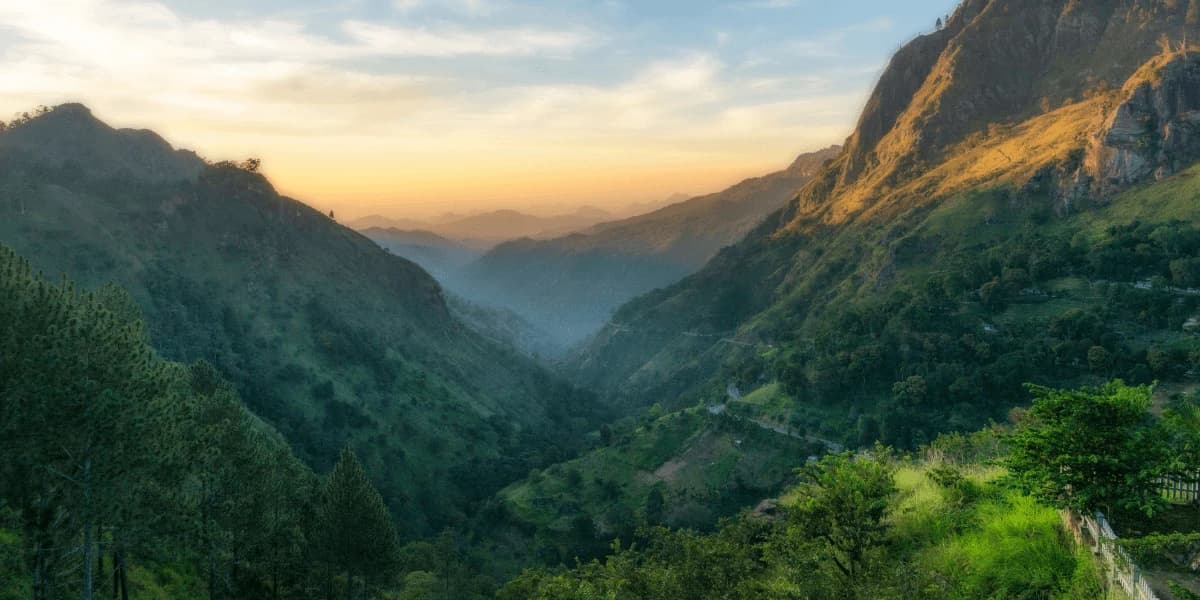
The easiest and most comfortable place in Sri Lanka for solo women. The town is small, walkable, full of cafés where people work and socialise, and the hiking (Little Adam's Peak, Ella Rock) is safe to do alone. The atmosphere is relaxed and the ratio of solo travellers to groups is high. You'll make friends without trying.
Hiriketiya
The south coast's yoga-and-surf hub, with a compact bay, boutique hostels, and an international community skewing young and female. Surf lessons, yoga sessions, and beach-bar evenings provide natural social structures. Solo women are the majority in many guesthouses.
Mirissa and Unawatuna
Popular beach towns with established tourist infrastructure. Busy enough to feel safe, social enough to prevent loneliness. Mirissa has a livelier nightlife scene; Unawatuna is calmer with excellent swimming.
Galle Fort
Safe, flat, walkable, and car-free. The fort's compact streets and established café scene make it an easy solo destination. An excellent place for a few days of unhurried exploration.
Arugam Bay (May–September)
The east coast surf town attracts a high number of solo travellers, particularly women. The community is small, everyone recognises each other within a day, and the surf-and-yoga culture creates an inclusive social environment.
Kandy
The cultural capital requires more awareness than beach towns (it's a working city with urban energy), but the Temple of the Tooth area, Kandy Lake, and the Botanical Gardens are comfortable for solo exploration during daylight hours.
Places requiring more caution
Colombo after dark — use PickMe rather than walking alone at night, particularly in less-touristed areas. During the day, the city is fine.
Rural areas far from the tourist trail — not unsafe, but the absence of other foreigners means more attention and fewer English speakers if you need help.
Anywhere alcohol is flowing — beach parties and nightlife areas carry the same risks as anywhere in the world.
Meeting People
Loneliness is the other side of solo travel, and Sri Lanka makes it remarkably easy to combat.
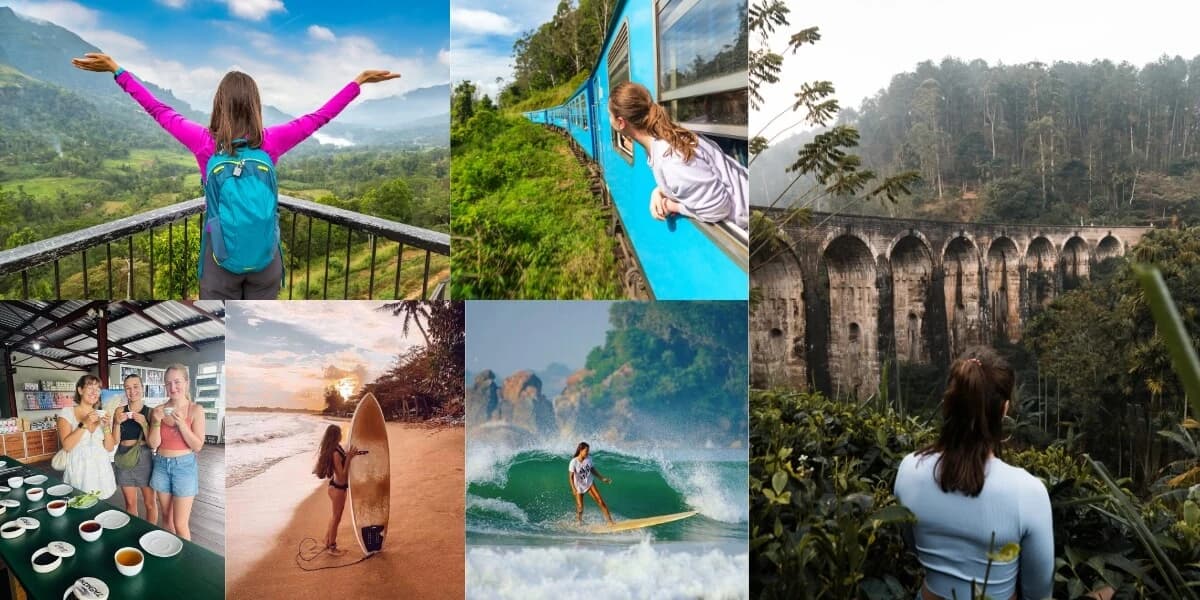
The train to Ella is the most reliable social event on the backpacker circuit. Travellers share compartments, lean out doors together, and exchange details for the next destination. Arriving in Ella alone and having dinner with three new friends the same evening is the standard experience.
Surf camps and yoga retreats are purpose-built for solo travellers. They provide daily structure (morning surf or yoga, shared meals, evening socialising) and a ready-made community.
Hostels: The common areas in Ella, Mirissa, Hiriketiya, and Arugam Bay hostels are where solo travellers converge. Even if you prefer a private room, many guesthouses have communal spaces where meeting people is effortless.
Organised day tours: Safaris, whale watching, and cooking classes often group solo travellers together. These are natural environments for conversation.
Other solo women: You will meet them constantly. Sri Lanka has one of the highest concentrations of solo female travellers in Asia. The shared experience creates instant connection — within days, you'll have a network.
Budget Considerations for Solo Women
Solo travel in Sri Lanka is affordable, but a few gender-specific budget considerations are worth noting.
The solo accommodation penalty: You pay the full room rate. In Sri Lanka, this is less painful than in expensive countries — a $12 private room is $12 whether one or two people use it. But over two weeks, the difference adds up. Budget $15–25/night for comfortable solo accommodation rather than the $8–12 a couple would pay per person.
Private transport costs more solo. A private driver at $50–70/day is excellent value for two people but expensive for one. Budget travellers use buses and trains; if you want the comfort and safety of a driver for part of your trip, consider hiring one for the multi-day Cultural Triangle segment (where public transport is least convenient) and using public transport for the rest.
PickMe vs. negotiated tuk-tuks: PickMe charges fair rates regardless of your gender. Negotiated tuk-tuk fares are frequently inflated for solo women more than for men. PickMe saves you money as well as hassle.
What Everyone Tells You (And What's Actually True)
"Sri Lanka is dangerous for women." No. It's conservative, occasionally uncomfortable, and requires the same awareness you'd exercise in any developing country. Dangerous is a significant overstatement.
"You'll be harassed constantly." No. You'll be stared at (cultural), occasionally questioned (curious), and rarely experience anything beyond that. The word "constantly" does not match reality.
"You need a male travel companion." No. Millions of solo women travel Sri Lanka without male companionship. A confident attitude, basic precautions, and PickMe on your phone are vastly more useful than a male companion.
"Dress codes don't matter, it's the 21st century." Ideologically correct. Practically unhelpful. Modest dress in conservative areas demonstrably reduces unwanted attention and is a sign of cultural respect. Both things can be true simultaneously.
"Sri Lanka is just as easy as Thailand." Not quite. Thailand's tourist infrastructure is more polished, English is more widely spoken in tourist areas, and the backpacker trail is more established. Sri Lanka is slightly rawer, slightly less convenient, and requires slightly more initiative. That's part of why many solo women find it more rewarding.
This article is part of our comprehensive Sri Lanka travel series. For practical logistics, see our travel tips guide. For budget planning, see our budget guide. For route planning, see our Sri Lanka 10/14-day itinerary. For destination guides on the places mentioned here, see our guides to Ella, Galle Fort, Kandy, and Arugam Bay.
Key Takeaways for Quick Reference:
Is it safe? Yes. Safer than India, comparable to Thailand, lower street harassment than many European cities.
Will you feel uncomfortable? Occasionally. Staring (cultural), questions about being alone (curiosity), rare boundary-pushing.
PickMe app: Non-negotiable. Download before landing. Use for all tuk-tuks, especially at night.
Dress: Cover shoulders/knees in towns, temples, rural areas. Beach towns more relaxed. Carry a scarf.
Best solo destinations: Ella (easiest), Hiriketiya (surf/yoga), Mirissa (beach social), Galle Fort (walkable charm), Arugam Bay (community).
Accommodation: Hostels for social, family guesthouses for safe. Read solo-female reviews.
Meeting people: Train to Ella, surf camps, hostel common rooms, day tours. Other solo women are everywhere.
At night: Use PickMe. Avoid isolated areas. Stick to well-lit, populated areas.
The key distinction: Discomfort ≠ danger. Most experiences are the former. Know the difference so you respond appropriately to both.
Budget solo adjustment: $15–25/night accommodation (paying full room rate). Private drivers expensive solo; use public transport + PickMe.
Emergency: Police 119. Tourist Police 1912.
The bottom line: Go. Take precautions. Trust your instincts. Sri Lanka rewards solo women who show up with confidence and awareness.
Places Mentioned(4)
Ella town, ඇල්ල නගරය
39 Passara Rd, Ambagollapathana, Sri Lanka
Hiriketiya Beach
Hiriketiya Beach, Sri Lanka
Mirissa Beach
Mirissa Beach, Mirissa, Sri Lanka
Arugam Bay Beach
Arugam Bay Beach, Sri Lanka
Tap a place card to see more details • Swipe to see all 4 places