Here's a confession.
Before my first trip to Sri Lanka, I spent three weeks in a spreadsheet spiral. Flights. Hotels. Visa fees. Tuk tuk costs. Safari prices. Currency conversions. I had seventeen tabs open and a growing headache.
Then I landed in Colombo, took a bus to Kandy for ₹65, ate the best rice and curry of my life for ₹250, and realised something that would have saved me all those sleepless nights:
Sri Lanka is ridiculously affordable for Indian travellers.
Not "affordable if you eat only dal" affordable. I mean genuinely, joyfully affordable — the kind where you eat well, sleep comfortably, see everything worth seeing, and still come home with money left in your account.
A 7-day Sri Lanka trip from India can be done for ₹30,000 per person if you're a smart backpacker. It can be done in comfort for ₹50,000-₹80,000. And even if you go full luxury with 5-star hotels and private drivers, you'll struggle to spend more than ₹1-1.5 lakh for a week — which is less than what a comparable trip to Thailand or Bali would cost.
The Indian Rupee goes a long way here. As of 2026, ₹1 INR equals roughly 3.5 LKR, which means your money is worth over three times its face value the moment you cross the Palk Strait.
Let me show you exactly how to make the most of it.
The Big Picture: What a Sri Lanka Trip Actually Costs
Before we dive into the details, here's the honest overview. For a 6-7 day trip from India — covering flights, visa, accommodation, food, transport, and activities — here's what you're looking at per person.
Budget traveller (hostels, street food, trains/buses): ₹25,000-₹40,000
Comfortable mid-range (clean guesthouses, local restaurants, mix of trains and private transport): ₹50,000-₹80,000
Luxury (boutique hotels, fine dining, private car and driver): ₹1,00,000-₹1,50,000
These numbers include flights from India. Without flights, your on-ground costs in Sri Lanka can be genuinely jaw-dropping — budget travellers regularly report spending ₹2,000-₹3,500 per day on everything combined.
Now let's break this down piece by piece.
Flights: Your Biggest Expense (and How to Tame It)
Flights are typically the single largest line item in your Sri Lanka budget, but the good news is they're among the cheapest international flights you'll find from India.
Most flights from India land at Bandaranaike International Airport (CMB) in Colombo. Here's what return tickets typically cost in 2026.
From Chennai, Kochi, or Bengaluru — these are the cheapest departure points because of the short distance. Return flights regularly go for ₹8,000-₹18,000 if you book early. During sales or off-peak months, you might snag something even lower.
From Mumbai — expect ₹12,000-₹22,000 return, depending on season and booking window.
From Delhi or Kolkata — slightly higher at ₹15,000-₹25,000 return, given the longer distance.
Peak season (Christmas, New Year, Diwali long weekends, school holidays) can push prices to ₹22,000-₹30,000+ from any city. If budget matters, avoid these dates.
Airlines operating the India-Sri Lanka route include IndiGo, SriLankan Airlines, Air India, SpiceJet, and AirAsia. Budget carriers frequently run flash sales — signing up for fare alerts on apps like Skyscanner or Google Flights is the single easiest way to save ₹5,000-₹10,000 on your trip.
The golden rule: Book 4-8 weeks in advance and fly mid-week. Tuesday and Wednesday departures are almost always cheaper than Friday or Sunday.
Visa: Simple, Quick, Affordable
Indian travellers need an Electronic Travel Authorization (ETA) to enter Sri Lanka. It's applied for entirely online, takes a few minutes to fill out, and approval usually comes within 24-48 hours.
The ETA cost for Indians in 2026 is approximately ₹1,700-₹3,000 (around USD 20-35) for a 30-day stay. Sri Lanka has periodically offered visa fee waivers or reduced rates for Indian tourists during promotional periods, so it's worth checking the latest status before you apply.
You'll need a passport valid for at least 6 months beyond your arrival date, a recent photograph, and basic travel details. Print your ETA approval and carry it with you — you'll need to show it at immigration.
One important note: Indian Rupees are not officially accepted or easily exchangeable in Sri Lanka. The smartest approach is to convert INR to USD at your bank in India before departure, then exchange USD to LKR at a bank outside Colombo airport (not the airport exchange counters, which offer worse rates). Alternatively, simply withdraw LKR from ATMs in Sri Lanka using your debit card — the rates are generally fair, and ATMs are plentiful in tourist areas.
International credit and debit cards (Visa, Mastercard) work at most hotels, restaurants, and larger shops, but carry cash for tuk tuks, street food, small shops, and rural areas.
Also read: Sri Lanka Visa for Tourists 2026: The No-Nonsense Guide to ETA, Fees, and the Free-Visa Confusion
Accommodation: Where Your Rupee Stretches Furthest
This is where Sri Lanka truly shines for Indian travellers. Accommodation is significantly cheaper than most international destinations, and the quality-to-price ratio is excellent.
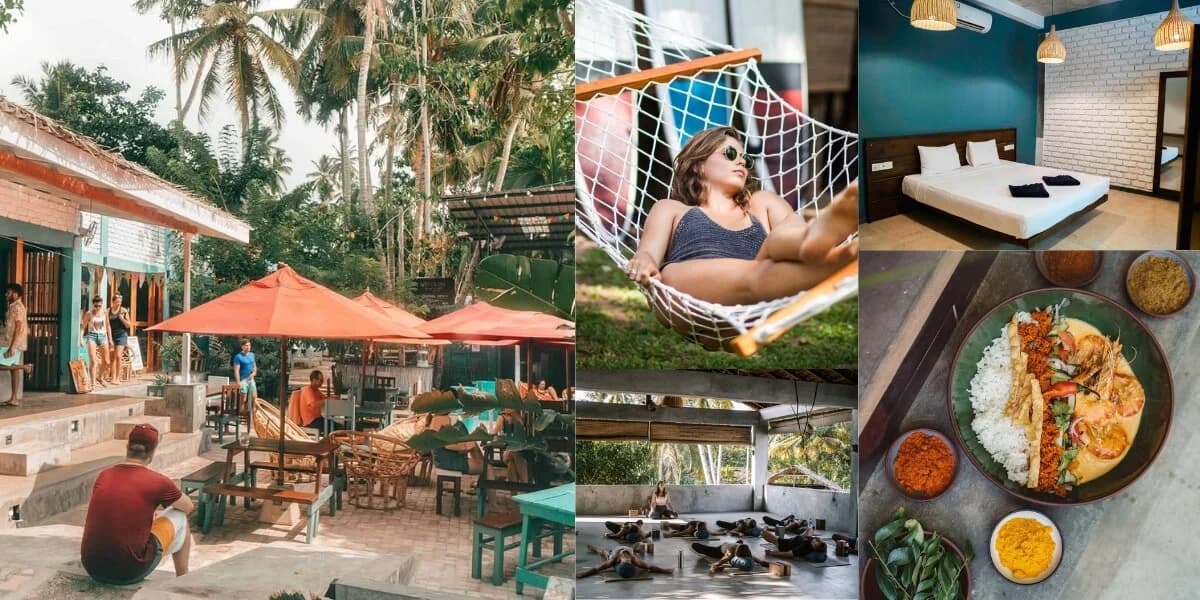
Budget (₹800-₹2,000/night): Hostels, dormitories, and basic guesthouses. You'll get a clean bed, a fan (sometimes AC), and often a shared bathroom. Colombo, Kandy, Ella, and Galle all have well-reviewed hostels in this range. Homestays — where a local family rents out a room — are often in this bracket too, and they come with home-cooked breakfast and priceless local insight.
Mid-range (₹2,500-₹5,000/night): Clean, comfortable guesthouses and small hotels with air conditioning, private bathrooms, WiFi, and often breakfast included. This is the sweet spot for most Indian travellers — you'll sleep well, eat well in the morning, and still have plenty of budget left for the day.
Upper mid-range (₹5,000-₹10,000/night): Boutique hotels, beachfront properties, and atmospheric heritage stays. At this level, you're getting beautiful rooms, excellent service, pools, and stunning locations. Compared to what ₹10,000 gets you in Goa or Kerala, the value in Sri Lanka is remarkable.
Luxury (₹10,000-₹25,000+/night): Sri Lanka has world-class luxury properties — places like Chena Huts near Yala, Heritance Kandalama, or the boutique hotels inside Galle Fort. If you want to splurge for a night or two, this is where India-to-Sri-Lanka arbitrage really works in your favour.
Pro tip for couples and families: Sri Lanka is one of those rare destinations where a couple sharing a room pays barely more than a solo traveller in a hostel. A lovely double room at a mid-range guesthouse costs ₹3,000-₹4,000, which splits to just ₹1,500-₹2,000 per person. Families of four can often book a family room or small apartment for ₹4,000-₹6,000 total.
Food: Eat Like Royalty for the Price of a Mumbai Vada Pav
If you're Indian, Sri Lankan food is going to feel like coming home to a cousin's house. The flavours are familiar — coconut, curry leaves, mustard seeds, chilli — but different enough to be exciting. Rice and curry is the backbone of the cuisine, served with an array of side dishes (sambols, dals, vegetables) that change from region to region and meal to meal.
Here's what eating costs in 2026.
Street food and local canteens (₹70-₹250 per meal): This is where most budget travellers eat, and frankly, it's where the best food is. A plate of kottu roti — chopped roti stir-fried with vegetables, egg, or chicken — costs around ₹100-₹150. String hoppers (steamed rice noodle discs) with curry run about the same. Hoppers (bowl-shaped rice flour pancakes) with a coconut sambol are breakfast perfection for under ₹100.
Mid-range restaurants (₹300-₹700 per meal): Sit-down restaurants in tourist areas serving Sri Lankan and international food. A full Sri Lankan rice and curry lunch — the kind with eight small bowls of different preparations arranged around a mountain of rice — is one of the great meals of the world, and it'll cost you ₹300-₹500.
Upscale restaurants (₹800-₹2,000 per meal): Hotel restaurants, beachfront dining, and international cuisine. Seafood is exceptional along the south coast — grilled fresh fish, prawns, and crab at prices that would make Mumbai weep.
Daily food budget: Most Indian travellers spend ₹500-₹1,000 per day on food, eating a mix of street food and restaurant meals. That's ₹3,500-₹7,000 for a full week of excellent eating.
Vegetarian travellers: Sri Lanka is vegetarian-friendly. Not as effortlessly as South India, but you'll find plenty of options everywhere. Rice and curry combos almost always include vegetarian preparations, and Hindu and Buddhist cultural traditions mean vegetarian food is understood and respected.
Also read: Sri Lankan Food: 21 Must-Try Dishes & Where to Eat Them (2026)
Getting Around: Trains, Buses, and the Beautiful Chaos of Tuk Tuks
Transport within Sri Lanka is cheap, varied, and — on the right routes — genuinely spectacular.
Trains: Sri Lanka's railways are legendary among travellers, and for good reason. The train from Kandy to Ella — winding through tea plantations, crossing bridges over misty valleys, and offering views that rival anything in Switzerland — is widely considered one of the most beautiful train journeys in the world. And it costs between ₹100-₹400 depending on class. Second class (reserved) gives you a window seat and that iconic open-door view for a fraction of what you'd pay for a scenic train anywhere else in the world.
Book train tickets in advance when possible — popular routes sell out, especially during peak season. You can reserve tickets online through the Sri Lanka Railways website or through agents.
Buses: Even cheaper than trains, and they go everywhere. A Colombo-to-Kandy bus costs about ₹65-₹100. Intercity buses are frequent, reasonably comfortable (the air-conditioned express services are best for longer routes), and connect every major town and city. They're also chaotic, loud, and driven by people who appear to believe they're in a Formula 1 race — which is either terrifying or thrilling, depending on your personality.
Tuk tuks: For short hops around a city or town, tuk tuks are the way to go. A typical ride of 3-5 km costs ₹150-₹350. Use the PickMe app for fair fares, or negotiate before you get in. Hiring a tuk tuk for a half-day (₹700-₹1,500) or full day (₹1,500-₹2,500) is great value if you want to explore multiple nearby spots without dealing with bus schedules.
Private car and driver: This is the most comfortable option and very popular among Indian families and groups. A car with driver costs approximately LKR 140 per kilometre (about ₹40/km) for a sedan, plus you'll cover the driver's food and accommodation (roughly ₹700-₹800/night). For a week-long tour covering 1,000-1,500 km, expect to pay ₹40,000-₹60,000 total for the car — split between a family of four, that's ₹10,000-₹15,000 per person. This is arguably the best value proposition in international travel for Indian families.
Daily transport budget: Using trains and buses primarily with occasional tuk tuks, expect ₹300-₹800 per day. With a private car, it works out to roughly ₹1,500-₹2,500 per person per day for a group of 2-4.
Also read: How to Travel Sri Lanka in 2026 Without Paying the "Tourist Tax"
Activities and Sightseeing: Where the Money Goes
Sri Lanka packs an absurd amount of variety into a small island. Here's what popular activities cost for Indian visitors.
Cultural sites: Sigiriya Rock Fortress is the most expensive at roughly ₹3,500-₹4,000 per person (USD 30 entry for foreigners). The Temple of the Tooth in Kandy is around ₹500-₹600. Most other temples and historic sites are free or charge nominal fees.
Also read: Sigiriya: Is Sri Lanka's $35 Rock Worth Climbing, or Should You Just Climb the $3 One Next Door? (2026)
Wildlife safaris: A half-day jeep safari at Yala or Wilpattu costs approximately ₹2,500-₹4,000 per person including entry fees and jeep (when shared with others). A full-day safari runs ₹4,000-₹6,000. SAARC visitors sometimes get slightly reduced park entry fees compared to other foreign nationals.
Also read: Yala or Wilpattu? A Lead Guide’s Raw Truth on the Ultimate Sri Lanka Safari
The Kandy-Ella train: ₹100-₹400 depending on class, as mentioned. This is essentially a free activity — the train ticket is the activity.
Also read: The Kandy to Ella Train: The Only Guide You Need for the World's Most Beautiful Rail Journey (2026)
Whale watching in Mirissa: ₹2,000-₹3,500 per person for a morning boat trip during season (November-April). Seeing blue whales — the largest animals on Earth — for under ₹3,500 is the kind of deal that feels too good to be true.
Also read: Whale Watching in Sri Lanka: Where the Largest Animals on Earth Swim Absurdly Close to Shore (2026)
Surfing lessons: ₹1,000-₹2,000 for a beginner lesson in Weligama or Arugam Bay, including board rental.
Also read: Surfing in Sri Lanka: Two Coasts, Twelve Months, No Wetsuit Required (2026)
Tea factory visits: Free to ₹500 at most estates in the hill country. The tea you buy to take home is laughably cheap compared to what the same brands cost in India.
Galle Fort: Free to walk around, free to photograph, free to fall in love with. One of the best freebies in all of Asian travel.
Total activities budget for a week: ₹5,000-₹15,000 depending on how many big-ticket items (Sigiriya, safari, whale watching) you include.
The Complete Budget Breakdown: 7 Days in Sri Lanka
Let me put it all together with three realistic scenarios for a 7-day trip.
The Backpacker (₹25,000-₹35,000 per person)
Flights (booked early, from South India): ₹10,000-₹15,000. Visa: ₹2,000. Accommodation (hostels/homestays, ₹1,000/night average): ₹7,000. Food (street food and local canteens, ₹600/day): ₹4,200. Transport (trains, buses, occasional tuk tuk): ₹3,000. Activities (Kandy temple, Ella train, Galle Fort, one safari): ₹5,000. Miscellaneous (SIM card, water, snacks): ₹1,500.
Total: approximately ₹32,700
The Comfortable Traveller (₹55,000-₹75,000 per person)
Flights: ₹15,000-₹20,000. Visa: ₹2,500. Accommodation (mid-range guesthouses, ₹3,000/night): ₹21,000. Food (mix of local and restaurant, ₹1,000/day): ₹7,000. Transport (mix of train, tuk tuk, some private transfers): ₹6,000. Activities (Sigiriya, safari, whale watching, tea estate): ₹12,000. Miscellaneous: ₹2,500.
Total: approximately ₹66,000
The Luxury Experience (₹1,00,000-₹1,40,000 per person)
Flights: ₹18,000-₹25,000. Visa: ₹2,500. Accommodation (boutique/5-star, ₹8,000/night): ₹56,000. Food (fine dining and hotel restaurants, ₹2,500/day): ₹17,500. Transport (private car and driver, full week): ₹15,000. Activities (all major sights, private safari, spa): ₹15,000. Miscellaneous: ₹4,000.
Total: approximately ₹1,30,000
The Best 7-Day Route for Indian Travellers
If you have one week, here's the route that gives you the best of everything.
Day 1: Arrive Colombo, transfer to Kandy. Land at CMB, grab a tuk tuk or pre-arranged transfer to Kandy (3-4 hours). Settle in. Walk around Kandy Lake in the evening. Visit the Temple of the Tooth for the evening prayer ceremony — the drumming and atmosphere are unforgettable.
Day 2: Kandy to Nuwara Eliya. Travel by bus or hire a car through the tea country. Visit a tea factory en route. Explore Nuwara Eliya — Sri Lanka's "Little England" with its colonial architecture and cool mountain air.
Day 3: Nuwara Eliya to Ella. Take the train. This is the famous stretch. Book second class if you can — the reserved seats and open windows are perfect. Arrive in Ella, hike to the Nine Arches Bridge or Little Adam's Peak before sunset.
Day 4: Ella. Full day exploring. Hike Ella Rock in the morning. Visit a tea plantation. Eat hoppers for dinner at a local spot. This is the day to slow down and breathe.
Day 5: Ella to Yala (or Mirissa). Head south. If wildlife is your thing, stop at Yala for a safari. If beaches call, continue to Mirissa. Either way, you're moving from mountains to coast, and the scenery shifts dramatically.
Day 6: South Coast. If at Yala, take an early morning safari. If at Mirissa, go whale watching (in season) or simply lie on the beach. Walk through Galle Fort in the afternoon — it's one of the most atmospheric places in all of Sri Lanka.
Day 7: Galle to Colombo, depart. It's a 2-3 hour drive up the Southern Expressway. If your flight is late, spend the morning in Galle. If it's early, leave at dawn and grab your flight.
This route hits hill country, tea country, wildlife, beaches, and colonial history in seven days. It's the greatest-hits tour and it works brilliantly for first-time visitors from India.
You can create itinerary using our itinerary planner or AI itinerary planner
Smart Money Tips That Save Real Rupees
These are the tips that seasoned India-to-Sri-Lanka travellers swear by.
Don't exchange money at the airport. The exchange counters inside Colombo airport offer terrible rates. Walk outside the arrivals hall and you'll find bank counters with significantly better rates. Even better, use ATMs in the city.
Carry USD, not INR. Indian Rupees are difficult to exchange in Sri Lanka and you'll get poor rates. Convert INR to USD at your bank before departure, then convert USD to LKR in Sri Lanka.
Eat where Sri Lankans eat. If a restaurant has a menu in English with photos, you'll pay tourist prices. If it has a chalkboard in Sinhala and is full of locals, you'll pay local prices — and the food will probably be better.
Travel in the off-season. May to September (southwest monsoon) brings rain to the west coast but the east coast and hill country are beautiful. Prices for flights, accommodation, and activities drop noticeably. If you're flexible on dates, this is where the biggest savings hide.
Book trains early. The Kandy-Ella train sells out daily during peak season. Book as early as possible. If you miss reserved seats, the unreserved second class is still fine — just board early to grab a spot near the door for that iconic view.
Share safari costs. Jeep safari prices are per vehicle, not per person. A group of 4-6 people sharing a jeep brings the per-person cost down dramatically. Many guesthouses near Yala and Wilpattu can help you find fellow travellers to share with.
Use PickMe for tuk tuks. This ride-hailing app gives you metered, fair prices and eliminates negotiation. It works well in Colombo, Kandy, Galle, and most larger towns.
Buy a local SIM. Airport shops sell tourist SIMs for ₹500-₹700 with generous data. Having mobile data means you can use Google Maps, PickMe, translate apps, and stay connected — all of which save you money by helping you navigate independently.
Why Sri Lanka Hits Different for Indians
I want to end with something that goes beyond budgets and spreadsheets.
Sri Lanka isn't just cheap for Indians. It's easy. The food feels familiar — you're never far from a good curry. The people look like you — there's no feeling of being an outsider. The temples carry the same energy you feel at temples back home. There's no time difference. The flight is shorter than Delhi to Chennai.
But it's also different enough to feel like a real international trip. The coastline is wilder. The trains are more scenic. The wildlife is closer. The colonial architecture, the Buddhism woven into daily life, the way a Sri Lankan curry uses coconut milk differently than a Kerala curry — these small differences add up to an experience that feels both comfortable and new.
Over 530,000 Indians visited Sri Lanka in 2025 — more than any other nationality. That number is growing fast. And the reason is simple: no other international destination gives Indian travellers this much beauty, this much variety, and this much value for this little money.
Your spreadsheet can relax now. Sri Lanka is waiting.
Prices in this guide are based on conditions as of early 2026 and may vary with exchange rates, season, and availability. For the latest visa information, visit the Sri Lanka ETA portal. For flight deals, set alerts on Google Flights or Skyscanner.